
Blog
Growing Spinach in the UAE: Cool-Season Sowing and Leaf Harvests

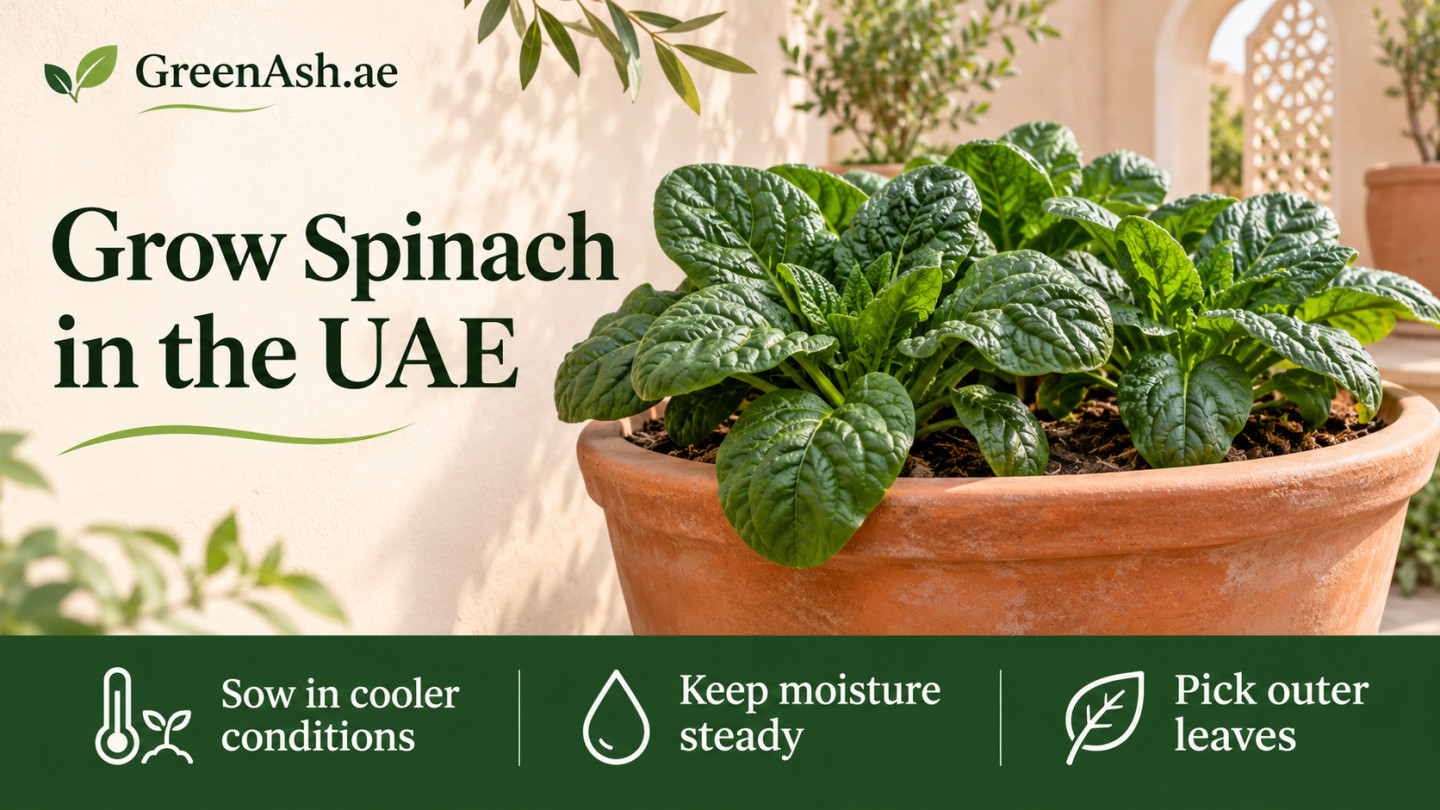
Growing spinach in the UAE is easier when you treat it as a crop for cooler conditions, rather than trying to keep the same planting productive all year. Before buying seed, decide whether you want a handful of baby leaves for salads or larger harvests for cooking. That choice affects how much space you need and how you use each sowing.
This guide covers true spinach, Spinacia oleracea. The practical UAE recommendations adapt general horticultural guidance to local garden conditions; overseas spring and autumn planting dates are not a UAE sowing calendar.
Check which “spinach” you are buying
True spinach comes in smooth-leaf and crinkled Savoy types. Perpetual spinach is a type of leaf beet, while Malabar and New Zealand spinach are different plants. They should not share one set of sowing instructions just because their common names include spinach.
GreenAsh lists Franchi Spinacio America spinach seeds, described on the product page as a Savoy type with crinkled leaves. Check current availability and the packet directions before planning your sowing. A variety described as slow to bolt still needs suitable growing conditions; that description does not establish UAE summer performance.
Let temperature guide the first sowing
Utah State University reports best spinach germination at about 13–18°C and reduced germination above roughly 27°C. These are general growing observations, not a guarantee for a particular packet. A hot container can therefore give disappointing emergence even when seed is watered regularly.
For a UAE balcony or villa garden, use the cooler months as your starting opportunity, then check the actual planting position. A pot beside a sun-heated wall may behave differently from a bed in an open garden. If conditions remain hot, delay the main sowing or test a small labelled batch first rather than using the entire packet.
Keep a simple record: variety, sowing date, position, watering and the date seedlings appear. If one location succeeds and another fails, you will have something more useful than a guess when planning the next batch.
Prepare a container that is easy to water and inspect
The RHS recommends a container at least 30 cm wide and deep to reduce rapid drying, filled with a suitable multipurpose potting compost. Check that the container drains freely and that a decorative outer pot does not hold drainage water around it.
Choose the pot before ordering the mix. Our potting-soil quantity guide explains how to estimate the litres required. For a long trough, leave enough access to inspect the centre of the planting rather than packing it tightly against a wall.
In beds, Utah State recommends fertile, well-drained soil and a soil test to guide fertilizer needs. Do not add extra feed solely because seedlings are slow: first check temperature, moisture and crowding. Nutrient additions cannot remove an unsuitable sowing environment.
Sow directly and leave room for your harvest plan
Direct sowing is a straightforward option. Follow the depth and spacing on your packet; the Spinacio America listing gives a sowing depth of 1 cm and spacing of 10–15 cm. Treat those as directions for that listing rather than a universal rule for every spinach variety.
- Moisten the growing medium before sowing and mark the row or pot.
- Sow a manageable batch, cover to the specified depth and water gently.
- Keep the seed zone from drying out without leaving the container saturated.
- Thin crowded seedlings according to the packet and intended leaf size.
For repeat supplies, divide your available space into separately labelled sowings. The RHS recommends small, repeated batches. In practice, one tray or section can be emerging while another is ready to pick. This also avoids having the entire crop reach harvest size at once.
Keep moisture steady and watch for bolting
The University of Minnesota explains that increasing day length encourages spinach to flower, with heat and drought accelerating that response. Bolting means the plant starts producing a flower stalk instead of continuing normal leaf production.
Check moisture regularly and adjust watering to the pot, weather and growing medium. A daily check is not an instruction to water every day. If the mix is already wet, investigate drainage rather than adding more water. Light shade can help during warmer conditions, but it is not a promise of year-round production.
| What you notice | Useful next check |
|---|---|
| Poor emergence | Review seed age, sowing depth, moisture and heat at the planting position |
| Plants crowding each other | Compare spacing with the packet and decide whether to harvest baby leaves or thin for larger plants |
| A central flowering stem | Harvest usable leaves and plan a replacement crop when conditions suit |
| Holes or damaged leaves | Inspect the plant and nearby hiding places before choosing any treatment |
If seedlings collapse at soil level, use our damping-off guide. If leaves have chewing damage, our snail and slug guide explains where to look. Neither symptom alone identifies a pest or justifies a pesticide application.
Pick leaves without damaging the growing centre
Utah State advises harvesting older outer leaves while leaving younger growth to develop. Minnesota Extension also notes that individual baby-leaf harvesting can allow further pickings. Work gently and preserve the growing point if you want another harvest.
Pick when plants are cool, handle the leaves carefully and refrigerate promptly. Wash before eating. Plan quantities around the meal: spinach loses considerable volume when cooked, so a small pot that supplies salad additions may not supply a family-sized cooked dish.
Frequently asked questions
Can spinach grow through UAE summer?
Do not plan on ordinary spinach as a reliable summer crop. Consider the actual temperatures and the variety. Heat-tolerant plants with spinach in their names are separate crops with their own requirements.
Why did my spinach flower while still small?
Day length, heat and water stress can contribute. Review the sowing conditions before buying more fertilizer or assuming the seed was faulty.
Should I sow the whole packet?
Usually there is little reason to use all the seed for a small household planting. Start with the space you can manage and keep the rest correctly stored. See our seed storage and germination guide before reusing older packets.
How many days until harvest?
Use the packet estimate as a planning guide, then judge leaf size and plant condition. Baby leaves and mature leaves are different harvest targets, and local conditions affect the timing.