
Blog
How to Store Vegetable Seeds in the UAE and Test Leftover Packets

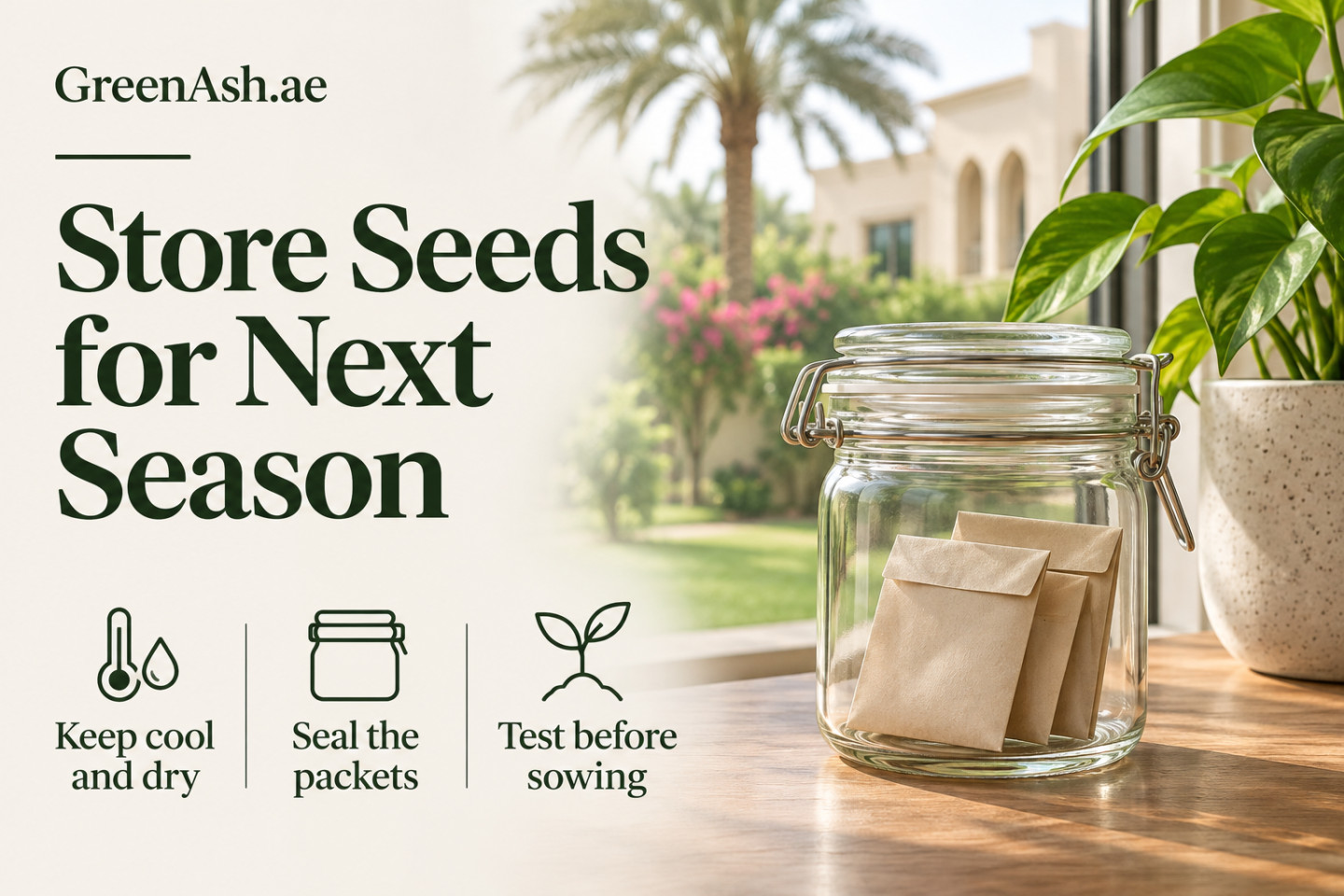
After sowing a few balcony pots, you may still have most of a vegetable seed packet left. Before putting it in a drawer, decide where it will spend the months until your next planting. A packet beside a sunny window, in a parked car or in an outdoor garden cupboard can experience very different conditions from one stored inside your home.
For ordinary dry, commercially packed vegetable seeds, the practical approach is to retain the packet, protect it from moisture and heat, and test older seed before committing a whole tray. Follow any special storage instructions on your particular pack.
Choose a storage place before opening the packet
Heat and humidity reduce seed germination and vigour. Utah State University recommends cool storage and a container with a good seal when using a refrigerator, because refrigerator air can be humid. Primed seed has a shorter storage life and needs particular attention to the supplier’s instructions. Read Utah State’s seed handling guidance.
In a UAE home, check the actual location you plan to use. A cupboard in an air-conditioned room is a different proposition from a balcony storage box. If the room becomes hot when you travel or switch off the air conditioning, plan another location before leaving. Bring purchased seeds indoors promptly rather than keeping them with tools in the car.
Pack leftover seeds in a few minutes
- Keep the original packet. Fold or close the opening securely. Retain the variety name, lot details, dates, sowing instructions and any seed-treatment information.
- Add a note. Write the date you opened it and roughly how many seeds remain. Keep different varieties in separate packets.
- Use a clean, dry, tightly closing outer container. A lidded jar or suitable sealed box can hold several packets. Keep wet hands, irrigation water and damp potting mix away from the contents.
- Store consistently cool and dry. A refrigerator can suit small quantities when the seed packets are protected inside the sealed container. Follow the pack’s directions for any treated or specially prepared seed.
Seed supplier Seminis recommends retaining unopened supplier packaging where possible and using sealed containers for opened packets. Its guidance also stresses careful transport and avoiding direct sunlight and heat. These are general handling principles, rather than a promise about how long a particular packet will last. See the Seminis storage guide.
Let refrigerated seeds warm up before opening
Take out the closed container and allow it to reach room temperature before lifting the lid. Opening cold seeds straight into warm, humid air can allow moisture to condense on them. Once you have removed what you need, close the packets and container promptly. The University of Hawaii explains this condensation precaution in its seed storage guidelines.
For repeated small sowings, group packets by the planting session you expect to use them for. That way, you can take out the relevant container without opening every variety in your collection.
Check older seeds before filling a tray
Plan the test early enough to buy replacement seed if needed. Iowa State recommends testing about a month before planting. Storage history matters, and age tables cannot tell you the condition of your own packet. See Iowa State’s storage and testing guide.
- Moisten a paper towel and place a counted sample of seeds on it. Ten seeds makes the calculation easy, though a larger sample gives a more useful picture when you have enough seed.
- Fold the towel over the seeds, place it in a sealable bag or container, and label it with the variety and test date.
- Keep it under suitable germination conditions for that crop. Use the packet’s temperature and timing guidance. Check periodically and keep the towel moist.
- At the end of the appropriate germination window, count the seeds that sprouted. Divide by the number tested and multiply by 100.
This follows the home test described by University of Illinois Extension. For example, eight sprouted seeds out of ten gives an observed germination result of 80%. With such a small sample, one seed changes the result by ten percentage points. Treat it as a planning check, not a guarantee of emergence in your garden.
For a small packet, weigh the value of the test against the seeds it uses. If you only have a few seeds left, sowing them in labelled cells and recording emergence may be more practical. Keep the test result with the packet so you can compare it with the next sowing.
Buy for the space you can actually plant
GreenAsh lists Kysar Okra Rekha F1 in a 50-seed packet. If you take ten seeds for a sowing, forty remain before any losses. Write that balance on the packet and decide when you realistically expect to use it. The pack quantity helps you plan purchases, but it does not tell you how many mature plants your balcony can accommodate.
Before buying another packet, check the variety, remaining quantity, storage history and next planting date. For tomatoes and peppers, use our guides to growing tomatoes in the UAE and growing peppers and chillies to plan the nursery stage.
Frequently asked questions
Does the printed date guarantee that every seed will grow?
No. Storage and sowing conditions affect the result. Keep the date and lot information, and test an older or poorly stored packet when its performance matters to your planting plan.
Can I put an open paper packet directly in the refrigerator?
Put it inside a well-sealed outer container to protect it from moisture. Let that container warm before opening it for the next sowing.
What if the paper-towel test works but the seed tray fails?
Check sowing depth, temperature, moisture and the condition of the growing mix. A successful test does not rule out a problem in the tray. If seedlings emerge and then collapse at the stem base, our damping-off guide explains what to inspect.