
Blog
Growing Coriander in the UAE: Sowing, Leaf Harvests and Bolting

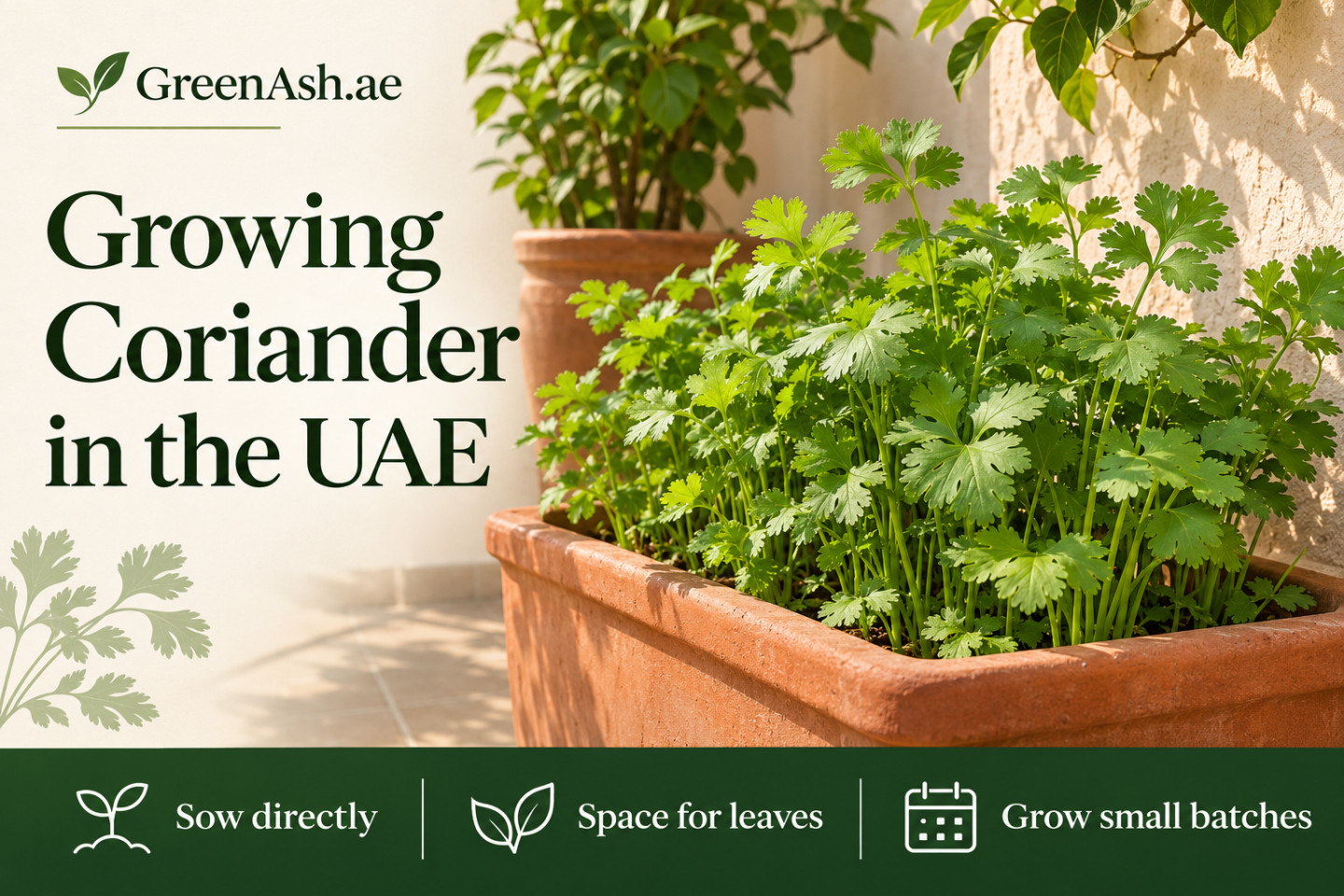
Growing coriander in the UAE is easiest to plan as a series of small cool-season crops. Start with the harvest you want: a few fresh leaves for the kitchen need a different layout from plants you intend to keep for seed. One crowded pot is unlikely to supply both for long.
When to sow coriander in the UAE
The Ministry of Climate Change and Environment planting calendar lists October–November for field planting of coriander, with a 50–60-day harvest guide. Use that as a local planning window, rather than copying spring sowing dates from European seed packets. Actual picking depends on the variety, conditions and how large you want the leaves.
For a November start, label the sowing date and leave some seed in the packet. Assess the first batch before committing all your space. A sheltered balcony and an exposed villa bed can need different watering even when they were sown on the same day.
Choose seed for leaves, then plan your space
Coriander and cilantro are the same plant, Coriandrum sativum; “cilantro” commonly refers to its leaves. Utah State University Extension recommends choosing a slow-bolting variety when leaves are the priority. Check the actual variety description: a brand name alone does not establish slow-bolting performance.
GreenAsh lists AgriMax coriander seeds for home gardening. Before ordering, check current availability and ask for the packet’s sowing instructions, seed quantity and variety name if these are important to your plan. The listing does not establish a specific slow-bolting cultivar. Do not assume a packet guarantees outdoor summer harvests.
Make a short shopping list: seed, a container with drainage holes if you are growing in pots, suitable potting compost, labels and a gentle watering attachment. Check what you already own before adding fertilizer or a seed tray. Direct sowing can avoid the need for a separate nursery stage.
How to sow coriander in a pot or bed
Garden Organic’s coriander guide advises sowing about 0.5 cm deep and thinning to 5 cm apart for leaves, or 20 cm for seed production. Follow a packet’s specific instructions where they differ. Its guidance also notes that coriander dislikes transplanting.
- Choose the final position. Use a sunny site with well-drained soil, or fill a draining container with potting compost. Avoid moving seedlings repeatedly between trays and pots.
- Prepare a level surface. Remove large lumps from the sowing area so you can cover seeds evenly. Sow shallowly, cover and water gently without washing seeds into a pile.
- Label the crop. Record the seed name and sowing date. Keep the packet so you can compare its expected emergence period with what happens.
- Thin for your harvest. Once seedlings are established, allow the spacing appropriate to leaves or seed. Do not keep every seedling simply because it germinated.
Garden Organic gives a germination range of 7–21 days. A bare surface after a few days is not a reason to add another layer of seed. If emergence remains poor beyond the expected window, check moisture and seed condition before restarting; our seed storage and germination-testing guide helps with leftover packets.
Watering and feeding: check the pot before reaching for the bottle
Coriander needs moisture while establishing but dislikes persistently wet conditions. Utah State advises moderate fertility and warns that excessive nitrogen can reduce flavour. Avoid adding several feeds to a new sowing, especially if the potting mix already contains fertilizer. Read the mix label first and use any additional feed only according to its directions.
For containers, the Royal Horticultural Society coriander guide recommends daily checks and watering as needed to keep compost just moist. This is a checking routine, not a daily watering prescription. Compare a pot beside a warm wall with one farther away; judge each separately. Make sure drainage water can escape.
Keep leaves coming and recognise bolting
Bolting is the shift towards flowering and seed production. Hot, dry conditions bring it on sooner. The RHS recommends small repeat sowings and a cooler position away from midday sun when heat becomes a problem. Removing early flower stems can prolong leaf picking, but coriander is an annual, not a permanent leafy shrub.
For leaf harvest, begin when plants are about 10–15 cm tall. Take a few leaves from each plant rather than stripping one plant bare, and allow recovery between pickings. If you want seed instead, let selected plants flower; Utah State describes collecting browning seed heads in a paper bag to finish drying.
A practical two-batch plan
Divide your intended growing space into two labelled sections. Sow the first during the local planting window, keeping the second available for a later small sowing a few weeks afterwards. Write down three observations: emergence date, first picking and first flower stem. Use those notes to decide the next batch size. If you use only a handful of leaves each week, smaller batches may suit you better than filling every available pot at once.
Frequently asked questions
Can I grow coriander indoors?
Yes, for short-term harvests in a bright position. Low light can produce pale, stretched growth, while a hot windowsill can encourage bolting. Check both light and heat before deciding indoors is the better location.
Should I grow coriander for leaves and seeds together?
You can allocate separate plants to each purpose. Give seed plants the wider spacing described above and label them so they are not repeatedly picked with the leaf crop.
What if young plants disappear overnight?
Inspect before treating. Check around pots and damp hiding places for snails or slugs, especially if leaves have been eaten. Our UAE snail and slug guide explains what to look for. Collapsed seedlings need a different investigation; see our damping-off guide.
Before buying, match the packet to your goal: fresh leaves, mature seed or a small trial. Knowing your sowing date, available space and preferred harvest makes choosing seed much easier.