
Blog
Mosquito Prevention in UAE Villas and Balconies: Where to Check for Standing Water

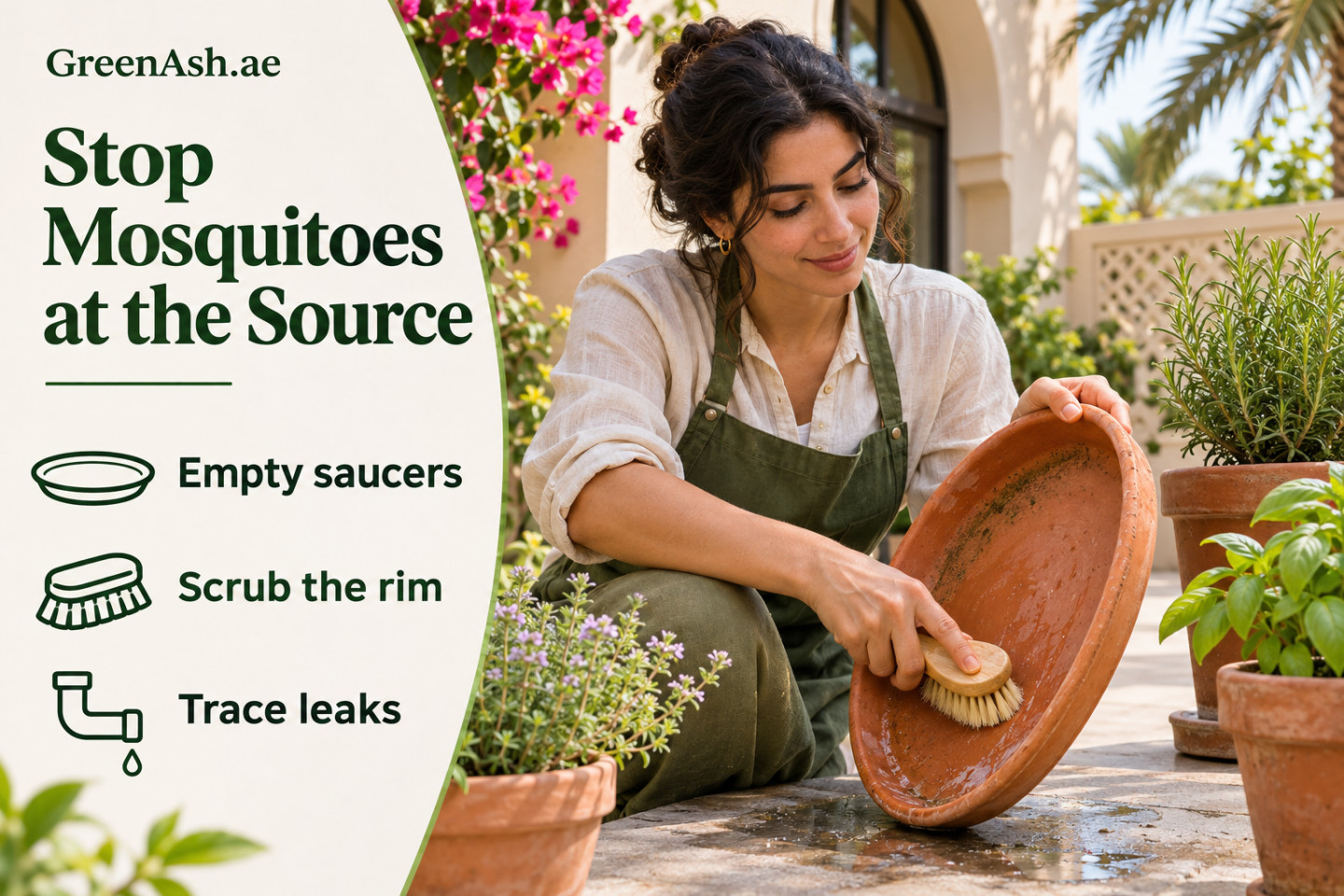
If you empty a plant saucer on Friday and the irrigation timer fills it again on Saturday, you have found the most useful place to start your mosquito check. Walk your balcony or villa garden just after watering. Look for the places where water comes to rest, then work backwards to see how it got there.
Where to check for standing water
Start at the patio door and follow the route you take to water the plants. Lift small nursery pots out of decorative outer pots, look beneath plant stands and open the outdoor storage box. A dry paving stone beside a planter tells you very little about the water hidden inside it.
| Place | What to check | What to change |
|---|---|---|
| Planters and saucers | Look inside the outer pot after the inner pot has drained. | Empty the collected water and scrub the inside of the removable tray. If you need the tray to protect a balcony below, keep it accessible so you can empty it after watering. |
| Hose taps and irrigation lines | Run the line while watching the joint nearest the puddle. Check again after switching it off. | Fix the leak or redirect the outlet to the planting bed. Test the same spot on the next cycle. |
| Buckets, toys and furniture covers | Check open containers and folds that sag after rain or washing. | Empty and scrub containers, store them upside down under cover and arrange covers so water runs off. |
| Building services | From an accessible spot, look for water collecting below an AC outlet, beside a shared drain or around a tank cover. | Photograph the location and report recurring pooling or a damaged cover to maintenance. Leave access to roofs, tanks and drain chambers to the responsible team. |
Empty the container, then scrub the waterline
Some mosquitoes lay eggs on the inside wall of a container near the waterline. Pouring away the water can leave eggs attached. Use a brush to clean the inside wall, including the rim where the water sat. Empty a portable container somewhere the water can drain without collecting in another tray. Give birds and pets fresh water after cleaning their bowls.
Make the walk a weekly job and repeat it after rain or a change to the watering timer. The CDC’s home mosquito-control guide recommends weekly container cleaning and tightly covered water storage. The UAE public health guide to mosquito prevention also highlights covered tanks and leaks that leave water around the home.
Choose the repair that fits the source
Suppose water reappears under a garden tap. Dry the hose fitting and the hose just below it, then turn the water on and watch for the first drop. A split in the hose, a leaking tap and a loose coupling need different repairs. For a damaged hose section, compare the hose diameter with the fitting specifications before choosing a Beorol hose repair connector. A split in a narrow drip line needs a fitting for that irrigation line. Our guide to testing drip irrigation shows how to check the rest of the run.
If a shared courtyard floods each morning, a dated photo immediately after irrigation and another later in the day will help maintenance see where the water persists. Include the nearest doorway or planter in the frame so the team can find the spot once it has dried.
Frequently asked questions
Do I need to buy a mosquito spray for a balcony?
Start with the saucers, outer pots and door screen. A spray aimed at flying insects cannot drain a tray that refills every morning. If mosquitoes persist after containers are cleaned and screens repaired, ask building management or a pest-control professional to inspect the property and shared areas.
Should I water my plants less?
Check where the water ends up before changing the whole schedule. If the root ball drains well but the outer pot traps the runoff, emptying the outer pot addresses that source while preserving the plant’s watering routine. If water pools on paving beside the bed, watch an irrigation cycle for a leak or misplaced emitter.
What if the water is in a fountain or storage tank?
Keep storage tanks securely covered and have damaged lids or screens repaired. For an ornamental fountain that cannot be emptied, ask the person maintaining it to inspect the basin and any separate pockets of still water. Keep household insect sprays out of water features and drinking-water storage.