
Blog
Fertilizer for Plants in the UAE: NPK Numbers and How to Choose

The three numbers on a fertilizer bag, such as 20-5-8 or 14-10-27, are the percentages by weight of nitrogen (N), phosphate (P2O5) and potash (K2O). Pick a nitrogen led feed for lawns and leafy growth, a potash led feed for flowering and fruiting plants, and a product with magnesium and trace elements for palms, then let the label rate, not the bag size, decide how much you use. In sandy UAE soil and hot pots, how often and how much you feed matters as much as which numbers you buy.
By the end of this article you will be able to read any fertilizer label, work out how many grams of nitrogen a dose really supplies, compare two products on nutrient content rather than pack weight, mix the right amount for a 1 L, 5 L or 16 L sprayer, and spot when a plant needs something other than more fertilizer.
What the three numbers on a fertilizer mean
The numbers are percentages by weight, always in the same order:
- N, nitrogen. Drives leaf and shoot growth and green colour. As nitrate it dissolves freely, so it moves with irrigation water through sand.
- P, phosphate (written on labels as P2O5). Needed for roots, energy transfer inside the plant, flowering and seed.
- K, potash (written as K2O). Involved in water control in the leaves, and linked to fruit fill and quality.
Clemson University Extension explains how to read the guaranteed analysis. A fertilizer containing all three primary nutrients is called complete; equal numbers, such as 10-10-10, are called balanced; and a product that leaves one out, such as 24-0-11, is incomplete and suits soil that already has enough of the missing nutrient. Clemson describes the rest of the bag as inert material or nutrient carrier that helps you spread the nutrients evenly, although many products also include magnesium, sulphur, trace elements or organic matter in that remainder.
Why phosphate and potash are written as oxides
Labels report phosphorus as P2O5 and potassium as K2O by long convention. Penn State Extension points out that these oxides do not actually exist in the bag and gives the conversions: % P2O5 x 0.44 = % P, and % K2O x 0.83 = % K. So a 20% phosphate figure means about 9% phosphorus, and 10% potash means about 8% potassium. You rarely need this, because recommendations are also written in oxide terms, but it explains why the middle and last numbers overstate the element.
A worked example: what is really in the bag
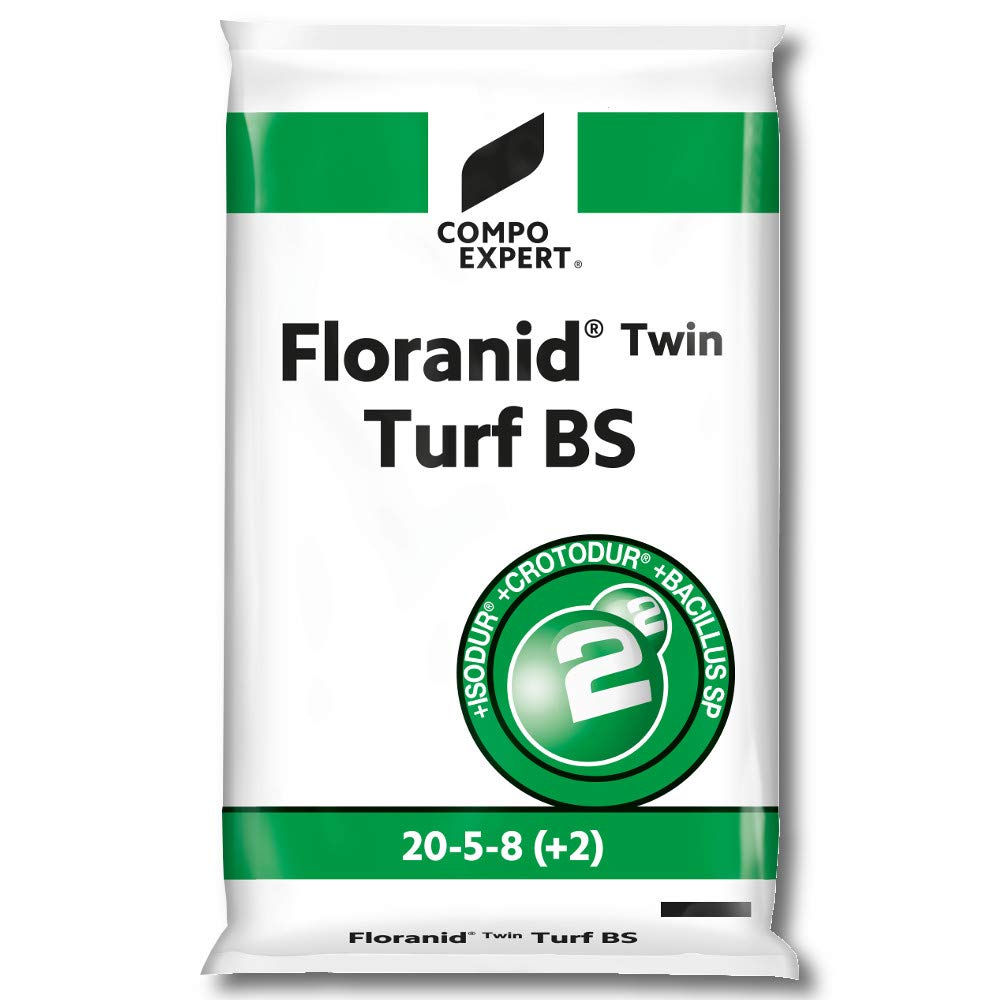
Take COMPO EXPERT Floranid Twin Turf 20-5-8, a lawn fertilizer. Every 1 kg contains:
- 200 g of nitrogen (20%)
- 50 g of phosphate (5%), which is about 22 g of elemental phosphorus
- 80 g of potash (8%), which is about 66 g of elemental potassium
- plus 2% magnesium oxide
The product page rate is 25 to 40 g per m2. At 25 g that is 5 g of nitrogen per square metre; at 40 g it is 8 g. That one calculation lets you compare any lawn feed with Floranid: divide the nitrogen you want by the first number as a decimal.
How to choose: match the numbers to the job
Start with the plant and the symptom, then the numbers. The ratio between the three figures tells you what a product is built for.
| What you are feeding | Ratio to look for | Why | Examples in our range |
|---|---|---|---|
| Lawn (Bermuda, paspalum, overseeded rye) | Nitrogen led, some potash, low phosphate | Grass is almost all leaf, and it is mown off weekly | Floranid 20-5-8 |
| Foliage houseplants, leafy herbs, young shrubs | Nitrogen led | Leaf growth is the goal | AGS 9-2-5 |
| Tomatoes, peppers, cucumbers, flowers in pots | Potash led, moderate nitrogen | Too much nitrogen gives leaf at the cost of fruit and flowers | Phostrogen 14-10-27, AGS 3-5-11 |
| Beds and shrubs needing a general feed | Roughly balanced with extra potash | Covers all three without overloading any | GrowFast 12-12-17, Desert Energy Grow Max 12-12-17+2MgO |
| Palms | Potash at least equal to nitrogen, plus magnesium and trace elements | Potassium and magnesium deficiency are common in palms | Palm Secrets 12-6-24 |
| A specific phosphate and potash shortfall | No nitrogen | Supplies P and K without pushing leaf growth | YAMFERT MKP 0-52-34 |
Lawns
Lawns need nitrogen above all, but the amount and timing depend on the grass and how fast it is growing. Floranid’s page says its nitrogen comes from Isodur and Crotodur, slow release forms, and gives a rate of 25 to 40 g per m2 every 8 to 10 weeks during the active growing season, watered in straight away. For mowing heights, watering and a month by month plan, see our guide to maintaining a healthy lawn in the UAE.
Worked doses for Floranid, from the page rate:
- 1 m2 test patch: 25 to 40 g, weighed on a kitchen scale.
- 20 m2 front lawn: 0.5 to 0.8 kg.
- 100 m2 villa lawn: 2.5 to 4 kg, supplying 0.5 to 0.8 kg of nitrogen.
- A 25 kg bag covers about 1,000 m2 at 25 g per m2, or about 625 m2 at 40 g per m2.
Vegetables, herbs and flowers
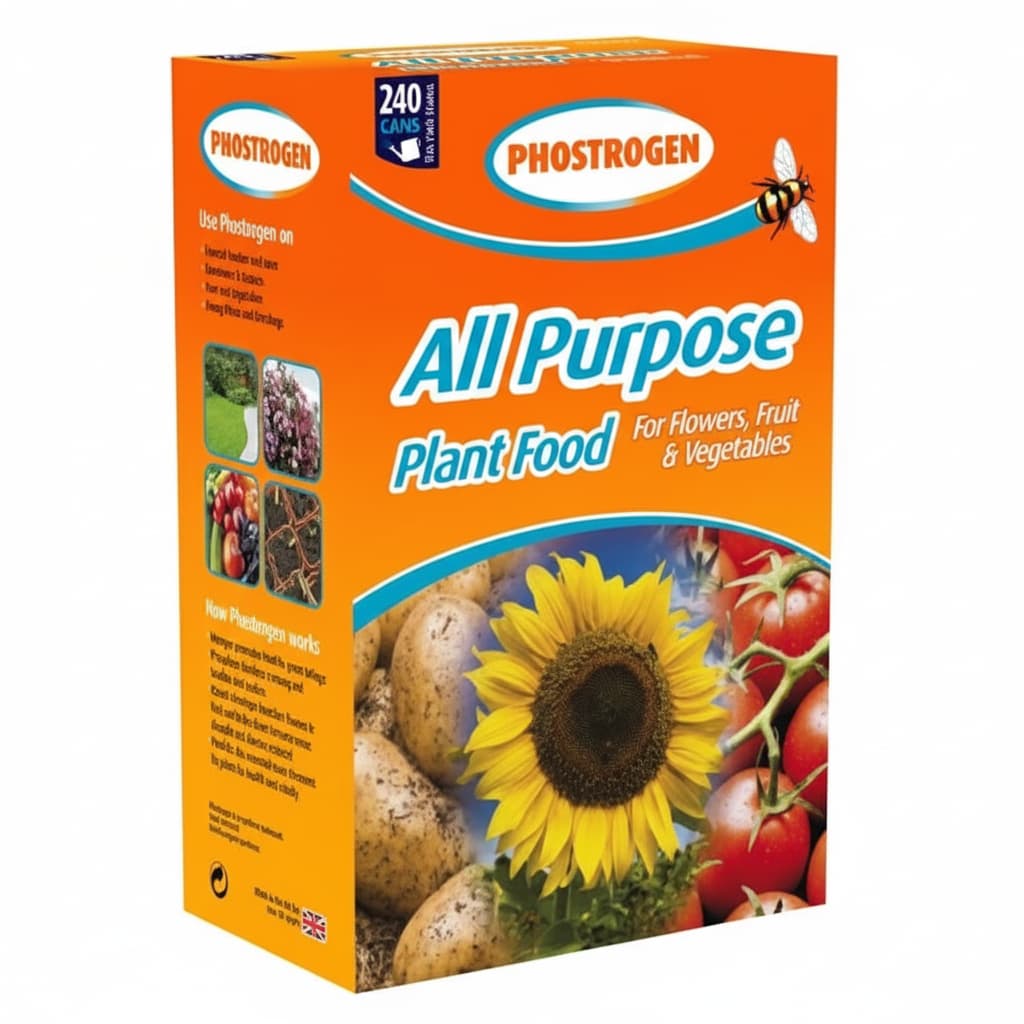
Fruiting crops need nitrogen to build the plant first, then steady potash as fruit sets. A potash led soluble feed such as Phostrogen 14-10-27 or AGS 3-5-11 suits that second stage. Leafy crops such as lettuce, rocket and herbs grown for leaves do better with a nitrogen led feed. If you are growing tomatoes or peppers, our potash fertilizer guide explains when to add potassium on its own.
Worked doses for Phostrogen, from the page rate of 1 level spoon (5 g) per 4.5 litres:
| Container | Full strength | Half strength for seedlings |
|---|---|---|
| 1 L hand sprayer or jug | 1.1 g | 0.55 g |
| 4.5 L watering can | 5 g (1 level spoon) | 2.5 g |
| 5 L sprayer or can | 5.6 g | 2.8 g |
| 16 L knapsack or tank | 17.8 g | 8.9 g |
At full strength that solution carries about 0.16 g of nitrogen and 0.30 g of potash in every litre. The page gives an interval of every 7 to 14 days in the growing season.
Indoor plants and balcony pots
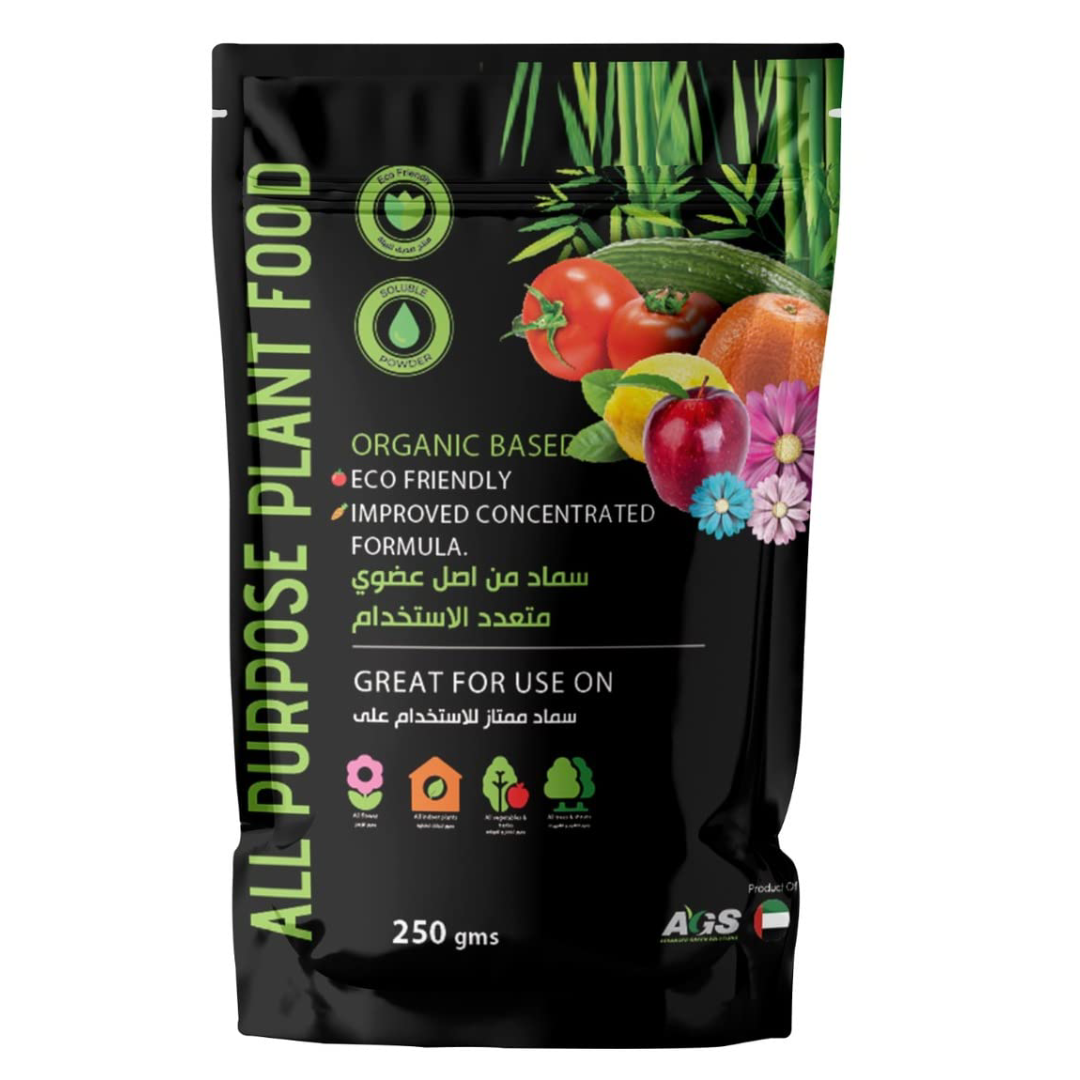
Indoor plants grow slowly, so a modest nitrogen led feed given monthly is usually enough. The AGS 9-2-5 page gives 1 level spoon (the spoon is inside the pack) in 3 litres of water for indoor plants and 3 level spoons in 10 litres for garden plants, repeated monthly or as needed, and says to avoid applying it directly on the foliage. The page does not say how many grams the spoon holds, so we cannot convert this to grams.
- 1 L: a third of a spoon is hard to measure, so mix 3 L with 1 spoon and keep the rest for the next pots.
- 5 L can: 1.5 level spoons (garden rate).
- 16 L tank: about 5 level spoons (4.8 at the garden rate).
Palms and fruit trees
Palms need attention to potassium, magnesium and manganese as well as nitrogen. University of Florida IFAS Extension calls potassium deficiency the most common nutritional disorder of palms and, for Florida landscapes, recommends a fertilizer labelled 8-2-12+4Mg or 8-0-12+4Mg with slow release macronutrients, spread evenly under the whole canopy three times a year from spring to autumn, with no winter feed. It also warns that high nitrogen lawn fertilizer applied even 30 feet (about 9 m) from a palm can trigger potassium deficiency, and says not to cut off yellowing fronds, which can signal a deficiency.
Those figures are for Florida, not the UAE, but the logic travels: potash at least equal to nitrogen, plus magnesium. Palm Secrets, sold as an organic mineral fertilizer, is listed as 12-6-24 with 2% MgO, 0.5% trace elements, 6% humic acid and 8% organic matter, a 1 to 2 nitrogen to potash ratio. Its page gives no application rate, so follow the bag label. For more, see our citrus fertilizer guide for fruit trees in pots and gardens.
The science: why the same numbers behave differently
Old leaves or new leaves: where the symptom shows
The UC Statewide IPM Program describes nitrogen shortage as older leaves turning uniformly pale green to yellowish while new growth stays green but sparse. Potassium shortage shows first on older leaves as yellow or brown tips, margins and patches between the veins. Iron and manganese shortage show on new leaves, which are small and yellow with green veins. Where the symptom appears is the clue: shortages that show on old leaves and shortages that show on new leaves have different causes, so yellow new leaves are not fixed by more NPK.
Alkaline sandy soil locks up micronutrients
UC IPM notes that iron and manganese deficiencies are common in high pH (alkaline) and sandy soils, and that a pH of about 6 to 7.5 suits most plants. Many UAE gardens have sandy soil, and where it is also alkaline, yellow young leaves are more often an iron problem than a nitrogen one. Our iron chlorosis guide covers that case, and our Epsom salt guide covers magnesium.
Fertilizers are salts
Every fertilizer dissolves into salts. The University of California Master Gardener houseplant page explains that fertilizer dissolved in water becomes a soluble salt, that salts concentrate as water evaporates, and that the signs are a yellow or white crust on the soil, a salt ring at the pot rim, brown leaf tips, lower leaves dropping and wilting. In a UAE summer, pots dry out daily and salts build quickly, which is why overdosing a pot does more harm here than in a cool climate.
Sand holds very little
Sandy soil has little clay or organic matter to hold dissolved nutrients and water. An International Center for Biosaline Agriculture (ICBA) project brief from Dubai (2016) measured sandy soil holding about 5% water at a suction of 0.1 bar, against about 61% for compost. Dissolved nitrogen in a sandy bed can wash below the roots with the next heavy irrigation, so smaller, more frequent feeds or a slow release product waste less than one large dose.
How much and how often: calculate it yourself
Iowa State University Extension sets out a simple method: divide the nitrogen rate you want by the nitrogen fraction of the fertilizer, then multiply by the area. Here is the same method in metric:
- Find the nitrogen you want per square metre, from a soil test report or the crop recommendation. As an example only, say 5 g of N per m2.
- Divide by the first number as a decimal. For a 12-12-17 product: 5 divided by 0.12 is about 42 g per m2.
- Multiply by the bed area. A 1 m by 4 m bed is 4 m2, so about 167 g.
- Check the result against the product label. If the label rate is lower, use the label rate.
The same arithmetic compares packs. A 250 g pack of 9-2-5 holds 22.5 g of nitrogen; an 800 g pack of 14-10-27 holds 112 g. So the 800 g pack holds about five times the nitrogen of the 250 g pack, not about three times as its weight suggests. Compare grams of nutrient, not grams of product.
Granules, powder or liquid?
| Form | How it works | Good for | Watch out for |
|---|---|---|---|
| Slow release granules | Releases nitrogen gradually; Clemson notes a product labelled slow release must have at least a third of its nitrogen in slow release form | Lawns and beds, fewer applications | Check how much of the nitrogen is slow release, not just the word on the bag |
| Standard granules | Dissolves with irrigation over a shorter period | Beds, shrubs and trees | Water in well; keep granules off leaves and stems |
| Water soluble powder or liquid | Taken up quickly through the roots | Pots, vegetables, regular light feeding | Easy to overdose; measure, do not guess |
| Foliar spray | Small amounts absorbed through leaves | Short term top up of a specific nutrient | Spray early or late in the day, never in midday heat |
Clemson also recommends a product with 50% or more of its nitrogen in slow release form when you want a long, steady supply. Liquid feeds are covered in detail in our liquid fertilizer guide.
What is not an NPK fertilizer
Some products on the fertilizer shelf have a different job. HUMFERT 15% humic acid is described as a soil enhancer, vermicompost improves sandy soil structure, and seaweed extracts are biostimulants. Some contain small amounts of nutrients, so check the guaranteed analysis, but do not count them as a full feed.
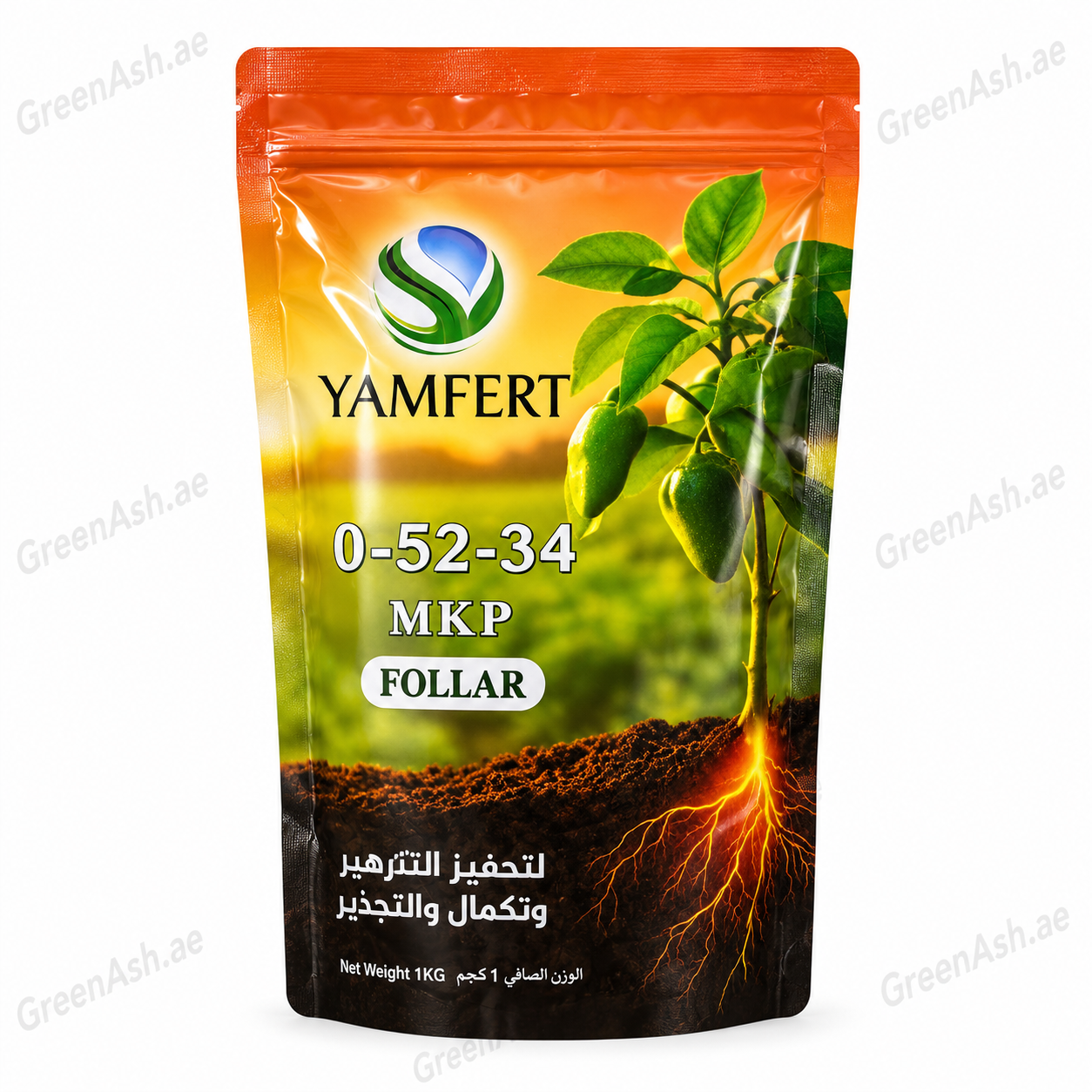
The opposite case is a single purpose product with a zero in it. YAMFERT MKP 0-52-34 is monopotassium phosphate: no nitrogen, a lot of phosphate and potash. Its page gives a foliar rate of 2 to 5 g per litre of water, applied during flowering and fruit development, and says to dissolve it completely first.
- 1 L sprayer: 2 to 5 g.
- 5 L sprayer: 10 to 25 g.
- 16 L knapsack: 32 to 80 g.
- Each gram supplies 0.52 g of phosphate and 0.34 g of potash.
Start at the low end of that range on a few plants and check for leaf scorch over the next few days before spraying the whole crop. Use it when a real shortfall is suspected, not as a routine feed, because adding phosphate to soil that already has enough does nothing useful.
Products compared
| Product | Analysis | Form and pack | Rate on the page | Interval on the page | Who it suits |
|---|---|---|---|---|---|
| Floranid Twin Turf | 20-5-8 + 2 MgO | Slow release granules, 25 kg | 25 to 40 g per m2 | Every 8 to 10 weeks in active growth | Lawns of any size |
| Phostrogen All Purpose | 14-10-27 + 2 MgO + trace elements | Soluble powder, 400 g or 800 g | 5 g per 4.5 L | Every 7 to 14 days | Fruiting vegetables, flowers, pots |
| AGS All Purpose | 9-2-5 | Soluble powder, 250 g | 1 spoon per 3 L indoors, 3 per 10 L outdoors (spoon weight not stated) | Monthly or as required | Houseplants, leafy plants |
| AGS Fruits & Vegetables | 3-5-11 | Soluble powder, 250 g | As AGS All Purpose | Monthly or as needed | Small fruiting containers |
| GrowFast 12-12-17 | 12-12-17 | Granules, 300 g | 1 to 2 tsp indoors, 2 to 3 tbsp outdoors per plant | Every 2 to 3 months indoors, every 3 months outdoors | A few pots or shrubs |
| Desert Energy Grow Max | 12-12-17 + 2 MgO + trace elements | Granules, 1, 3 or 5 kg | Not given | Not given | Beds, once you have a label rate |
| Palm Secrets | 12-6-24 + 2 MgO + trace elements | Granules, 25 kg | Not given | Not given | Palms; follow the bag label |
| YAMFERT MKP | 0-52-34 | Soluble crystals, 1 kg | 2 to 5 g per L as a foliar spray | Flowering and fruit development | A diagnosed P and K shortfall |
A UAE feeding timeline
| Period | Lawns | Vegetables and pots | Palms and trees |
|---|---|---|---|
| October to November | Feed Bermuda while it is still growing; feed overseeded rye once it is established | Sowing and transplanting season: half strength soluble feed for seedlings, full strength once growing | Last feed of the year, following the label |
| December to February | Growth slows; feed only grass that is actively growing | Main growing season; regular feeding at the label interval, potash led once fruit sets | UF/IFAS (Florida) advises no winter feed; adapt timing to your palm’s growth |
| March to April | Bermuda wakes up: first slow release feed of the season | Fruiting peak; keep potash led feeds going, watch for salt crust in pots | First feed of the year as growth starts |
| May to September | Feed at the label interval while growing; water in at once and never feed a dry lawn | Pots dry daily and salts build: feed lightly, flush pots as below, skip plants that are wilting in the heat | Summer feed per the label; spread evenly under the canopy |
Palm timing in this table is adapted from Florida guidance; lawn and vegetable timing follows active growth, so feed when plants are growing and follow each label interval.
Villa, balcony or farm
- Villa garden: keep lawn feed off palm root zones, because high nitrogen near palms can bring on potassium deficiency.
- Balcony pots: soluble feeds at the label rate, and flush pots with plain water to stop salts building up.
- Farm or large plot: base rates on a soil and water test, and calculate product from the nitrogen recommendation as shown above rather than from spoon measures.
Signs you are overdoing it
- Brown, crisp leaf tips and edges, especially after a feed.
- A white or yellow crust on the soil surface or around the rim of pots.
- Lots of soft green growth but few flowers or fruit, a common sign of too much nitrogen on fruiting plants.
- Lower leaves dropping and plants wilting even though the soil is moist.
Heat, salty irrigation water and poor drainage cause the same signs, so pause feeding and check the cause. For a pot, the UC Master Gardener page advises scraping off any crust (no more than about 6 mm of soil), then running through plain water equal to twice the volume of the pot and letting it drain completely, at least every 4 to 6 months. A 10 L pot therefore needs about 20 L of water. Never leave the pot standing in the drained water, because the salts can be taken back up.
Common mistakes
- Buying on the biggest numbers. A 20-20-20 is not better than a 10-10-10; it is twice as concentrated, so you use half as much. Compare grams of nutrient, not the label size.
- Feeding yellow new leaves with NPK. New leaves yellow with green veins usually point to iron or manganese, which NPK does not fix.
- Adding phosphate every time. Clemson advises against applying all three nutrients when phosphorus and potassium are already adequate. Adding phosphate to soil that already has enough does nothing useful.
- Using lawn feed on vegetables. Some lawn products contain weed killers. Use only a product whose label lists your crop.
- Feeding a dry or wilting plant. Water first, feed the next day. Salts in dry soil scorch roots.
- Topping up just to be sure. In sand and hot pots, extra fertilizer becomes extra salt.
Troubleshooting: you fed it and it did not help
- Still pale all over after two feeds: check drainage and roots. UC IPM lists waterlogging, salinity, nematodes and root rot among the causes that mimic deficiency by damaging roots.
- Got worse after feeding: stop, flush the pot or water the bed deeply, and resume at half strength after new growth appears.
- Yellow new leaves: iron or manganese; see the iron chlorosis guide.
- Older palm fronds with yellow, orange or brown flecks, or browning along the margins and tips: likely potassium; check the feed’s potash and keep lawn nitrogen away.
- No clear pattern: get a soil and water test from an accredited laboratory before buying more fertilizer. A test turns guesswork into a recommendation you can calculate from.
Safety and storage
- Wear gloves when handling powders and granules, and avoid contact with eyes and mouth, as the Phostrogen page advises.
- Keep children and pets off a lawn until granules are watered in, as the Floranid page says.
- Store fertilizers sealed, cool and dry, out of reach of children and pets and away from food, as the MKP and Phostrogen pages advise.
- Sweep granules off paving and driveways back onto the lawn so they do not wash into drains.
- Never mix fertilizers into the same tank as a pesticide unless both labels allow it.
Frequently asked questions
What does 20-20-20 fertilizer mean?
It declares 20% nitrogen, 20% phosphate (P2O5) and 20% potash (K2O) by weight. Using Penn State’s factors, that is about 9% elemental phosphorus and 17% potassium. Whether it suits you depends on the plant and what the soil already holds.
Which NPK is best for flowering?
A potash led feed with moderate nitrogen, such as 14-10-27, once plants are established. Too much nitrogen tends to give leaf at the cost of flowers, so choose a feed that is not nitrogen led.
Which fertilizer is best for vegetables in the UAE?
Leafy crops prefer a nitrogen led feed; tomatoes, peppers, cucumbers and melons prefer a potash led one once fruit sets. In sand, feed little and often at the label rate.
Is organic fertilizer better than chemical fertilizer?
Neither is automatically better. An organic based soluble feed can work quickly; compost and manure feed slowly and also improve sandy soil. Choose by the analysis, the label directions and what the plant needs.
How often should I fertilize potted plants?
Follow the label: Phostrogen gives every 7 to 14 days in the growing season, AGS monthly. Feed less when growth slows and flush pots with plain water every few months.
Can I use lawn fertilizer on vegetables?
Only if its label lists the edible crop. Some lawn products include herbicides, and a lawn feed’s high nitrogen is not what fruiting crops need.
Which fertilizer is best for palm trees in the UAE?
One with potash at least equal to nitrogen, plus magnesium and trace elements. UF/IFAS recommends 8-2-12+4Mg for Florida palms; Palm Secrets 12-6-24 with 2% MgO and trace elements is a palm fertilizer in our range. Follow its bag label, as the page gives no rate.
Why are my leaves turning yellow after fertilizing?
Brown edges and yellowing after a feed usually mean salt damage from too strong a dose or a dry root zone. Water deeply, flush pots and resume at half strength.
Still unsure which numbers you need? Browse our full fertilizer range or message us with what you are growing and where, and we will help you work out the product and the dose.