
Blog
Liquid Fertilizer in the UAE: When to Use It and How to Mix It Right

Liquid fertilizer is worth using in the UAE when a plant is actively growing and needs nutrients quickly: pots and hanging baskets that are watered every day, a Bermuda lawn in its growing months, and vegetables that have started to flower. It is the wrong tool for a plant that is wilted, newly repotted, dormant or sitting in salty, waterlogged mix. The bottle’s format matters as much as its name. A concentrate must be measured, a ready-to-use spray must not be diluted further, and a hose-end refill only works with its own feeder. Using one product’s instructions for another can burn roots and leaves.
By the end of this article you will be able to pick the right format, turn any label rate into an exact dose for a 1 litre bottle, a 5 litre can and a 16 litre knapsack, work out how strong the mix really is, and spot salt build-up before it costs you a plant. For what the three numbers on a pack mean, see our guide to NPK numbers and choosing fertilizer.
When does liquid fertilizer make sense?
A liquid or water-soluble feed is already dissolved, so the nutrients are in the root zone the moment the water reaches it. The University of Minnesota Extension’s guide to fertilizing and watering container plants calls soluble fertilizers a good choice for containers and the best option when nutrients are needed fast, giving yellowing lower leaves on tomatoes as the example. The same speed is the weakness: whatever the plant does not take up can wash out of the pot with the next watering. Minnesota notes that frequent watering leaches nutrients from containers, and in a UAE summer a terracotta pot on a south facing balcony may need water more than once a day.
That gives a simple rule for when liquid feed earns its place:
- Pots, planters and grow bags. Small volumes of mix, frequent watering and fast leaching. Liquid feed lets you top up little and often.
- Plants that need a quick correction. Pale new growth on a fast growing plant in a well drained pot, or a vegetable that has started to fruit.
- Lawns where you want even coverage and would rather water nutrients in than spread granules by hand.
- Drip and fertigation systems, where the feed goes in with the irrigation water.
Liquid is not automatically better than granular. A garden bed of sandy soil with compost, or a shrub border, is often better served by a controlled release granule that feeds for weeks; our article on slow-release fertilizer in the UAE explains how heat shortens those release periods. You can also do both: a slow release base in the mix and a weak liquid top up during heavy growth.
Decide first: does this plant need feeding at all?
A lot of liquid feed is wasted on plants whose real problem is water, light, roots or salt. Use this table before you open a bottle.
| What you see | Likely cause | What to do |
|---|---|---|
| Older, lower leaves turn evenly pale yellow while new growth is still green; plant growing fast | Nitrogen running short, common in pots watered daily | Liquid feed fits. Water first if dry, then feed at the label rate |
| Newest leaves yellow with green veins, in alkaline soil or hard water | Iron uptake problem, not a lack of NPK (see our iron chlorosis article) | A general NPK feed will not fix it. Check pH and use a chelated iron product |
| Brown, crisp leaf tips and edges; white crust on the mix or a white ring at the drainage hole | Soluble salt build-up from fertilizer and water (UC and Nebraska Extension list these signs) | Stop feeding. Leach the pot (method below) before any more fertilizer |
| Plant wilts although the mix is wet; roots brown and soft | Waterlogging or root rot | Do not feed. Fix drainage, empty the saucer, check the roots |
| Leaves scorched in patches on the sunny side only, in summer | Sun or heat scorch | Feeding will not help. Move or shade the plant |
| Plant just repotted, newly rooted, or not producing new leaves in a dim room | Not actively growing | Wait. Nebraska Extension advises no fertilizer on wilted, newly repotted, unrooted or resting plants |
| Lush dark leaves but few flowers or fruit | Can mean nitrogen is already plentiful | Feed less, or switch to a lower nitrogen, higher potassium product |
Nebraska Extension gives a quick test for whether a houseplant is active: look for new leaves, flower buds or flowers. A plant showing none of them does not need feeding yet.
Choose the right format before buying
Four very different products are all sold as “liquid fertilizer”. Each one is measured differently, and mixing up their instructions is an easy way to overfeed.
| Format | How you dose it | Mistake to avoid |
|---|---|---|
| Liquid concentrate | Measured millilitres or drops into a stated volume of water | Pouring concentrate straight into a pot, or using a “capful” when the label does not say how big the cap is |
| Ready-to-use (RTU) spray | Sprayed as it comes, no dilution | Diluting it further, or assuming every liquid bottle is ready to use |
| Hose-end system | A feeder on the hose meters the refill into the water stream | Putting an unrelated concentrate into the feeder |
| Water-soluble powder | Grams or level spoons per litre, dissolved before use | Using a liquid product’s millilitre rate for a powder |
The format also changes what you pay for. Compare the nitrogen in a pack, worked from the analysis on each product page and assuming a litre of product weighs about a kilogram (the pages give no density, and liquid feeds are usually slightly heavier, so the true figures are a little higher):
- TaraVert EVO 7, 1 L at 7% nitrogen: about 70 g of nitrogen in the bottle.
- RTU Vegetable Booster, 250 ml at 0.27% nitrogen: about 0.7 g of nitrogen.
- Flower Enhancer RTU, 750 ml at 0.13% nitrogen: about 1 g of nitrogen.
A ready-to-use spray is convenient for a few pots on a balcony, but a concentrate holds far more fertilizer per bottle. If you feed more than a handful of plants, a concentrate and a measuring syringe make more sense.
The science: what “strength” means in a watering can
Plant roots take up nutrients dissolved in the water around them. The strength of a feed is therefore a concentration: how many milligrams of nitrogen sit in each litre of the solution, written as parts per million (ppm). Commercial growers think in ppm because it lets them compare any two products directly.
The UMass Extension greenhouse team’s fertilizer calculations fact sheet gives the metric rule: ppm equals grams of fertilizer per litre, multiplied by the percentage of the nutrient, multiplied by 10. For a liquid, a millilitre weighs roughly a gram, so the same rule gives a close estimate from millilitres per litre. UMass gives 150 to 250 ppm nitrogen with every watering as a common constant feed range for many greenhouse flower crops. That is a reference point, not a target for your plants, but it shows how far apart product rates can be:
| Product and page rate | Working | Approximate nitrogen in the mix | How the page says to use it |
|---|---|---|---|
| Schultz 8-14-9, 7 drops per US quart | 7 drops is about 0.35 ml (at about 20 drops per ml) in 0.946 L, so about 0.37 ml per litre x 8 x 10 | About 30 ppm | Every watering |
| Schultz 8-14-9, 14 drops per quart | Double the above | About 60 ppm | Less frequent feeding |
| Mango Feed 4-10-18, 5 ml per litre (fertigation) | 5 x 4 x 10 | About 200 ppm (and about 900 ppm potassium, as listed) | Twice a month |
| TaraVert EVO 7, 10 to 20 ml per litre | 10 x 7 x 10 to 20 x 7 x 10 | About 700 to 1,400 ppm | Every 15 days |
Two patterns explain these numbers. A weak feed given with every watering (the Schultz approach) keeps a steady, low supply in the pot. A stronger feed every two weeks gives a larger dose less often, so the mix swings from rich to lean between feeds. Drop size varies between bottles, so treat the Schultz figure as an estimate. The practical lesson is that “a capful” of one product and “a capful” of another can differ several fold in strength, so you cannot swap rates between products.
Every fertilizer is a salt once dissolved. UC’s California Garden Web explains that as water evaporates from a pot the minerals stay behind and concentrate, and high levels make it harder for roots to take up water and can kill root tips. In the UAE, where tap or well water may already carry dissolved salts and pots dry fast in the heat, stronger is not better. If you own an EC (electrical conductivity) pen, UMass describes comparing the EC of the mixed solution with the EC of the plain irrigation water: the difference is what your fertilizer added.

How to mix liquid fertilizer accurately
- Read the whole label first. Check which plants it covers, the dilution, the interval, whether it goes on soil, leaves or through drip, and anything it should not be mixed with.
- Check the units. Millilitres per litre is a concentration. Millilitres per square metre is an area rate. A US quart is 0.946 litres and a US gallon is 3.785 litres; a “drop” and a “cap” mean nothing unless the label defines them. One level tablespoon is about 15 ml and one teaspoon about 5 ml, but a marked syringe or measuring cylinder is far more accurate than kitchen spoons.
- Water first if the mix is dry. Feeding a dry or wilted plant puts strong solution on stressed roots. Nebraska Extension advises against feeding wilted plants.
- Half fill the can or tank with water, add the measured concentrate, then top up to the final volume and stir or shake. Use the full volume on the label: 50 ml in “10 litres” means 10 litres of finished mix, not 10 litres plus the concentrate added to a full can.
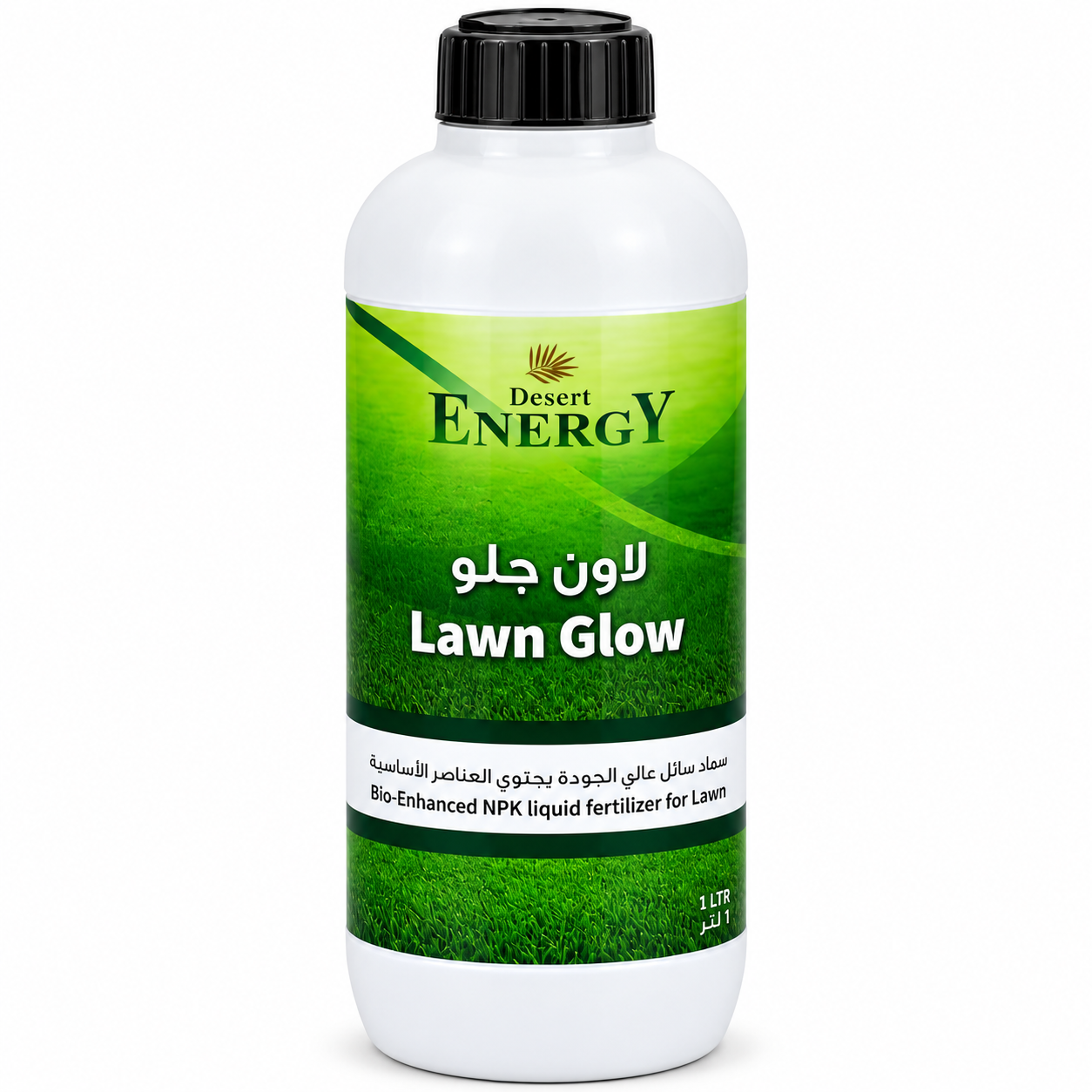
- Mix only what you will use that day. Never guess tank mix compatibility with pesticides or other feeds; the Lawn Glow page itself says not to mix it with other chemicals unless compatibility is confirmed.
- Apply as a normal watering until a little drains from the pot, then empty the saucer. UC Garden Web warns that water left standing in a saucer can carry salts back into the mix.
- Write it down. Date, product, rate and which plants. Check the note before feeding again.
Worked doses for 1 L, 5 L and 16 L
Every figure below is calculated only from the rate printed on that product’s page. Multiply the per litre rate by the litres you are mixing; for rates given per 10 litres, divide by 10 first.
| Product (page rate) | 1 L hand bottle or can | 5 L watering can or sprayer | 16 L knapsack or large can |
|---|---|---|---|
| TaraVert EVO 7 (10 to 20 ml per litre) | 10 to 20 ml | 50 to 100 ml | 160 to 320 ml |
| Desert Energy Lawn Glow (50 to 100 ml per 10 litres, so 5 to 10 ml per litre) | 5 to 10 ml | 25 to 50 ml | 80 to 160 ml |
| Mango Feed, fertigation rate (5 ml per litre) | 5 ml | 25 ml | 80 ml |
| Schultz 8-14-9, every watering (7 drops per US quart) | 7 drops | 37 drops | 118 drops |
| Schultz 8-14-9, less frequent feeding (up to 14 drops per quart) | 15 drops | 74 drops | 237 drops |
| Schultz Cactus Plus (7 drops per quart) | 7 drops | 37 drops | 118 drops |
How the drop figures are worked: 5 litres is 5.28 US quarts, so 5.28 x 7 = 37 drops; 16 litres is 16.9 quarts, so 16.9 x 7 = 118 drops. Counting over a hundred drops is impractical, which is a sign that the Schultz bottles are made for a jug of water for houseplants, not for a knapsack. Start at the low end of any range the first time, and only move up if the plant is growing well and the leaves show no tip burn.
The Mango Feed page also gives “1 cap per 3 L of water” for ordinary watering but does not say how much the cap holds, so we have only used its millilitre fertigation rate. Measure the cap with a syringe before using the cap method.
Feeding a lawn evenly
The Lawn Glow page gives a dilution but no coverage, so it does not say how many square metres 10 litres of mix should cover. To feed evenly, check your own spread first: fill your can or sprayer with plain water and walk the lawn at a steady pace, noting the area it covers before it runs dry. Then mix the same volume with Lawn Glow and walk the same pattern. Water lightly afterwards, as the page directs. For how much nitrogen a Bermuda lawn needs over a year and when, see our UAE lawn care guide; Lawn Glow’s page lists no NPK percentages, so it cannot be converted to grams of nitrogen per square metre.
Pots: how much solution per pot
Give the mixed feed as a normal watering: enough that a little water drains from the bottom, then empty the saucer. How much that takes depends on the pot size and how dry the mix was, so watch for the first drips rather than pouring a fixed amount. If you are feeding 20 pots, a 5 litre can at the Schultz every watering rate (37 drops) or a TaraVert mix at 50 ml is a sensible batch, and you can mix a second can if needed rather than making too much.
Root feeding and foliar feeding are different
A liquid feed is not automatically a leaf spray. Use it on foliage only when the product directions allow that route. The TaraVert page lists both soil and foliar use; the Schultz 8-14-9 page says to water at the base and avoid wetting the leaves; the Vegetable Booster and Flower Enhancer RTU sprays are foliar only.
UConn Extension’s foliar fertilization fact sheet (Pettinelli, revised 2023) is clear about the limits. Foliar feeding is “not a substitute” for adequate nutrients in the soil. It works best as a short term fix for micronutrient shortages such as iron, and it is not practical as the only source of nitrogen, phosphorus or potassium, which plants need in large amounts. Nutrients enter through the waxy cuticle and the leaf pores (stomata), on both leaf surfaces. Concentrated sprays, nitrogen especially, can burn foliage, and UConn notes that foliar products are often less concentrated than soil applications, so check the label for a separate foliar rate.
University of Missouri guidance (Trinklein, 2014) adds that uptake varies between species because of cuticle thickness and stomata, that macronutrient sprays are less effective and burn more easily, and that weaker concentrations applied more often are safer than strong ones applied less often. Missouri suggests spraying when the air is about 22 C (72 F), early in the morning or late in the evening for summer crops.
How to spray, from UConn: use a fine mist, cover the undersides of the leaves, spray until droplets just begin to drip, and test a new product on a small section of leaves first. In practice, on a UAE balcony that means spraying before the sun reaches the plants, never at midday, and waiting a day to check the test leaves for scorched edges. A small trigger sprayer or a 5 litre pressure sprayer suits this job; our garden sprayer guide covers the choice and cleaning, and a sprayer used for weedkiller should never be used for feeding.

Hose-end feeders and drip systems
A hose-end feeder draws concentrate into the water stream as you water, so there is no hand mixing. The Miracle-Gro LiquaFeed page says its refill works only with the LiquaFeed feeder, gives a 12-4-8 analysis with micronutrients, and says to feed every 7 to 14 days. It suits a villa with many beds and pots on one hose run. The trade off is control: the page gives no dilution ratio, so you cannot work out the strength, and every plant along the path gets the same feed whether it needs it or not.
For drip and fertigation, follow the product’s fertigation rate where one is given (Mango Feed gives 5 ml per litre; Lawn Glow lists fertigation as a method). Run plain water for a few minutes after feeding so concentrate does not sit in the lines, and clean the filter and flush the laterals as your system’s maker advises.

Comparing the liquid feeds we stock
All figures are as printed on each GreenAsh product page on 10 November 2026. Fertilizers do not carry a harvest interval in the way pesticides do, and none of these pages states one.
| Product | Analysis on page | Pack | Use | Rate on page | Harvest interval on page | Suits |
|---|---|---|---|---|---|---|
| TaraVert EVO 7 | N 7%, P 3%, K 5%, with Mg, Fe, Zn | 1 L concentrate | Soil drench or foliar | 10 to 20 ml per litre, every 15 days | None stated | Mixed beds and pots, vegetables, fruit trees |
| Desert Energy Lawn Glow | N, P, K, Fe, Zn, Mn, Cu named; no percentages | 1 L concentrate | Lawn, by can, sprayer or fertigation | 50 to 100 ml per 10 litres, every 2 to 3 weeks in active growth | None stated | Bermuda, paspalum, ryegrass and zoysia lawns |
| Schultz Plus 8-14-9 | 8-14-9 with micronutrients | 118 ml with dropper | Root watering, avoid wetting leaves | 7 drops per US quart each watering; up to 14 for less frequent feeding | None stated | African violets and flowering houseplants |
| Miracle-Gro LiquaFeed kit | 12-4-8 with micronutrients | About 475 ml refill plus feeder | Hose-end, over plants and soil | No dilution given; every 7 to 14 days | None stated | Villas with many beds on one hose |
| Organic Based Mango Feed | N 4%, P 10%, K 18%, humic acid 10%, organic matter 30% | 1 L concentrate | Watering or fertigation | 5 ml per litre by fertigation; 1 cap per 3 L (cap size not given); twice a month | None stated | Mango, fruit trees and fruiting vegetables |
| Schultz Cactus Plus | 2-7-7 with micronutrients | 118 ml | Root watering | 7 drops per quart each watering | Not applicable (ornamental) | Cacti, succulents, jade, aloe |
| Grow Fast Liquid 4-1-2 + TE | N 4%, P 1%, K 2% plus trace elements | 1 L concentrate | Not stated | None on page; refers to the original packaging | None stated | General feeding, once you have the pack label |
| RTU Vegetable Booster | N 0.27%, P 0.07%, K 0.31%, Mg 0.03% | 250 ml ready to use | Foliar only | No dilution; repeat as required | None stated | A few vegetable or herb pots |
We have not boxed Grow Fast 4-1-2, although many people search for it by name, because its page gives no rate, interval or list of plants; follow the label on the bottle you receive, and do not borrow a rate from another product. The Mango Feed has a useful high potassium analysis for fruiting plants but its everyday cap measure is undefined. The two ready-to-use sprays are easy for a balcony but carry very little fertilizer per bottle and are foliar only.
A UAE feeding timeline
A calendar is only a reminder. Feed according to growth: new leaves, buds and runners mean the plant can use nutrients.
- October and November. Planting season. Seedlings and new transplants need roots before feed: Minnesota Extension suggests starting regular feeding 2 to 6 weeks after planting into containers, depending on the mix and growth. Pots of petunias, vegetables and herbs started now can move to a low, regular liquid feed once they are growing away. Leach any pots that came through the summer with a white crust before you start.
- December to February. Cool, bright and the main growing window for vegetables, annuals and herbs. This is when liquid feed does most good in beds and pots. Indoors, plants in dim rooms away from windows may slow down; Nebraska Extension notes that plants in very bright windows keep growing and can be fed as active plants.
- March and April. Fruiting vegetables such as tomatoes and peppers are setting fruit; a feed with more potassium than nitrogen suits them. As temperatures climb, move feeding to early morning, and keep foliar sprays to the coolest hours.
- May to September. Peak heat. Pots dry fast and salts concentrate quickly. Some ornamentals slow down in the hottest weeks, so feed less, and never feed a pot that is wilting at midday until it has been watered and recovers. Warm season lawns such as Bermuda keep growing through the hot months, which is when the Lawn Glow page’s “active growth” interval of 2 to 3 weeks applies, always watered in and applied in early morning or late afternoon as the page says.
Villa, balcony and farm
- Villa gardens: beds of sandy soil respond best to compost plus a slow release granule; save liquid feed for pots, the lawn and fruiting vegetables. A hose-end feeder saves time but treats every plant the same.
- Balconies: small pots, wind and reflected heat from walls and glass mean daily watering and fast leaching. A weak feed with watering, plus leaching every few months, is easier to manage than strong feeds. Check that drainage water is not dripping onto the balcony below.
- Farms and large plots: fertigation through drip is the efficient route. Use rates written for fertigation, follow your injector maker’s instructions on where it connects, and flush the lines with plain water afterwards.
Check drainage and salt build-up
Fertilizer salts accumulate in pots. UC’s soluble salts page and Nebraska Extension’s houseplant fertilization guide (Browning, 2021) list the same warning signs: a yellow to white crust on the surface, a white ring at the rim or drainage hole, brown leaf tips, small new growth, dropping lower leaves and wilting. These signs can have other causes, but if you have been feeding regularly, assume salt until proven otherwise.
The leaching method both sources give:
- Scrape off any crust, removing no more than about 6 mm of mix. UC advises not to add fresh mix on top.
- Stand the pot in a sink, bath or on open ground where water can drain freely.
- Slowly pour through plain water equal to twice the pot’s volume. A 5 litre pot needs about 10 litres. Nebraska Extension notes that using more water is harmless but using less is not recommended.
- Let it drain completely and empty the saucer. Let the mix dry to its normal level before the next watering.
- Repeat at least every 4 to 6 months as routine, sooner if the crust returns. If salt levels look extreme, UC suggests repotting.
If the pot does not drain, leaching makes things worse. Clear the drainage hole or repot first. Minnesota Extension also notes that waterlogged mix in a full drip tray loses nitrogen to the air through denitrification, so a pot standing in water can look hungry and be overfed at the same time.
Common mistakes and what to do instead
- Doubling the dose “to catch up”. A stronger mix raises the salt load around the roots and can burn leaf tips. Stay within the label range and feed again at the stated interval.
- Feeding a dry or wilting plant. Strong solution meets stressed roots. Water first, let the plant recover, then feed.
- Using a cap or spoon from another product. Rates are tied to that product’s concentration. Use the measure the label defines, or a syringe.
- Spraying leaves at midday. UConn and Missouri both warn that fertilizer plus heat and sun damages tissue. Spray in the cool early morning or evening, or feed the roots instead.
- Treating every yellow leaf as hunger. Yellow new leaves with green veins usually point to iron, and wet, soft roots point to drainage. Use the diagnosis table first.
- Stacking feeds. Potting mix with slow release fertilizer, plus granules, plus a weekly liquid feed, adds up. Count what is already in the pot before adding more.
- Leaving saucers full. Salts are carried back into the mix. Empty saucers after watering.
- Mixing a full knapsack for three pots. Mixed feed left in a hot sprayer is wasted and is hard to dispose of properly. Mix to the job.
Troubleshooting: if feeding did not work
- No change after two or three feeds. The problem is probably not nutrients. Check light, roots, drainage and pests, and for alkaline soil or hard water consider iron.
- Brown leaf tips appeared after you started feeding. Stop, leach the pot, then restart at the lowest label rate or at a longer interval.
- Burnt spots after a foliar spray. Rinse the leaves with plain water, remove badly damaged leaves, and switch to root feeding or spray only in the coolest hour.
- A lawn turns patchy or striped after a liquid feed. Uneven walking speed or overlapping passes. Recheck your coverage with plain water and water the lawn well.
- Drippers blocked after fertigation. Flush the lines with plain water after each feed and clean the filter.
When to stop and get help: if a valuable tree or palm keeps declining despite correct watering and feeding, or several plants in different pots show the same damage, have the soil and irrigation water tested by a laboratory before buying more fertilizer. Persistent problems on a farm call for a soil and water test and advice from an agronomist.
Safety, storage and disposal
- Protective equipment. We advise chemical resistant gloves and safety glasses when measuring and pouring concentrates. The Lawn Glow page says to avoid contact with eyes and skin, and the Mango Feed page says to wear gloves and that skin contact may cause irritation. Wash hands after use.
- Edible crops and harvest. None of these product pages states a harvest interval. Use only products whose pages list your crop (Lawn Glow is a lawn feed), feed the soil rather than the leaves of crops close to picking, and wash produce before eating.
- Children and pets. Keep children and pets off a freshly fed lawn until it has been watered in and the surface has dried. Store bottles where children cannot reach them, as the Lawn Glow, Schultz 8-14-9 and LiquaFeed pages ask.
- Bees and wildlife. Fertilizers are not insecticides, but do not spray open flowers while bees are working them, and keep feed out of birdbaths.
- Fish and water. Never mix or rinse equipment beside a fish pond, and do not let runoff reach drains or ponds; nutrients in water feed algae.
- Storage. Keep the product in its original labelled bottle, tightly closed, in a cool, shaded place; the Lawn Glow page says away from direct sunlight and the LiquaFeed page says upright. A car boot or a sunny store room in summer is no place for it.
- Disposal. Use leftover mix on other plants at or below the label rate rather than pouring it into a drain. Rinse empty bottles three times into the watering can and use the rinse water as feed, then dispose of the bottle with household waste unless your municipality says otherwise. Wash sprayers after each use, as the Lawn Glow page advises.
Frequently asked questions
Can I double the strength for faster growth?
No. A stronger solution adds more salt around the roots and raises the risk of tip burn, especially in hot, fast drying pots. If a plant needs more, feed at the label rate a little more often within the label’s interval, or switch to a weak feed with every watering.
Should every watering include fertilizer?
Only if the product is designed for it. Schultz 8-14-9 is written for 7 drops per quart at every watering; TaraVert is every 15 days and LiquaFeed every 7 to 14 days. Keep plain watering separate from feeding with those.
Is liquid fertilizer better than granular?
It is faster, not better. Liquid suits pots, quick corrections and fertigation. Granular and slow release products suit beds and long gaps between feeds. You can use both, as long as you count the total.
How often should I use liquid fertilizer in UAE summer?
Less often for potted ornamentals that slow down in peak heat, and always in the cool of the morning. Warm season lawns are the exception, as they grow through summer. Leach pots more often in summer, because salts build up faster.
Can I use a lawn feed on vegetables?
Do not assume so. Lawn Glow’s page lists lawn grasses only. Choose a product whose page or label covers vegetables, such as TaraVert, Mango Feed for fruiting crops, or the RTU Vegetable Booster.
Can liquid and slow-release feeds be used together?
Yes, with care. Minnesota Extension notes that pots with slow release fertilizer still lose nutrients with watering, so a weak liquid top up can help fast growers. Start at the low end of the liquid range and watch for tip burn.
Can I spray liquid fertilizer on leaves in the heat?
Not in the heat of the day. Use only products whose label allows foliar use, spray early morning or evening, and test a few leaves first. Foliar feeding helps with micronutrients but will not replace root feeding for nitrogen, phosphorus and potassium.
How do I measure drops for a big watering can?
Work in quarts: one US quart is 0.946 litres, so a 5 litre can holds 5.28 quarts and needs 37 drops at 7 drops per quart. For anything bigger, a product with a millilitre rate is easier to measure.
Before your next feed
Check that the plant is growing, water first if it is dry, choose a product whose label covers the plant, and measure the rate for your can using the tables above. Browse our liquid fertilizers, and if you are not sure which format suits your plants, send us a photo of the plant and your watering setup and we will help you choose.
