
Blog
Palm Fertilizer in the UAE: What Yellow Fronds Tell You Before You Buy

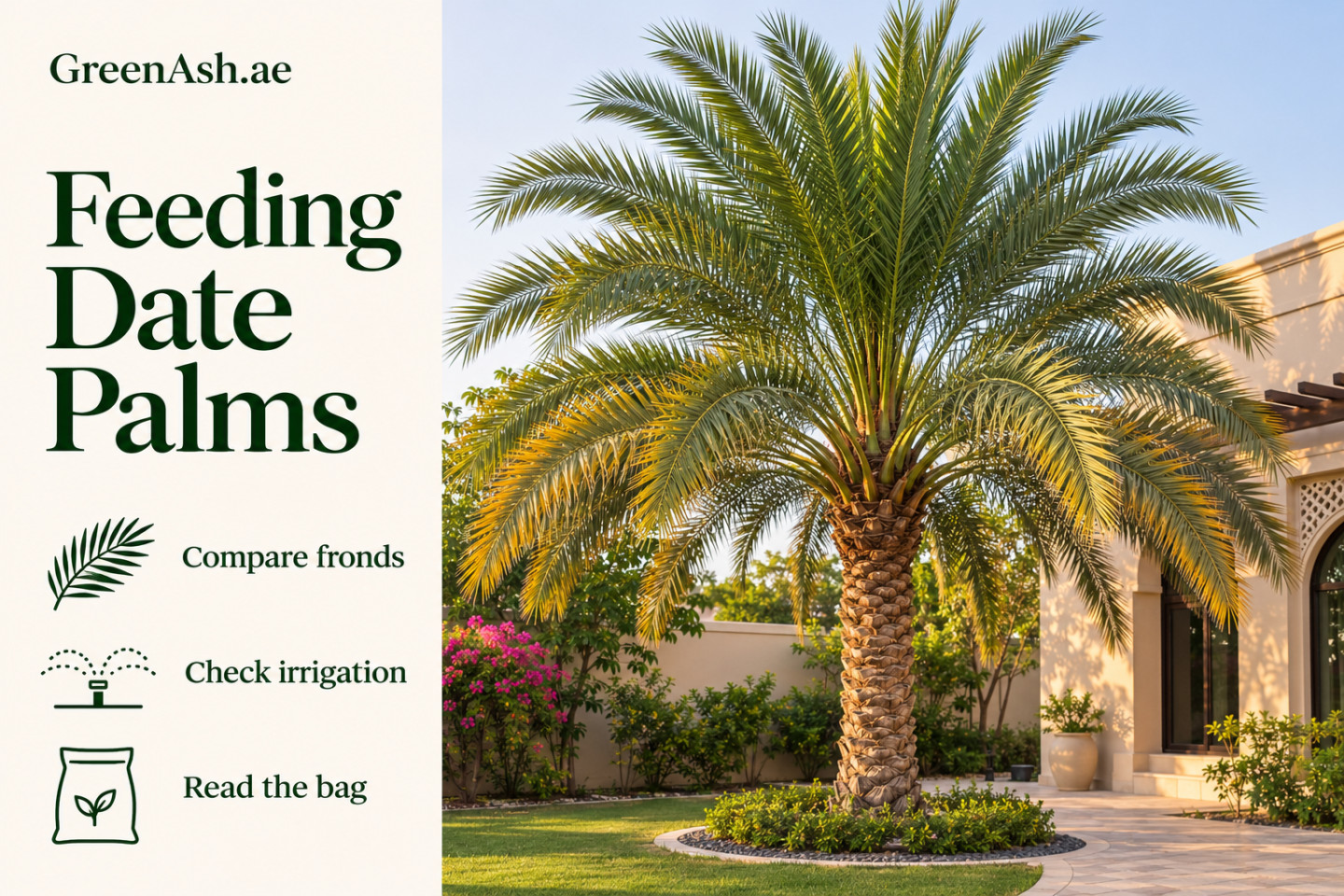
Before buying fertilizer for a yellowing date palm, step back far enough to see the whole crown. Are the bottom fronds changing colour while the centre is opening green? Or is the newest growth pale while the older leaves look sound? Those two photographs can lead to quite different buying decisions, even for two palms in the same UAE courtyard.
Read the crown before choosing a palm fertilizer
| Where the change starts | What to look for | What to do next |
|---|---|---|
| Oldest, lowest fronds | Orange or translucent spots, with dead leaflet tips towards the end of the frond, can indicate a potassium shortage. | Keep partly green fronds in place. Note whether several lower fronds share the pattern and check what fertilizer the palm and nearby lawn have received. |
| Older or middle fronds | Broad yellow bands on the margins with a distinctly green centre suggest magnesium deficiency. Both patterns can occur on a single date palm. | Photograph the full frond as well as the tips. Check whether the current feed declares magnesium before adding a separate supplement. |
| Newest leaves in the centre | Pale or distorted emerging leaves point to a different problem. A close-up of an old brown tip will miss it. | Check for standing water, a change in soil level around the trunk or a recent transplant. Have persistent symptoms identified before choosing a nutrient correction. |
The University of Florida’s photographs of magnesium deficiency in palms show the yellow margins clearly, including how potassium damage can appear on the same frond. Use the pictures to compare patterns. A feeding rate developed for a Florida landscape cannot establish the right dose for a UAE garden.
Check the ground the roots actually occupy
In a villa garden, one side of the palm may face an irrigated lawn and the other a paved drive. Run the usual irrigation cycle and look at where the water lands. A blocked emitter or a wet patch confined to one side deserves attention before you spread granules. If a landscaping team feeds the lawn, ask for the product name, date and area treated. The palm’s roots can share that ground. Our guide to testing a drip line explains how to compare emitters.
Compare the analysis and the bag size separately
GreenAsh lists two granular products with the same first and third NPK numbers. The differences worth checking are the phosphate figure, the magnesium declaration, the pack size and the directions for your planting.
| Product | What the listing tells you | Buying consideration |
|---|---|---|
| Palm Magic for date palms | 5 kg, NPK 12-8-24. The listing names magnesium and trace elements. | The smaller pack is worth comparing for a single landscape palm. Check the bag directions for its age and establishment stage. |
| Palm Secrets palm fertilizer | 25 kg, NPK 12-6-24. The listing declares 2% MgO and lists trace elements. | For several palms, work out the total product weight needed from this bag’s own instructions before committing to the larger sack. |
Read the middle number as phosphate and the third as potash. For an equal product weight, the two listings declare the same nitrogen and potash percentages. The 25 kg sack holds five times the material in the 5 kg bag. Its size tells you how much you are buying, not how much one palm needs. For help interpreting these units, see our guide to NPK numbers.
Plan the application and the follow-up
- Record which palm you intend to feed and whether it is established in the ground, newly planted or in a container. Use pack directions that cover that situation.
- Measure the quantity for one application separately from the total you plan to buy. Spread it over the area specified on the pack and follow its watering instructions. Keep granules off paving and out of drains.
- Take a dated photograph of the crown from a fixed spot. On the next visit, compare the leaves that have opened since. Brown, dead tips on an old frond will remain brown even if the condition improves.
Frequently asked questions
Should I cut off the yellow bottom fronds before feeding?
Leave partly green fronds on a palm with suspected potassium deficiency. The palm can still draw potassium from them, and removing them can accelerate decline. If high fronds need attention near a path or seating area, have a qualified arborist assess them from a safe position. The UF/IFAS palm nutrient guide illustrates how the location of damage helps distinguish deficiencies.
Can I use a fraction of the per-tree rate on a balcony palm?
A short palm in a pot and a young date palm planted in open ground can be the same height but have very different root volumes. Look for container-specific directions, including the pot size or volume. If the pack gives only an in-ground tree rate, choose a feed with clear container instructions or get advice for that palm.
What should I take to the supplier if I’m unsure?
Bring a whole-crown photo, a close-up of the affected frond and a photo of the newest growth. Add the species if known, the last fertilizer label and a note about watering or recent landscaping. For palms grown for a date harvest, ask an agronomist to interpret the crop’s feeding history and any leaf, soil or irrigation-water analyses before ordering for the whole planting.