
Blog
Mealybugs and Scale Insects in UAE Gardens: How to Identify and Remove Them

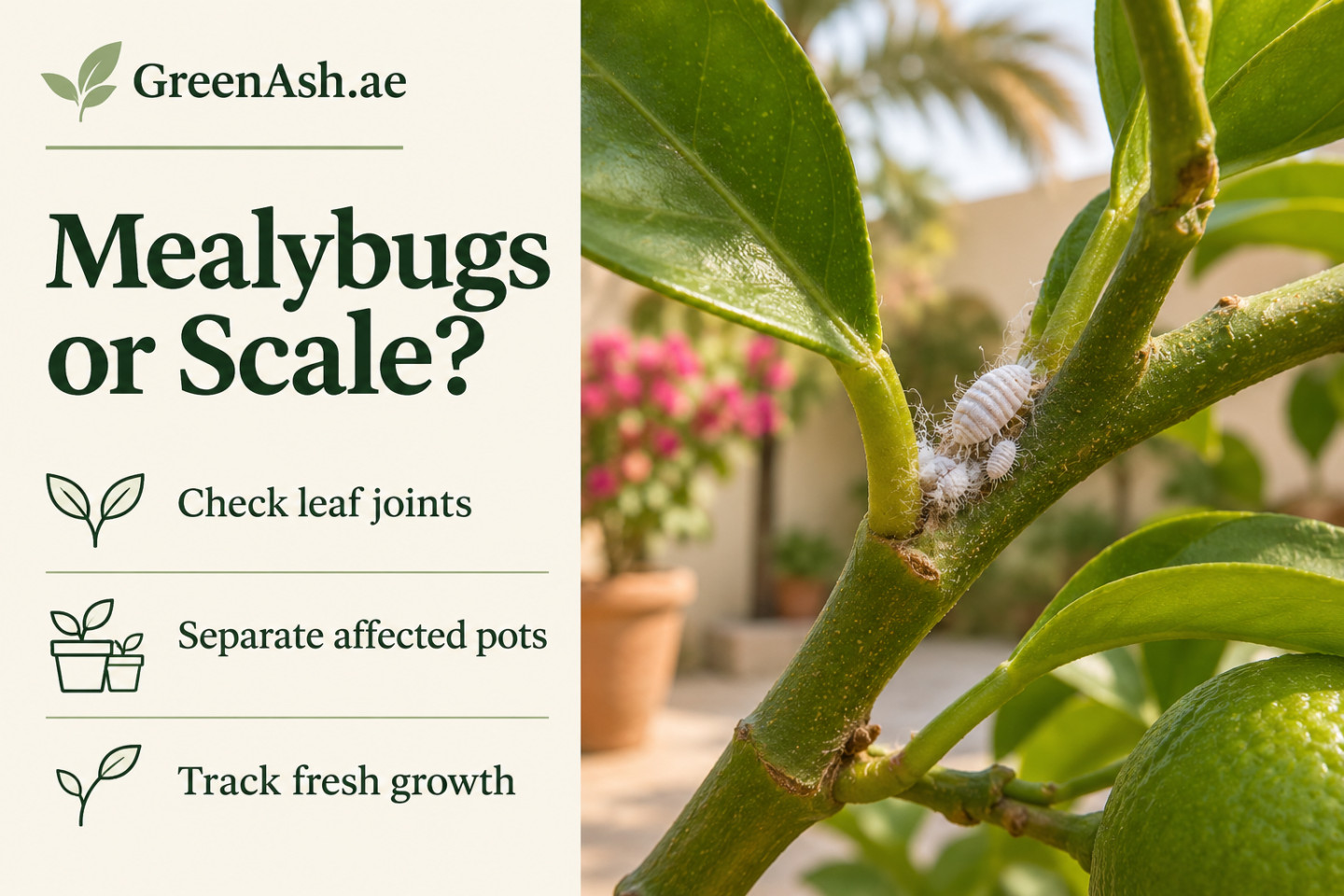
If the tiles under your potted lemon tree feel sticky, look up before you clean the floor. Turn over a leaf directly above the sticky patch and follow its stem back to a fork. What you find there can tell you whether to rinse a few mealybugs off, trim an infested shoot or simply keep watching. A close-up photo taken today is more useful for that decision than a bottle chosen by the colour of the pest.
How to tell mealybugs from scale insects
| What you find | What to check next |
|---|---|
| White tufts where a leaf joins a stem or two fruits touch | Use a hand lens or your phone camera. An oval, segmented insect with a fringe of white wax suggests a mealybug. Fluff alone is insufficient for identification. |
| Brown, domed bumps along a twig or leaf vein | Look below for sticky droplets. Soft scales produce honeydew, and their covering is part of the body. Ants visiting the droplets can lead you to the colony. |
| Small, flat, shell-like discs | Gently lift the edge of one cover. A separate insect underneath suggests armoured scale. These insects produce no honeydew, so a clean patio can still have an affected plant above it. |
Sticky leaves can also come from aphids. If the shoot tips carry clusters of soft, pear-shaped insects, compare them with the photos and guidance in our UAE aphid guide. Avoid removing every waxy insect you see. A larger, shaggy white larva moving through a mealybug colony may be a predatory ladybird feeding there.
What to do on a balcony or in a villa garden
- Separate touching pots. Move an affected pot far enough that its foliage clears its neighbours. Check adjoining leaves, support stakes and pot rims before rearranging the balcony. Give new nursery plants the same inspection before placing them in the group.
- Match the tool to the patch. On a small houseplant, lift off a few visible mealybugs with a damp cotton bud. On a sturdy outdoor hibiscus, support the shoot and rinse exposed clusters with water. An adjustable nozzle such as the Beorol GPP9 lets you start gently. Check a single shoot first and keep the runoff away from neighbouring pots.
- Trim selectively. If almost all the insects are on one twig, hold a bag beneath it and cut just that twig with clean bypass pruners. Bag the clipping before carrying it through the garden. Where insects are scattered across a healthy shrub, stripping the canopy costs the plant sound foliage.
- Follow the ants. Watch where they reach the plant. On a balcony, a leaf resting against a wall or railing can give them a route to the honeydew. Move the pot to break that bridge. Outdoors, ants can drive away predators that would otherwise feed on the colony.
How to tell whether the infestation is spreading
Photograph one affected shoot and one clean shoot on the same plant. Wipe a sticky leaf below the colony and note the date. Recheck those same spots the following week. Fresh droplets suggest a honeydew producer is still feeding somewhere above. New insects on the previously clean shoot are stronger evidence of spread than old wax left on the first one.
Scale covers can stay attached after the insect dies. A neat round exit hole in a cover is evidence that a tiny parasitic wasp has emerged. If you find many empty covers, healthy new leaves and no expanding patches, continue observing. If live insects are spreading to fresh shoots or branches are dying back, take close-ups and a whole-plant photo for identification. For a tall palm or a tree with damage beyond reach, arrange an on-site inspection.
Questions before buying a treatment
Does black sooty mould need a fungicide?
When the dark coating sits on sticky leaves beneath a colony, it can be mould growing on honeydew. Wipe a small patch with a damp cloth and inspect the growth above it. Cleaning makes fresh deposits easier to spot. Lasting improvement depends on finding the source of the honeydew.
Can I use the same spray on a hibiscus and a fruiting lemon?
Check the actual pack before buying. Look for the pest, the crop and the permitted use site. For fruit you intend to eat, also read the harvest instructions. An ornamental use on the pack does not establish a use on citrus. On a sun-exposed UAE terrace, check any temperature and plant-stress restrictions against conditions where the pot stands. Our guide to reading an insecticide label explains what else to check.
What if the bumps are still there after cleaning?
Take a close look at a few bumps on different shoots. Empty covers and old marks can persist. If you find live insects under covers on previously clean growth, save a photo of both the cover and what was beneath it. That gives a plant specialist more to work with than a picture of a yellow leaf.
For identification photographs, see the University of California Statewide IPM Program’s field guides to mealybugs and scale insects.