
Blog
Damping Off in UAE Seed Trays: Why Seedlings Collapse and How to Start Again

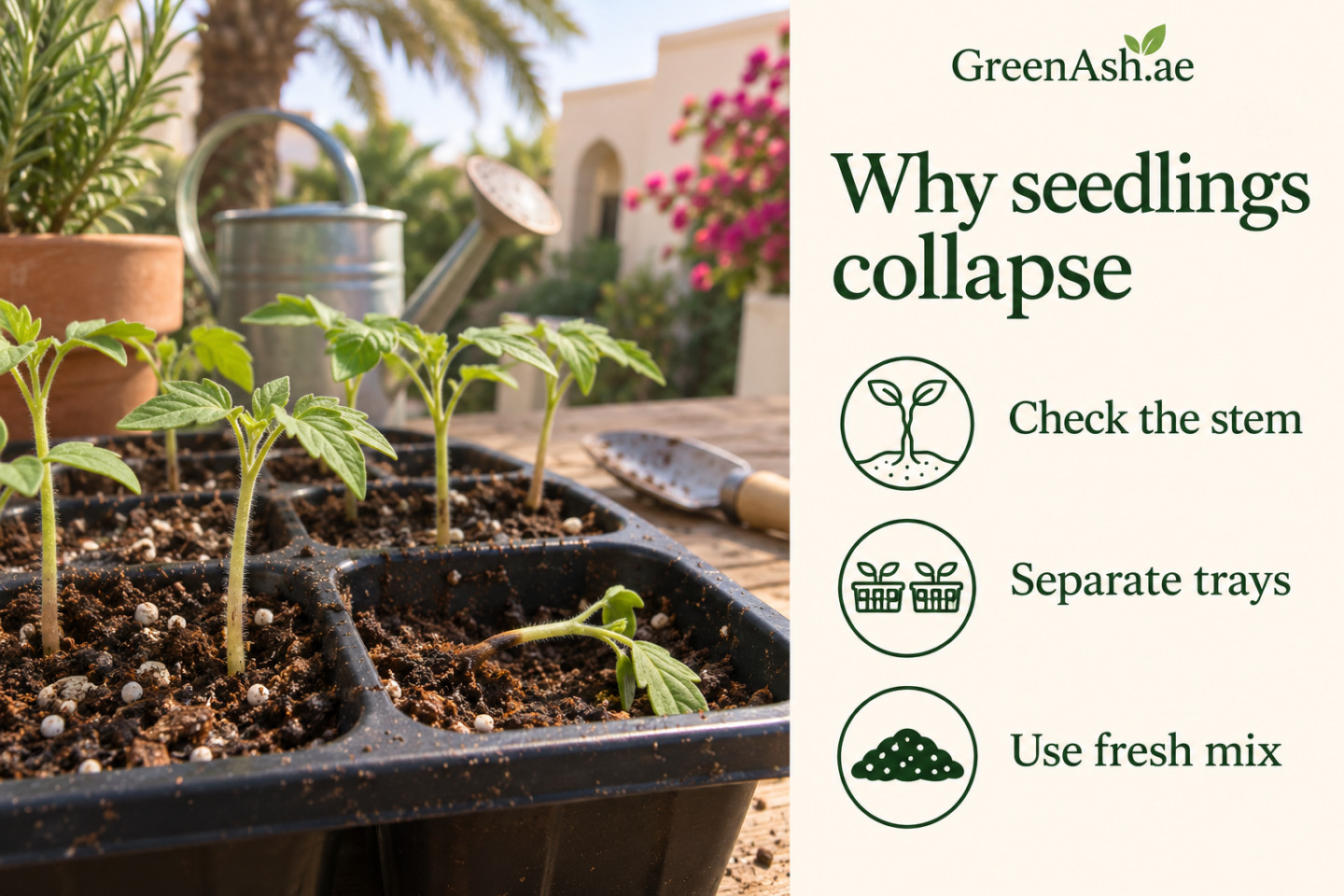
A tomato seedling can fall over while its first leaves are still green. Look where the stem meets the mix. If it has narrowed to a soft, thread-like section that can no longer hold the leaves up, suspect damping off. Move the tray out of any shared watering dish before checking the rest of the seedlings. That one step matters because contaminated water can carry the organisms from one tray to another.
Read the stem and the pattern in the tray
Damping off is a group of seedling diseases. Seeds can decay before they emerge, or the stem and roots can rot soon after emergence. A gap in a row, on its own, tells you little. A patch of seedlings with damaged stem bases gives you more to go on.
| What you see | What to check next |
|---|---|
| Several seedlings have toppled in neighbouring cells. | Look at a fallen stem at mix level. A water-soaked or pinched base supports a suspicion of damping off. Check the next standing seedling and note whether the patch grows. |
| Long, pale seedlings lean towards the balcony door. | If their bases are firm and intact, investigate light and crowding. A leaning stem alone is weak evidence of rot. |
| Nothing came up in one row. | Check the packet’s germination window and sowing depth. Gently uncover a seed from a failed cell. A decayed seed is a clue, but poor emergence alone cannot identify a pathogen. |
| The entire tray wilted after a move into direct sun. | Check moisture below the surface, heat exposure and the timing of the change. On a UAE terrace, compare cells beside the sun-facing wall with those in the sheltered middle before deciding the problem is infectious. |
What to do with a collapsing tray today
- Separate the water. Put the suspect tray on its own clean support. Keep its drainage away from other batches. If you water from below, use a separate dish and fresh water for each batch.
- Remove collapsed seedlings and their plugs. A stem that has rotted through will not recover if you stake it or bury it deeper. Keep the discarded mix away from clean trays. Work on healthy seedlings first and clean your hands and tools after handling the affected batch.
- Decide whether to resow. With one affected plug, you can keep the tray separate and monitor its neighbours. If new patches keep appearing in a small home tray, discard that batch and restart in a clean container with fresh mix. Moving apparently healthy plugs from the same tray straight into a new one risks carrying the problem across.
Set up the next sowing
Choose a clean container with open drain holes. Scrub old mix out of reused cells, especially the corners and underside. If disinfecting a reusable tray, follow the disinfectant’s directions for suitable surfaces, contact time and rinsing. A new tray is a practical option when narrow cells still contain debris. Clean the saucer and the bench as well.
Use fresh seed-starting mix. Garden soil and mix from a failed tray can introduce organisms into the next batch. Look for a fine-textured medium intended for sowing, such as Gardener’s Seed Starter Potting Mix. Use a clean scoop, close the bag afterwards and keep it off the floor. A fresh bag loses its advantage if the scoop goes straight from a diseased tray back into it.
Leave room and check moisture before watering. Follow the packet’s depth and spacing instructions. Water gently so seeds stay in place, keep the mix evenly moist during germination and allow surplus water to drain. A tray indoors beside a bright window may dry at a different speed from one on a breezy terrace. Check them individually even if both were sown on the same day. For crop-specific nursery guidance, see our guides to starting tomatoes and growing peppers and chillies in the UAE.
Frequently asked questions
Does watering from below prevent damping off?
It can help you water gently, but a communal reservoir gives contaminated water a route between trays. Keep batches separate, let each drain and avoid transferring used water to another tray.
Should I buy a fungicide for a few fallen seedlings?
For a small home sowing, start by inspecting the stems and correcting the tray setup. Several organisms can cause similar damage, and a fungicide cannot rebuild a collapsed stem. For repeated nursery losses, seek a plant diagnostic service’s advice before selecting a treatment.
What information helps if the next batch fails too?
Keep the seed packet and note the sowing date, mix, watering method and where each tray stood. Photograph the whole tray and a stem at the mix line as soon as damage appears. A record of which cells failed first is more informative than a photograph taken after every seedling has fallen.
For symptom photographs and further prevention guidance, see the University of Minnesota seedling guide and Penn State’s damping-off guide.
