
Blog
Fungus Gnats in UAE Houseplants: Find the Source and Fix Wet Pots

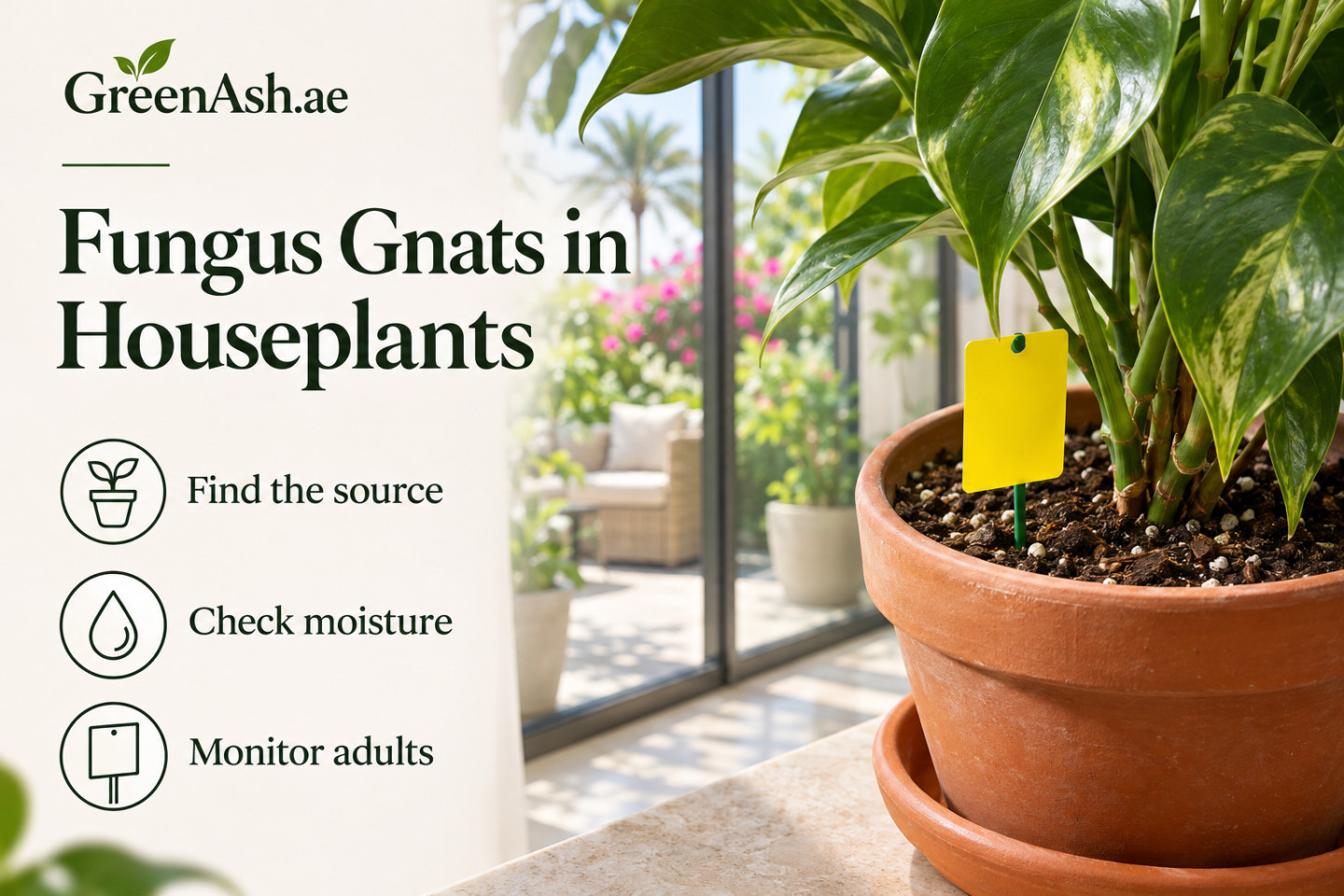
Tiny dark flies lifting off a houseplant when you water it often point to fungus gnats. Before buying a spray, watch the potting mix. The adults you see may be coming from a damp pot beside your desk, while the immature stages remain below the surface.
For UAE apartments and villas, start with the conditions around each indoor plant. An outdoor watering routine can be a poor fit for a pot kept indoors. Check the mix and drainage before watering again.
Confirm that the flies are coming from a pot
Adult fungus gnats are small, dark, delicate flies with long legs and antennae. They often walk over the mix or hover close to pots and windows. Their larvae are pale, slender and legless, with a dark head. Adults are mostly a nuisance, while large larval populations can damage roots, especially on young plants. The UC IPM fungus gnat guide has identification photographs.
Watch each pot during its next necessary watering. Flies running across the surface or up the pot edge can help locate the source, as described by Iowa State University Extension. Number the pots if several look alike and photograph where you see activity. A fly on a window alone gives you much less information.
If activity centres on a sink, investigate that area too. University of Maryland notes that moist debris in drains can also support fungus gnats. If you cannot identify the insect, take a close photograph before choosing a treatment. Its fungus gnat guide explains checking the source.
Correct persistent moisture without drying out the plant
- Check before watering. Allow the surface of the mix to dry between waterings as the plant tolerates. Avoid repeatedly adding a little water to an already moist surface. Seedlings and moisture-loving plants need particular care, so adjust to the plant instead of imposing a fixed number of dry days.
- Inspect the inner pot. Lift it out of its decorative outer container and check for trapped water. Ensure drainage holes are open and empty accumulated drainage water.
- Remove fallen leaves. Clear decaying debris from the mix and clean the saucer. Check nearby damp material and leaks as well.
- Record the next watering. Note whether the surface was dry and whether the pot still felt heavy. Compare the same pot at each check.
Moisture and decomposing material favour fungus gnats, so correcting those conditions is central to management. UC IPM also advises keeping stored potting mix closed and off the ground. A bag left open beside an affected pot deserves attention alongside the plants.
Use yellow sticky cards to follow adult activity
Place a yellow sticky card in the affected container, clear of foliage, following its instructions. Label it with the pot number and date. Compare catches over equal periods and keep the position consistent. Check the other pots at the same time so you can see whether activity is spreading.
Cards capture adults and help track the problem. They cannot reach the larvae in the mix. Wisconsin Extension explains that overlapping life stages can keep adults appearing after changes begin, and management may take several weeks. A quiet day is too little evidence to declare the problem resolved. Read Wisconsin’s houseplant guidance.
When a potting-mix purchase makes sense
If the pot remains persistently wet despite a suitable watering routine and open drainage holes, assess the mix and roots. Repotting into an appropriate fresh medium can be useful when the existing mix has deteriorated. Choose the medium for the plant you are growing.
Perlite is one component used to improve the structure and drainage of potting mixtures. GreenAsh lists Desert Energy Natural Perlite in a 10-litre pack. Consider it when preparing a suitable replacement mix and follow the pack’s handling instructions, including avoiding dust inhalation. It is a growing-medium ingredient, and adding it does not replace the need to correct overwatering.
Before purchasing, note the plant species, pot size, current mix and how long it stays wet. Those details help you choose a suitable medium. If newly emerged seedlings are collapsing, inspect their stems using our damping-off guide rather than assuming the visible flies explain every loss.
Review the result before choosing a treatment
Keep a short record of trap catches, watering and plant condition over the next few weeks. If catches stay high, inspect neighbouring pots, damp stored mix and possible drain sources again. Photograph the insects and the affected plant when seeking advice.
For severe or persistent problems, any pesticide choice must be checked against the actual product label for the pest, plant and indoor setting. A product sold for outdoor insects may have different permitted uses. Our insecticide label guide explains the details to check.
Frequently asked questions
Will vinegar traps solve fungus gnats?
Wisconsin Extension reports that vinegar traps used for fruit flies are ineffective for monitoring fungus gnats. Use identification, pot inspections and yellow sticky cards to guide your next step.
Should I stop watering every houseplant?
Adjust each plant’s watering to its needs. The aim is to remove persistent excess moisture while keeping the roots healthy. Check individual pots rather than withholding water from the entire collection.
Are the little white insects under leaves fungus gnats?
White insects rising from foliage suggest a different identification check. Turn the leaves over and compare them with our whitefly guide. Where the insects live is an important clue.
Why are flies still appearing after I changed watering?
Immature stages already present can continue developing. Follow the trend over several weeks, check every nearby source and reassess if numbers remain high or plant health declines.