
Blog
Growing Radishes in the UAE: Sowing, Spacing and Harvest in Pots

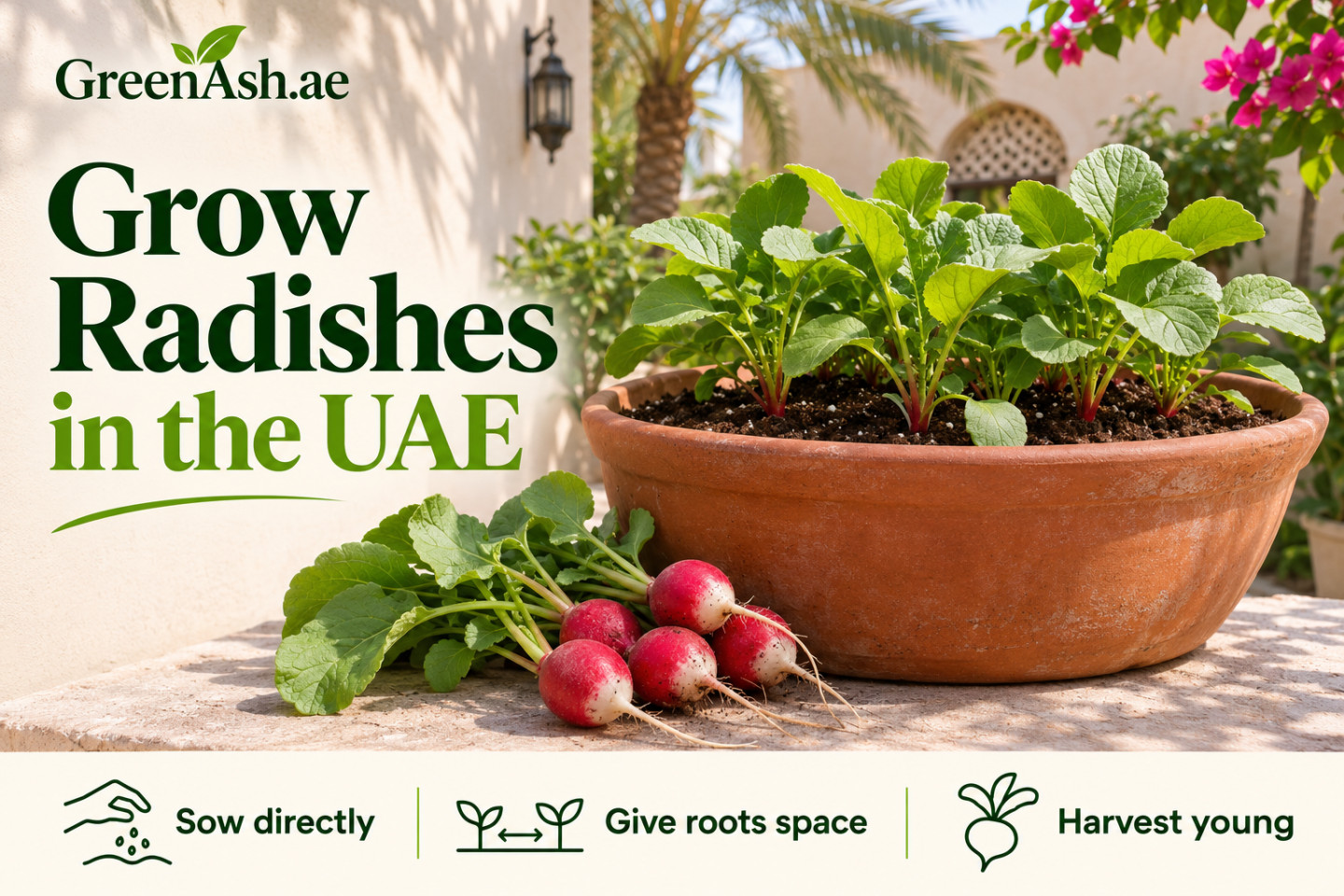
Radishes are a useful crop for a small UAE vegetable bed because you can sow a short row and check the results within weeks. The common disappointment is a mass of healthy-looking leaves with little root underneath. Choosing the right type, leaving enough space and keeping moisture steady gives you a better starting point than adding more fertilizer.
When to grow radishes in the UAE
The Ministry of Climate Change and Environment’s vegetable calendar lists November–December for field planting radish, with a general harvest interval of 40–50 days. Use that as a local seasonal reference and check your variety’s packet for its own timing. The calendar’s nursery column also lists October–November, but for a home crop, direct sowing into the final pot or bed avoids transplant disturbance. See the UAE planting calendar.
Radishes prefer cooler growing conditions. On a balcony, assess the planting position as well as the month. Note when direct sunlight reaches the container and whether a nearby wall makes the spot especially hot. Start with a small sowing if you are unsure how that location performs.
Choose a radish that fits the container
Small, round salad radishes suit a different space from long daikon or mooli types. Long-rooted varieties need deeper, prepared soil and generally take longer. The Royal Horticultural Society recommends a large container at least 30 cm wide and deep for short-rooted salad radishes. Use a suitable container growing mix and a pot with drainage holes. Read the RHS radish guide.
GreenAsh’s catalogue includes Franchi Cherry Belle radish seeds, a round red type. This listing was out of stock when checked on 15 November 2026, so check availability before planning a sowing around it. Compare root shape and packet instructions when choosing an alternative. A fast-maturity statement is a guide to planning, rather than a guaranteed harvest date for every UAE balcony.
Sow a short row directly where it will grow
- Prepare the rooting space. Remove weeds, stones and compacted lumps. For small garden radishes, loosen bed soil at least 15 cm deep. Long types require more depth.
- Mark a short row. For small salad types, sow about 1 cm deep. Follow the packet if it gives different instructions for that variety.
- Leave room for roots. Aim for roughly 5 cm between established small salad radishes. Thin crowded seedlings carefully. Larger varieties need wider spacing.
- Water gently and label. Record the variety and sowing date. Keep the sowing moist while seedlings establish, allowing surplus water to drain.
The University of Minnesota describes shallow direct sowing, loosening the rooting zone and giving small radishes about 5 cm of space. Crowded plants can fail to develop harvestable roots. See Minnesota’s planting guidance.
A practical first trial is one short row. Keep the remaining seed for another sowing and record what emerged. Our vegetable seed storage guide explains keeping opened packets and testing older seed.
Keep moisture steady and avoid unnecessary feeding
Check the growing mix regularly, especially near the exposed edge of a balcony pot. Keep it evenly moist with good drainage. A container in wind and sun may need checking more often than a sheltered bed, so judge the actual mix instead of watering every planting to the same timetable.
Radishes have relatively low nutrient needs. Excess nitrogen can encourage foliage at the expense of the root. Before feeding, check whether the potting mix already contains fertilizer and what you added when preparing the bed. University of Maryland’s guidance emphasises even moisture and avoiding excess nitrogen. Read Maryland’s radish care guide.
Harvest by checking the root
As the packet’s expected harvest period approaches, pull one representative plant. Look at root size and texture before leaving the rest longer. Small garden radishes can mature in around three to five weeks under suitable conditions, while larger types take longer. Delaying harvest can produce woody or pithy roots. Iowa State recommends small repeat sowings every 7–10 days to spread the harvest. See Iowa State’s harvest guidance.
For a small household, label each new row with its own date. If the first batch is still crowding the available space, wait until it is harvested before resowing that area. Record the size and quality at harvest so your next packet choice reflects what worked in your garden.
Troubleshoot before buying another product
| What you see | What to check |
|---|---|
| Large tops with very small roots | Check crowding, recent nitrogen applications and hot growing conditions before adding feed. |
| Cracked roots | Review whether the mix repeatedly dried out and was then heavily watered. Uneven moisture can cause splitting. |
| Woody, pithy or unusually hot roots | Check how long they stayed in the bed and whether the crop experienced heat or drought stress. |
| Uneven emergence | Check seed age, depth and surface crusting. Compare the failed section with the rest of the row before resowing. |
These checks draw on the Minnesota and Iowa State guides above. If seedlings emerge and then collapse at the soil line, inspect the stems using our damping-off guide.
Frequently asked questions
Should I start radishes in a seed tray?
Direct sow them in their final position. Iowa State advises against starting radishes for transplanting because they do not transplant easily.
Can I grow a long white radish in the same pot as a round variety?
Check the long variety’s mature root length, depth and spacing requirements first. A container chosen for small salad radishes may be unsuitable for a large daikon.
Should I feed radishes when the roots are small?
First check spacing, growing conditions and existing nutrients. More nitrogen can increase leafy growth without resolving the cause of poor root development.
Must every radish be ready on the packet’s stated day?
No. Variety and growing conditions affect development. Use the date to begin checking and sample a root before deciding when to harvest the row.