
Blog
Repotting Houseplants in the UAE: Pot Size, Drainage and Aftercare

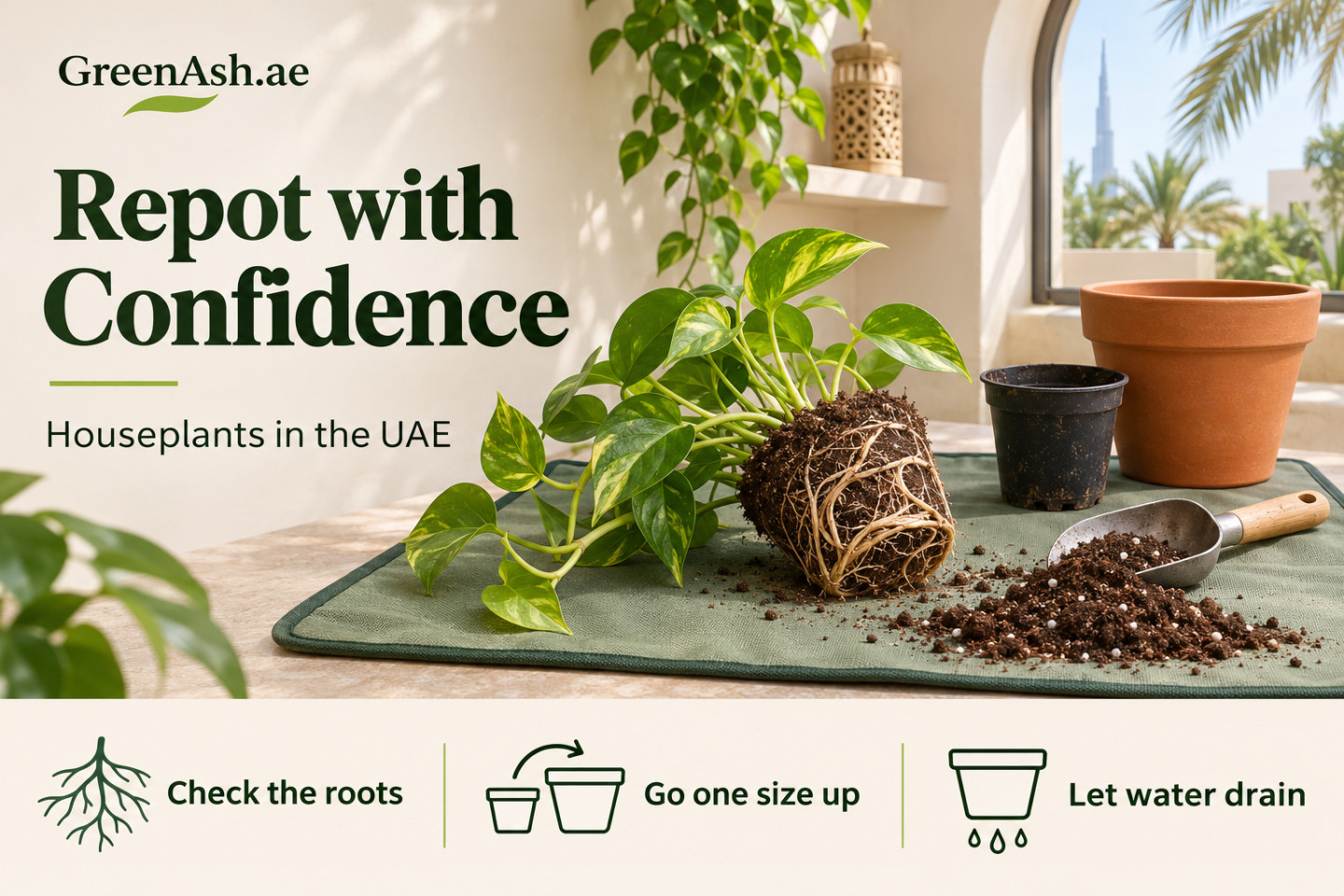
Repotting a houseplant should solve a root-space or growing-medium problem. A larger decorative pot alone is not a reason to disturb a healthy plant. In UAE homes, first separate the needs of a plant beside an indoor window from those of one on an exposed balcony: the same potting change can behave differently in each position.
This guide is for ordinary foliage houseplants grown in potting mix. Orchids, cacti, bonsai and plants grown in water need care suited to their own root systems.
Does your houseplant actually need repotting?
Look for a combination of clues: roots densely filling the container, growth slowing while the plant should be growing, or the mix drying unusually quickly. Old mix that has compacted and drains poorly is another reason to reassess the container. Iowa State’s houseplant guide explains these signs and notes that frequent repotting is not always necessary.
Gently slide the root ball out while supporting it. A few roots near a drainage hole are a prompt to inspect, rather than proof that you need the largest pot available. Photograph the roots and compare how much of the ball is roots versus mix.
| What you find | Next decision |
|---|---|
| A dense mass of circling roots with little free mix | Consider a modest increase in pot size. |
| Plenty of unoccupied mix that stays wet | Check watering, drainage and root health before upsizing. |
| Degraded mix but a root ball that still fits | Refreshing the medium may be more appropriate than buying a bigger container. |
| Soft, deteriorating roots and persistent wilting | Treat this as a root-health problem; a larger pot is not an automatic remedy. |
Choose a slightly larger pot with an escape route for water
For small containers under 25 cm in diameter and depth, the RHS repotting guide suggests moving to one about 2.5–5 cm wider and deeper. Check the internal planting space, not just the decorative rim. A broad base also helps a tall houseplant remain stable.
For example, a plant filling a 15 cm nursery pot might suit an approximately 18 cm pot as the next step. This is an illustration of a modest increase, not a requirement for every species. Avoid jumping straight to a deep floor planter.
Why does size matter? A large volume of fresh mix around a small root ball can remain wet for too long and reduce air around the roots. The RHS guide to overpotting describes this problem. Adding more water to a wilting, already-wet pot can make it worse.
Use a decorative outer pot without trapping water
If the decorative container has no hole, keep the plant in a separate inner pot with drainage holes. Remove that inner pot for watering, let it drain, then return it. Empty any water collected in the outer pot or saucer. Make this check easy: an inner pot jammed tightly into its cover is inconvenient to lift and inspect.
Do not add a gravel layer to compensate for missing drainage. Penn State’s guidance on container drainage explains that coarse material at the bottom can hinder water movement and takes away rooting space. A small piece of mesh can retain mix over a large hole without creating a thick drainage layer.
What to buy before you begin
Prepare the replacement pot, suitable fresh potting medium, a small scoop, gloves and a place where drainage water can be collected. Measure the old pot first and identify the plant. That information is more useful when choosing a mix than asking for the strongest fertilizer.
GreenAsh lists PROMIX Premium Potting Soil in a 50-litre bag as a ready-to-use growing medium. The live listing was in stock when checked on 15 November 2026. Check the pack against your plant’s needs before purchase; the listing does not establish a universal recipe or a feeding period for every houseplant.
For comparison, GreenAsh also lists Desert Energy Natural Perlite. Perlite is a component used in potting mixtures, not a substitute for choosing an appropriate complete medium. Do not automatically add it to a ready-made mix or copy a single ratio for every plant. Follow pack handling directions and avoid breathing dust.
Repot without burying the stem
- Prepare the medium. Lightly moisten the fresh mix before use so it wets evenly. Use a clean container with open drainage holes.
- Release the plant gently. Support the root ball rather than pulling on the stems. Ease apart accessible circling roots without tearing the whole ball apart.
- Set the height. Add enough mix underneath to keep the plant at its previous planting depth. Leave room below the rim for watering.
- Fill around the sides. Settle the mix gently around the roots; do not ram it down tightly.
- Water and drain. For these foliage houseplants, water the newly filled pot thoroughly and let excess water escape. Empty the collecting saucer or outer pot.
These steps follow Penn State’s repotting guidance. Its advice also distinguishes ordinary houseplant mixes from specialist media for orchids, succulents and other plants.
Aftercare in a UAE apartment or balcony
Record the repotting date and check the mix before the next watering. Do not assume the new pot needs water on the old timetable. Check both the original root-ball area and the surrounding fresh mix; the pot may not dry evenly.
Keep an indoor plant in light appropriate to its species instead of moving it into balcony sun as part of the same job. For outdoor containers, consider heat at the pot wall: NC State’s container guide notes that dark containers absorb more heat than light ones. This is a useful consideration on an exposed UAE balcony.
Check whether the new mix already contains fertilizer before adding feed. Our liquid fertilizer guide covers checking drainage and measuring a feed. If small flies persist around damp pots, use the separate fungus gnat guide to locate the source.
Frequently asked questions
Must I repot every houseplant each year?
No. Inspect the roots, growth and condition of the mix. Slow-growing plants may need attention less often than vigorous ones.
Can I keep the same decorative pot?
Yes, if a suitable inner pot fits and can drain freely. If you cannot increase the root space, seek plant-specific advice on refreshing the mix or managing roots.
Will a much bigger pot save future work?
It can create a long-lasting wet zone around a small root ball. Choose the next container for the roots you have and the plant’s expected growth.
Does repotting cure yellow leaves?
Only if it addresses the underlying problem. Check light, moisture, drainage and roots before deciding that more space or fertilizer is needed.