
Blog
Snails and Slugs in UAE Gardens: Find the Damage and Protect Young Plants

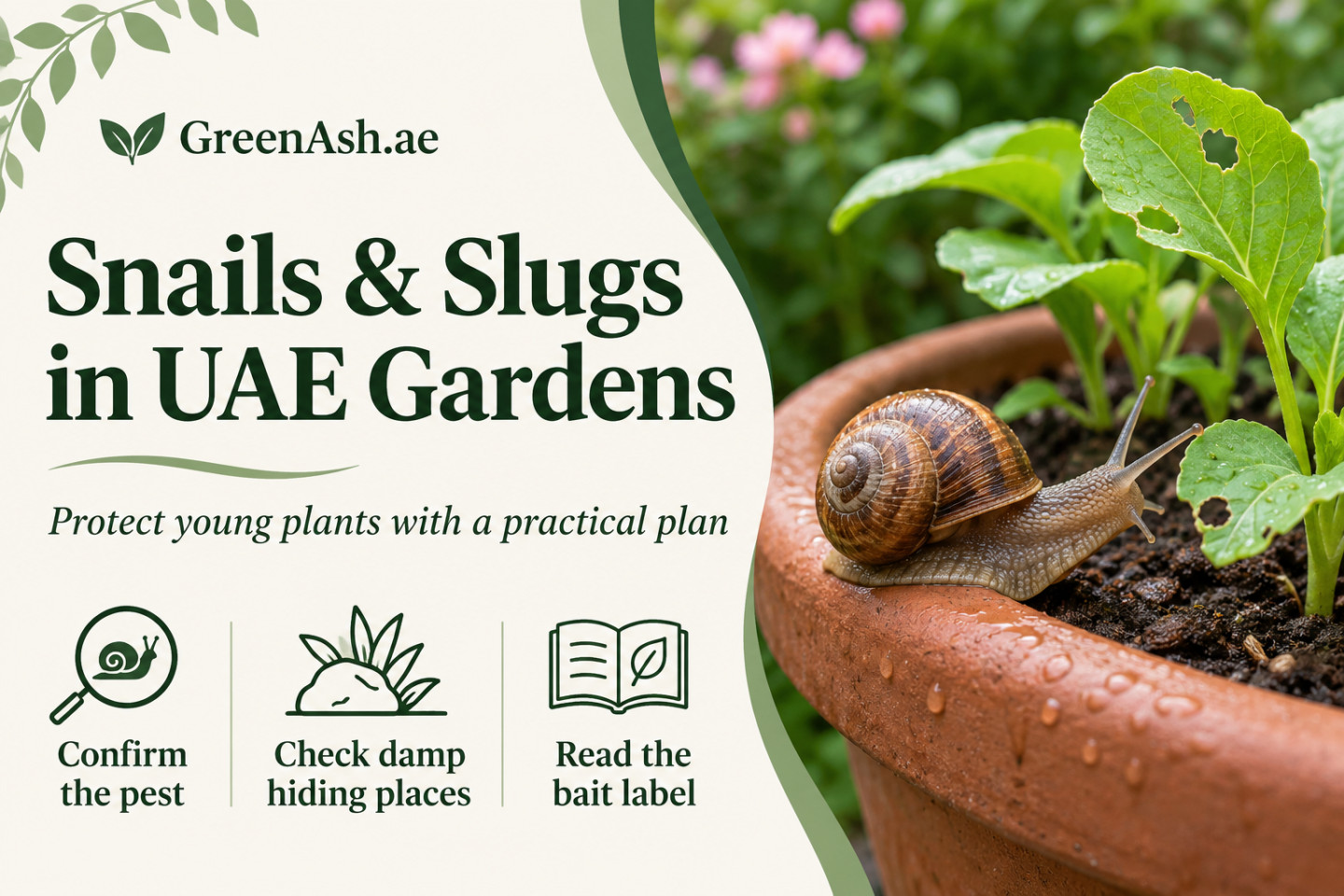
Ragged holes in lettuce or missing young shoots can make snail bait look like the obvious purchase. First, confirm what is feeding. Snails and slugs are molluscs, not insects, and caterpillars or other chewing pests can leave similar damage.
For UAE balcony planters and irrigated villa beds, start with the damp places immediately around the affected plants. This guide explains how to inspect them, reduce avoidable shelter and decide whether a labelled bait belongs in your plan.
Confirm snails or slugs before treating
Look for live animals alongside fresh feeding damage. A snail has an external shell; a slug does not have the same visible spiral shell. Glistening dried slime can be a useful clue, but a hole alone does not identify the culprit. Cornell IPM notes that caterpillar damage can look similar and that caterpillar droppings may be present on leaves or nearby ground.
Use a torch after dark to examine leaf undersides, pot rims and the soil near damaged plants. Photograph what you find. Repeat the inspection rather than deciding from one daytime visit, when the animals may be hidden.
| Observation | Next check |
|---|---|
| Fresh ragged holes and a slime trail | Inspect after dark and look beneath nearby pots |
| Chewed leaves with pellet-like droppings | Search for caterpillars before choosing a molluscicide |
| Old holes but no further damage | Photograph the plant and monitor new growth |
| Several vulnerable seedlings disappear | Inspect the tray, its support and surrounding hiding places promptly |
Map the damp hiding places around the damage
A dry-looking courtyard can still contain a small moist refuge beside an irrigated planter. Check the underside of unused pots, stacked trays, loose boards, dense low foliage and accumulated dead leaves. The aim is to identify accessible shelter beside the plants you want to protect, not strip every garden bed bare.
Oregon State University’s snail and slug guidance recommends reducing hiding places and separating susceptible plants from them. For a balcony, an actionable first step is to move spare pots into dry storage and leave enough access to inspect each planted container.
Inspect incoming plants and their containers before setting them among established pots. Keep a record of where you find animals: “under the empty tray beside the lettuce” is more useful than “snails everywhere”. This helps focus subsequent checks.
Adjust irrigation without drying out the crop
Water at the base of plants where practical, and review evening sprinkling that leaves a broad wet surface overnight. Cornell recommends morning watering and improving air circulation around plants. Keep the roots supplied with the water the crop needs; deliberately wilting seedlings is not a pest-management method.
In a villa bed, look for a leaking fitting or an emitter watering a path instead of a root zone. In a container group, check that one pot is not constantly draining into a sheltered space under another. Our drip irrigation setup and testing guide explains how to check delivery before changing a timer.
Use repeated collection and a checked shelter trap
Where numbers are manageable, regular collection can reduce the problem. Wear gloves or use tongs. Oregon State describes placing collected slugs and snails in a container of soapy water; keep the container away from children and pets. Do not release collected pests into a neighbouring garden.
A small board placed beside a damaged bed can act as a deliberate shelter trap. Check its underside the following morning and remove any snails or slugs. Cornell describes this simple method. A board left unchecked becomes another hiding place, so only set traps you will maintain.
UC IPM recommends thorough, repeated hand-picking, initially checking daily and reducing frequency once numbers decline. It also advises against using salt because this raises soil salinity. Keep salt off beds, pots and paved areas where runoff can reach roots.
Do copper tape, eggshells and rough barriers work?
Do not make a valuable seedling crop depend on a barrier alone. The RHS reviews mixed evidence for barriers: some studies found copper deterrence, while its garden trial found no reduction in damage from several commonly suggested materials, including copper tape. Results in one setting are not a guarantee for another.
If you already have a barrier, check for leaves or objects bridging it and for animals sheltered inside. Continue inspecting the plants. For new purchases, prioritise a workable inspection and watering routine over a promise of a completely snail-proof planter.
When is snail bait worth considering?
Consider bait when you have confirmed the pest and fresh damage continues on plants you need to protect despite the practical measures above. The product must match the intended setting and crop. Do not substitute a general insect spray simply because it is already in the cupboard.
GreenAsh lists Neudorff Sluggo snail and slug bait. It was out of stock when checked on 17 November 2026. Check current availability and request the readable label for the actual pack before ordering. This article does not assign a dose, application interval or edible-crop use from the product name.
Before choosing a bait, check:
- The exact product and active ingredient on the pack.
- Whether the label covers your garden setting and the crop you grow.
- The application rate, maximum frequency and any harvest restrictions.
- Where children, pets and other animals could encounter the granules.
- Storage, spill cleanup and disposal instructions.
The National Pesticide Information Center warns that snail baits can attract dogs. “Organic” or “pet safe” wording is not a guarantee that eating a product is harmless. Store bait securely, clean up spills promptly and follow the label’s access precautions. Do not concentrate bait into piles or lines. If a pet may have eaten bait, contact a veterinarian promptly and provide the packaging.
A simple monitoring record
Choose a small group of affected plants and photograph them before making changes. Each morning, note fresh damage and what you found at the previous evening’s inspection. Record which hiding places you cleared and any irrigation repairs. This is a way to evaluate progress, not a promise of control within a fixed number of days.
Judge the result by new damage, not by whether old leaf holes disappear. If damage continues but you no longer find snails or slugs, revisit identification rather than automatically buying more bait. For tender salad crops, our lettuce-growing guide covers spacing, watering and harvest planning.
Frequently asked questions
Why do I find snails when the UAE weather is dry?
Check the local microclimate around the plants. Irrigated soil, shaded pot undersides and damp debris can differ from the exposed courtyard. Locate those refuges before changing your whole garden routine.
Do all snails and slugs need removing?
No. Focus on confirmed feeding damage to vulnerable plants. The RHS recommends targeted protection rather than trying to eradicate every slug and snail from a garden.
Can I use salt around my pots?
Avoid it. Salt can enter the growing medium or nearby soil. Use inspection, collection and shelter reduction instead.
Should I apply bait again after every watering?
Do not invent a repeat schedule. Follow the specific pack’s directions and application limits, and check whether fresh damage is continuing before deciding on another treatment.