
Blog
Growing Basil in the UAE: Pots, Watering and Repeat Harvests

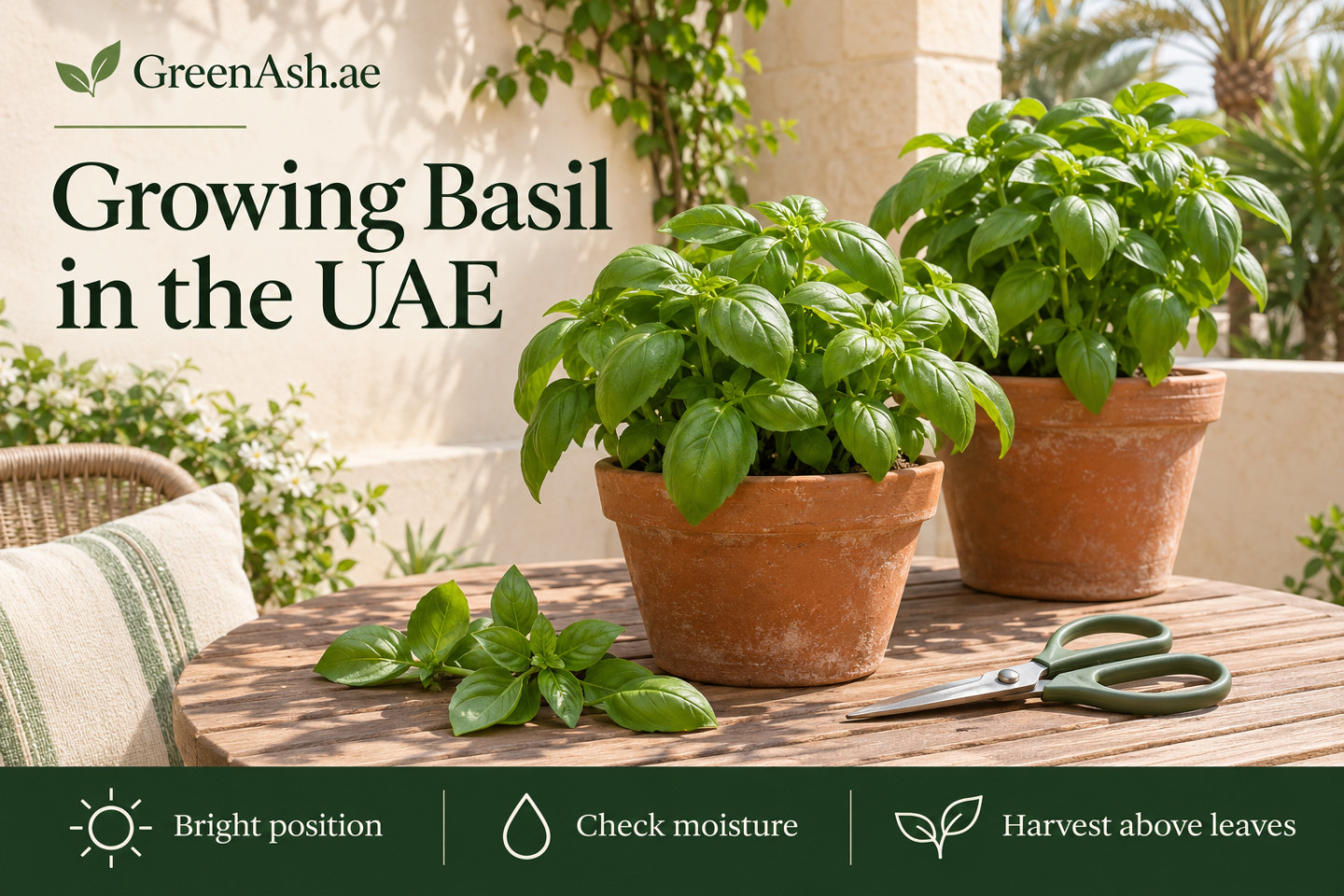
Growing basil in the UAE is a useful small-space project when you can give the plant bright light, consistent moisture and regular, light harvests. The aim is a branching plant that supplies fresh leaves, rather than one tall stem that is stripped bare for a single meal.
Start with one or two pots where you can inspect them easily. This guide covers ordinary culinary basil grown for leaves, from choosing seed to deciding whether a struggling plant needs water, a different position or a fresh start.
Choose basil for the food you want to cook
Sweet Italian basil, Thai basil and lemon-scented types are not interchangeable in flavour. Read the variety name before ordering. GreenAsh lists Basilico Genovese seeds as a classic Italian culinary type. Check current availability and the packet instructions; a listed harvest estimate is a guide, not a guarantee for your balcony.
For a first trial, keep the variety and sowing date on a label. If you later compare two types, grow them in similar pots and positions so that a difference in light or watering does not get mistaken for a difference between varieties.
Find a bright, warm position without treating heat as unlimited
The RHS basil care profile recommends bright light, ideally daytime temperatures around 21–27°C, and protection from sudden temperature changes. It also advises keeping nights above 10°C. These are useful growing-condition checks; UK planting months should not be copied directly into a UAE calendar.
For UAE homes, use the actual conditions at plant height to choose a position. A bright window, a sheltered balcony and an exposed paved terrace can be very different environments. Check the spot in the morning and afternoon before placing a whole batch of seedlings there.
As a practical starting approach, choose a bright, sheltered position and watch the plant through the hottest part of the day. Avoid placing a tender plant directly in an air-conditioning draught. If moving a plant outdoors, introduce the new exposure gradually rather than changing light, wind and temperature at once.
Sow a small batch and leave space to grow
The RHS basil growing guide recommends warm sowing conditions around 20°C and small batches a few weeks apart. It advises keeping seedlings bright and avoiding overwatering. This approach is useful when you want replacement plants ready as an older pot becomes less productive.
- Use a clean pot or tray with drainage. Fill it with a suitable seed-starting medium and moisten it before sowing.
- Sow thinly and follow the packet. Record the date and use the depth specified for your seed, rather than burying tiny seeds under a thick layer of mix.
- Keep the seed zone moist. Water gently so the seed is not washed into one corner. Check it regularly instead of flooding it on a fixed schedule.
- Give established seedlings room. Move them on according to the packet’s spacing and their growth. A dense seedling carpet is not a finished pot for repeated stem harvests.
If seedlings collapse at the soil line, separate the affected container and review hygiene and moisture. Our damping-off guide explains what to check before sowing again.
Water the growing medium, then check drainage
The RHS care profile calls for moist, not soggy, compost and checking the top few centimetres before watering. In practice, inspect below the surface and feel the pot’s weight as well: a dry-looking top does not always mean the entire root zone is dry.
Use a container with functioning drainage holes and check that its outer cover or saucer is not trapping water. Water at the growing medium and let excess drain away. Recheck sooner after a hot or windy day; do not automatically copy yesterday’s amount.
Keep a short record if the pot repeatedly wilts: time of day, moisture before watering, whether water drains, and whether the plant recovers. This is more useful than adding fertilizer to every drooping plant. For plants that have outgrown their containers, see our repotting guide.
Feed according to the product and the pot
First check whether the potting mix already contains fertilizer. GreenAsh’s Baby Bio Herb Food 175 ml listing describes a concentrate for herbs, including basil. Its page refers users to the packaging for dilution, so use the instructions on your bottle; do not estimate a dose from the cap size.
Record the product and application date. If you have already added another fertilizer, account for that before adding more. Our liquid fertilizer guide covers measuring and mixing. Pale or weak growth alone does not prove a nutrient shortage: inspect light, moisture and roots too.
Harvest stems to encourage branching
Utah State University Extension suggests beginning harvest once plants have at least six to eight leaves. University of Minnesota Extension recommends cutting stems just above a pair of leaves. Leave healthy foliage below the cut rather than removing the whole green top.
Use clean scissors, identify the leaf pair you want to leave, and cut above it. Alternate between plants instead of repeatedly stripping the smallest one. Pick close to cooking time when possible, and avoid taking more than a small plant can reasonably replace.
Both extension guides support regular harvesting before flowering for leaf production. Utah State also links high temperatures and water stress with flowering. Once an older plant is flowering heavily and producing little useful foliage, a younger replacement may be more practical than repeatedly removing flowers and expecting a complete reset.
Check damage before choosing a treatment
Look at both leaf surfaces, growing tips and stems. Photograph the whole plant and a close-up of the damage. If you see clusters of small sap-feeding insects, compare them with our aphid identification guide before deciding what to do.
A kitchen herb needs particular care with pesticide decisions: only use a product whose label permits the relevant crop and pest, and follow its harvest interval. Do not transfer a dose or edible-crop claim from a product intended for ornamental plants.
Frequently asked questions
Can basil grow indoors in the UAE?
Yes, provided the position is sufficiently bright and warm. A decorative spot far from a window may not provide the light needed for useful leaf harvests. Check growth rather than assuming all indoor locations are equivalent.
Why does basil wilt even though I watered it?
Check whether the root zone is still dry, persistently wet or unable to drain. Also note heat and exposure. More water is not automatically the right response to a pot that is already wet.
Should I remove individual leaves or cut a stem?
Either can supply a small kitchen harvest, but cutting above a healthy leaf pair gives you a clear point for branching while retaining foliage below. Avoid leaving a bare stem after removing all its leaves.
How do I keep a steady supply?
Sow small replacement batches, harvest established plants lightly and keep notes on the position that works. Plan around the leaves you actually use rather than sowing an entire packet into one crowded container.