
Blog
Growing Carrots in the UAE: Sowing, Thinning and Harvest in Pots

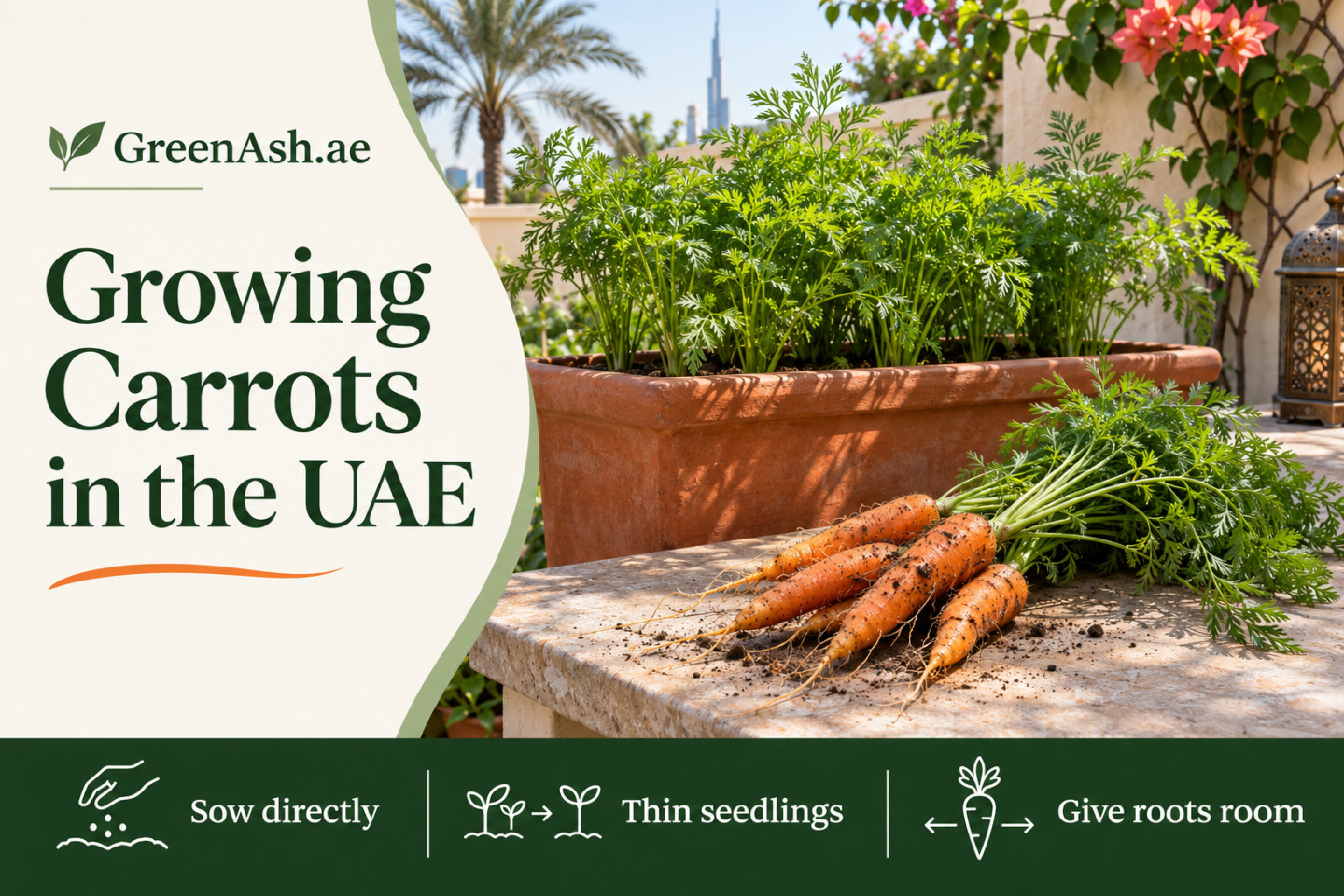
Growing carrots in the UAE starts with three decisions: sow in the cooler season, give the roots unobstructed space and thin the seedlings before they compete. A pot full of feathery leaves is encouraging, but the crop you want is developing below the surface.
This guide is for home garden beds and containers. It focuses on choosing seed for your available depth, getting slow-germinating seeds established and checking roots before harvest.
When to plant carrots in the UAE
The UAE Ministry of Climate Change and Environment planting calendar lists October–November for carrots and gives a general harvest period of 100–120 days. Use this local seasonal guide rather than importing spring planting dates from a European or North American packet.
A November sowing therefore needs space for several months. Label the date and variety, and avoid planning another crop in the same container before checking how your carrots are developing. The calendar is a planning guide, not a promise that every variety will mature on the same day.
Choose the variety and container together
GreenAsh lists Franchi Carota Berlicum carrot seeds, described on the product page as a long-rooted variety. Check current availability and the packet’s root length, spacing and sowing instructions before ordering. A long-rooted carrot needs more usable depth than a short or round type.
NC State Extension’s container guide suggests about 10–12 inches (25–30 cm) of potting-medium depth for carrots. Treat that as a starting point and match the depth to the chosen variety. Measure the filled growing depth, not the outside height of a decorative pot. Leave room above the mix for watering and use a container with drainage holes.
Before buying, write down the pot’s internal depth and width, where it will stand and which variety you intend to sow. If the packet describes a root nearly as long as the available depth, choose a deeper container or a shorter-rooted variety.
Prepare a clear path for the roots
The Royal Horticultural Society carrot guide recommends removing stones, breaking hard lumps and preparing a fine seedbed. Long roots are more likely to become misshapen in shallow, stony or heavy ground. In a container, use a suitable potting medium instead of packing in hard garden soil.
Check the bed below its smooth surface: a thin layer of loose material over a compacted base does not give a long carrot room to develop. Prepare the area before sowing, when you can work without damaging roots. For help comparing growing media, see our UAE soil and potting-mix guide.
Sow directly and keep the seed row moist
University of Minnesota Extension advises direct sowing because the taproot develops early and transplanting can damage or redirect it. A final growing pot is suitable; a nursery pot followed by transplanting is the step to avoid. Seeds can take up to three weeks to emerge.
- Mark the row or sowing area. Keep a label at its edge so you do not mistake an apparently empty patch for unused space.
- Sow thinly. The RHS gives a general depth of about 1 cm, with rows 15–30 cm apart. Follow the seed packet where its instructions differ.
- Cover gently and water carefully. Avoid a strong jet that moves the tiny seeds into clusters.
- Inspect the surface regularly. Keep the seed zone moist during emergence without leaving it saturated. Do not add a second sowing simply because nothing has appeared after a few days.
A useful record is a photograph taken from the same position every few days, with the label visible. It helps distinguish slow, uneven emergence from a genuinely failed sowing. For older packets, our seed storage and germination-testing guide can help before you commit a whole bed.
Thin seedlings and water the developing roots
Utah State University Extension recommends thinning at three to four true leaves, leaving roughly 5–7.5 cm between plants. Check your variety’s instructions, especially for larger roots. Leaving every seedling in place can produce a crowded row with disappointing roots.
Remove small weeds while they are easy to handle and avoid deep cultivation beside carrots. As the crop develops, check moisture below the surface rather than watering only enough to darken the top. Utah State links alternating wet and dry conditions with root cracking and advises basing irrigation on the soil type. A universal daily watering schedule is not appropriate for both a UAE balcony pot and a garden bed.
For a drip-watered bed, inspect the spaces between emitters as well as directly beneath them. Our drip irrigation guide explains how to check where water is actually reaching.
Do carrots need extra fertilizer?
Start with what the soil or potting mix already supplies. Utah State recommends a soil test to establish fertilizer needs. Do not add a strong nitrogen feed simply because you want larger carrots: Minnesota notes that excess nitrogen can encourage leafy growth at the expense of roots. Check crowding before interpreting lush tops and small roots as a feeding problem.
Harvest a sample before lifting the whole crop
Carrots can be harvested when they reach a usable size. Gently expose the shoulder of a sample root, then loosen the surrounding soil before lifting it; pulling hard on the leaves can snap a root in firm ground. Remove the tops and refrigerate harvested roots for use. These practical harvest steps follow Minnesota Extension’s guidance.
Write down the sowing date, harvest date and the size you liked eating. Your own observations will make the next sowing plan more useful than relying on the packet’s days-to-harvest figure alone.
Frequently asked questions
Why are my carrots forked?
Check for stones, compacted layers and earlier root disturbance. Forking can also accompany root damage or disease, so inspect the root rather than assuming every distorted carrot needs a pesticide.
Why are there healthy leaves but small roots?
Crowding is a common explanation; excessive nitrogen can also contribute. Compare the actual plant spacing with the packet before buying more fertilizer.
Can I sow carrots in a small balcony pot?
Yes, if the container drains and has enough growing depth for the variety. Short-rooted types offer more flexibility than long-rooted carrots. Keep the number of plants within the available space.
Should I spray if seedlings disappear?
Identify the cause first. Look for feeding damage or collapsed stems and inspect the area. If snails or slugs are present, our snail and slug guide covers practical checks. Do not infer a pesticide use or dose from a damaged seedling alone.
For a first crop, start with one clearly labelled pot or short row. Choose the seed to fit the depth, sow patiently and make thinning part of the plan from the beginning.