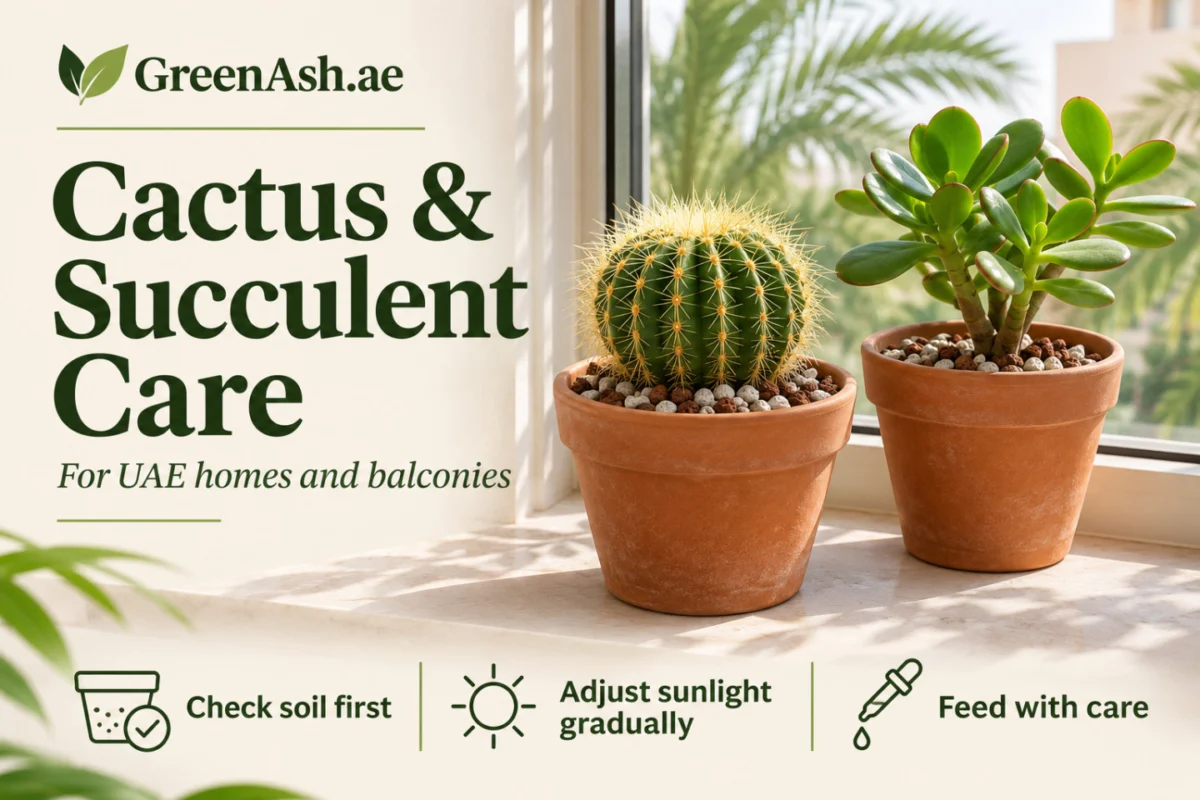
Cactus and succulent care in the UAE is not simply a matter of putting a pot in the sun and forgetting it. A small plant on an air-conditioned apartment shelf and one on an exposed balcony can need very different attention. The useful starting point is to identify the plant, check how its pot dries and decide whether it is actively growing before adding fertilizer.
This guide focuses on established potted desert cacti and common dry-growing succulents. It adapts horticultural guidance to UAE home conditions rather than copying overseas planting calendars.
Identify the plant before setting a watering routine
“Succulent” describes plants with water-storing leaves or stems; it is not one species with one care schedule. Cacti belong within that broad group. A shared appearance does not mean that two plants need identical watering.
The RHS highlights important exceptions: Christmas cactus, orchid cacti and Rhipsalis come from tropical rainforest environments and prefer more moisture and semi-shade. Do not apply a dry-growing desert-cactus routine to these plants. Keep the nursery label, or ask for identification using a clear photograph of the whole plant and close-ups of its stems or leaves.
For a mixed display, keep plants in separate nursery pots inside a shared tray until you know their needs. This lets you water each independently and remove one for inspection without disturbing the others.
Choose a pot that lets you control water
University of Minnesota Extension recommends drainage holes because trapped excess water can lead to decay. Its guidance also favours thorough watering with the excess discarded, rather than repeated shallow sprinkling. A decorative bowl with no outlet makes that routine difficult to manage.
- Check for an open drainage hole before filling the pot.
- If using a decorative outer cover, make sure the inner pot can be lifted out easily.
- Choose a growing medium sold for the plant type, and inspect how it behaves after watering.
- Keep a saucer accessible so you can empty it rather than leaving drainage water hidden underneath.
The RHS recommends a specialist cactus compost or an appropriately gritty mix. “Sand” is not a sufficient specification: its guide distinguishes horticultural sharp sand from builders’ sand. Avoid treating an unknown bag of fine sand as a ready-made cactus mix.
If you are changing an unsuitable container, our repotting guide explains pot-size and drainage checks. For comparing amendments rather than buying a complete mix, see perlite versus vermiculite.
Use a moisture check, not a fixed number of days
Illinois Extension explains that watering frequency changes with light, temperature, humidity, air circulation, pot size and growing medium. For dry-growing succulents, let the soil dry before watering thoroughly and allowing excess water to escape. A plant’s species and growth cycle still take priority over a general rule.
Try this observation routine for your UAE windowsill or balcony:
- Check below the surface. A dry-looking top layer does not tell you whether the centre remains wet. Test accessible medium without pushing your hand among spines.
- Lift a small pot. Compare its weight with how it felt after watering; use weight as a supporting clue, not the only test.
- Look at the whole plant. Note changes in firmness, colour or growth, and check the medium before interpreting a wrinkled leaf.
- Water only when needed. For an established dry-growing plant whose medium has dried, wet the root zone thoroughly and let it drain.
- Write down the date. Set reminders to inspect the plant, not automatic instructions to water it.
An example: if two pots were watered together but one is still moist at the next check, leave that pot alone. Do not force the slower-drying pot onto the faster one’s schedule. If a pot remains wet for an unusually long time, review drainage, mix and location before adding another drink.
Increase sunlight gradually
Illinois Extension warns that moving succulents straight into stronger outdoor light can burn leaves. Acclimatise plants progressively instead. It also identifies stretched, weak growth as a reason to assess insufficient light.
For UAE readers, this means a plant bought from an indoor display should not go directly onto an exposed afternoon balcony. Start with a protected bright position, observe its response and adjust gradually to the requirements of that species. These are practical local applications of the source guidance, not a claim that every succulent tolerates UAE summer sun.
Check the plant’s position at different times of day. A place shaded when you leave home may receive strong sunlight later. If growth leans toward the window, review available light before assuming fertilizer is missing.
When cactus fertilizer is useful
Minnesota Extension describes cacti and succulents as having relatively low nutrient requirements. Feeding should support active growth; it should not be used to force a stressed plant to grow. Overseas references often describe spring and summer feeding, but the months alone are not a reliable instruction for every species in a UAE home.
GreenAsh lists Schultz Cactus Plus Liquid Plant Food, a concentrated 2-7-7 product supplied with a dropper. The manufacturer’s page identifies it for cacti and other succulents, including jade and aloe vera, and specifies seven drops per quart of water. Use the supplied product instructions and measuring system; do not substitute seven drops per litre as though the volumes were identical.
The wording about feeding when watering is not a reason to water more frequently. First decide whether the plant needs water, then follow the applicable feeding directions. Do not pour concentrate directly into a pot or combine it automatically with another fertilizer or drip feeder.
For a small collection, compare the clarity of the label, measuring method and quantity you need before buying. Our liquid fertilizer guide covers accurate mixing. Keep one record of product, dilution and application date if several people look after the plants.
Check the cause before treating a struggling plant
Illinois Extension’s houseplant troubleshooting guidance lists several possible causes for colour loss, leaf drop and spots, including watering, light changes and excess fertilizer. A symptom is a starting point for inspection, not a diagnosis.
| Observation | First check |
|---|---|
| Stretched or weak new growth | Light at the actual plant position |
| Decline while the medium stays wet | Drainage, root condition and watering history |
| New damage after a move outdoors | Change in sun exposure and the acclimatisation process |
| White cottony clusters or attached bumps | Inspect closely for pests before choosing a treatment |
For the last situation, our mealybug and scale guide helps with identification. Keep a suspect plant apart from the collection while checking it. Avoid applying a pesticide or fungicide solely because a plant looks unhappy.
Frequently asked questions
Should I water a cactus every week?
Use a weekly reminder to inspect it, not as a universal watering schedule. Species, potting mix and location determine how quickly the pot dries.
Can all my succulents share one bowl?
Only combine plants with compatible needs, and choose a container that drains. Separate pots are easier to manage while you are learning the differences between plants.
Does a cactus need fertilizer to survive?
Its nutrient needs are modest. Choose feeding based on plant condition, active growth and product directions. More fertilizer is not a substitute for suitable light and watering.
Does living in the UAE mean winter rest advice does not apply?
No. Some species have specific rest requirements. Identify the plant and adapt care to its growth cycle and actual conditions rather than assuming that warm weather means continuous growth.

Leave a Reply