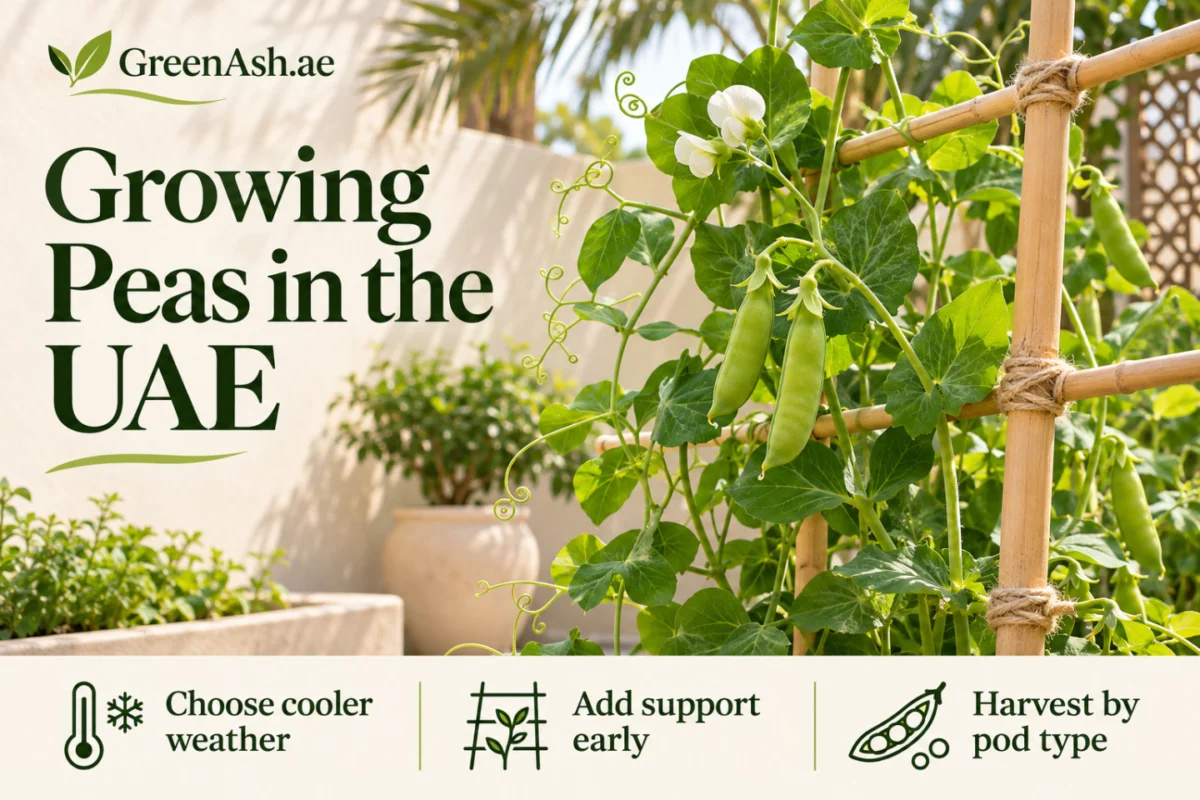
Growing peas in the UAE starts with two decisions: choose a genuinely cool growing window and know whether you want peas to shell or pods to eat whole. A packet labelled simply “green peas” does not tell you everything about plant height, support or harvest stage. Check those details before preparing a bed or buying a planter.
This guide adapts cool-season pea-growing advice to UAE home gardens. It does not use overseas spring planting dates as a UAE calendar: your local temperatures, exposure and variety matter more.
Choose a cool window, not a summer experiment
Utah State University identifies peas as a cool-weather crop that performs poorly above about 27°C. Heat and water stress can reduce pod quality. For UAE growers, that points to the cooler part of the year, with enough time for the packet’s expected maturity period before hot weather returns. Treat this as a planning guide, not a guarantee that one cool evening makes sowing suitable.
Check the forecast and the actual growing spot. A sunny bed and a planter beside a heat-reflecting wall may experience different conditions. Record your sowing date and location so next season’s decision is based on your own garden’s results.
Buy the right type of pea
| Type | What you harvest | What to check on the packet |
|---|---|---|
| Garden or shelling pea | The peas inside filled pods | Variety, mature height and days to harvest |
| Snow pea or mangetout | Young, flat edible pods | Edible-pod identification and support requirements |
| Sugar snap pea | Fleshy, rounded edible pods with developing peas | Harvest guidance and whether strings need removing |
GreenAsh lists Agrimax Green Peas Seeds. The listing does not establish a named cultivar, final height or edible-pod classification. Ask for the current packet information if these details affect your choice; do not assume this product is a snow or sugar snap pea. Check the live page for availability before planning a purchase.
Prepare the growing space and support first
Choose a sunny position with well-drained soil. For a container, choose a compact variety and a substantial planter with drainage holes; a tall climbing variety needs more support planning. Work out where you will stand to water and pick pods before filling the container. Our potting-soil volume guide helps calculate the amount of mix to buy.
Use a trellis or suitable mesh for climbing varieties. Install it before sowing so you are not pushing stakes through established roots later. Make sure you can reach both sides where possible, and secure freestanding supports against movement. The packet’s mature height should guide the support height; the word “pea” alone is not enough.
Sow with the packet beside you
- Read before opening. Note the variety, sowing depth, spacing and expected harvest period. Keep the packet for reference.
- Prepare the final position. Direct sowing avoids an extra transplanting step. Remove weeds and level the sowing area.
- Follow the specified depth and spacing. Do not crowd extra seed into a small pot simply because the seeds fit.
- Water gently and label. Mark the date and variety. Avoid washing seeds out of place or leaving the medium saturated.
- Keep unused seed properly. See our vegetable seed storage guide before putting the opened packet away.
Keep fertilizer granules out of direct contact with germinating seeds. Illinois Extension notes that young seedlings can be injured by fertilizer contact or careless cultivation.
Keep moisture steady as flowers and pods develop
Check soil moisture rather than watering by a fixed daily rule. Peas need regular moisture, especially after flowering, but waterlogged soil encourages root problems. Container and ground-grown plants will not necessarily need water at the same interval.
Do not add extra nitrogen simply to chase faster growth: excessive nitrogen can favour leaves and delay pod production. Base feeding on the soil or potting mix already used and relevant product directions. If growth disappoints, review heat, drainage and watering before buying another fertilizer.
Pick according to pod type
For shelling peas, open a sample when pods look full: the peas should be developed but still tender, not hard and starchy. Pick snow peas while their pods remain flat and tender. Pick snap peas as the pods become fleshy, before the seeds become oversized and the pod toughens. Check frequently as harvest approaches; a single “harvest day” for the entire planting is rarely a useful plan.
Support the stem while picking rather than pulling on the vine. Keep a small harvest bowl nearby and inspect pods hidden behind foliage. Use harvested peas promptly for the best quality.
Check problems before treating
Yellowing or wilting is not enough to identify a disease. First check whether the root zone is persistently wet or unexpectedly dry, and whether symptoms followed a hot spell. Look at new growth and leaf undersides for visible pests. If aphids are present, our UAE aphid guide explains the next checks. Photograph the whole plant and affected parts if you need help identifying the cause.
Frequently asked questions
Can I grow peas on a UAE balcony?
Yes, where the season and exposure suit a cool-weather crop. Start with a compact variety whose height you can accommodate, and plan drainage, access and support before sowing.
Can I eat every green pea pod?
Do not assume so. Garden peas are grown for shelling; snow and sugar snap peas are the edible-pod types. Confirm the type on the seed packet.
How many days until harvest?
Use the variety’s packet estimate as a starting point and judge readiness from the pods. An unnamed “green pea” listing cannot support an exact harvest promise for your garden.
Should I keep sowing as the weather warms?
Only if the remaining cool window suits the variety’s expected development. A second batch is useful when conditions allow it; repeating sowings into increasing heat is not a reliable way to extend harvest.
Sources and local application
Growing and harvest guidance draws on Utah State University Extension, the Royal Horticultural Society and University of Illinois Extension. Their regional planting calendars are not UAE recommendations; the advice here applies their crop requirements to local site and seasonal decisions.

Leave a Reply