
Blog
Perlite vs Vermiculite in the UAE: Which Does Your Potting Mix Need?

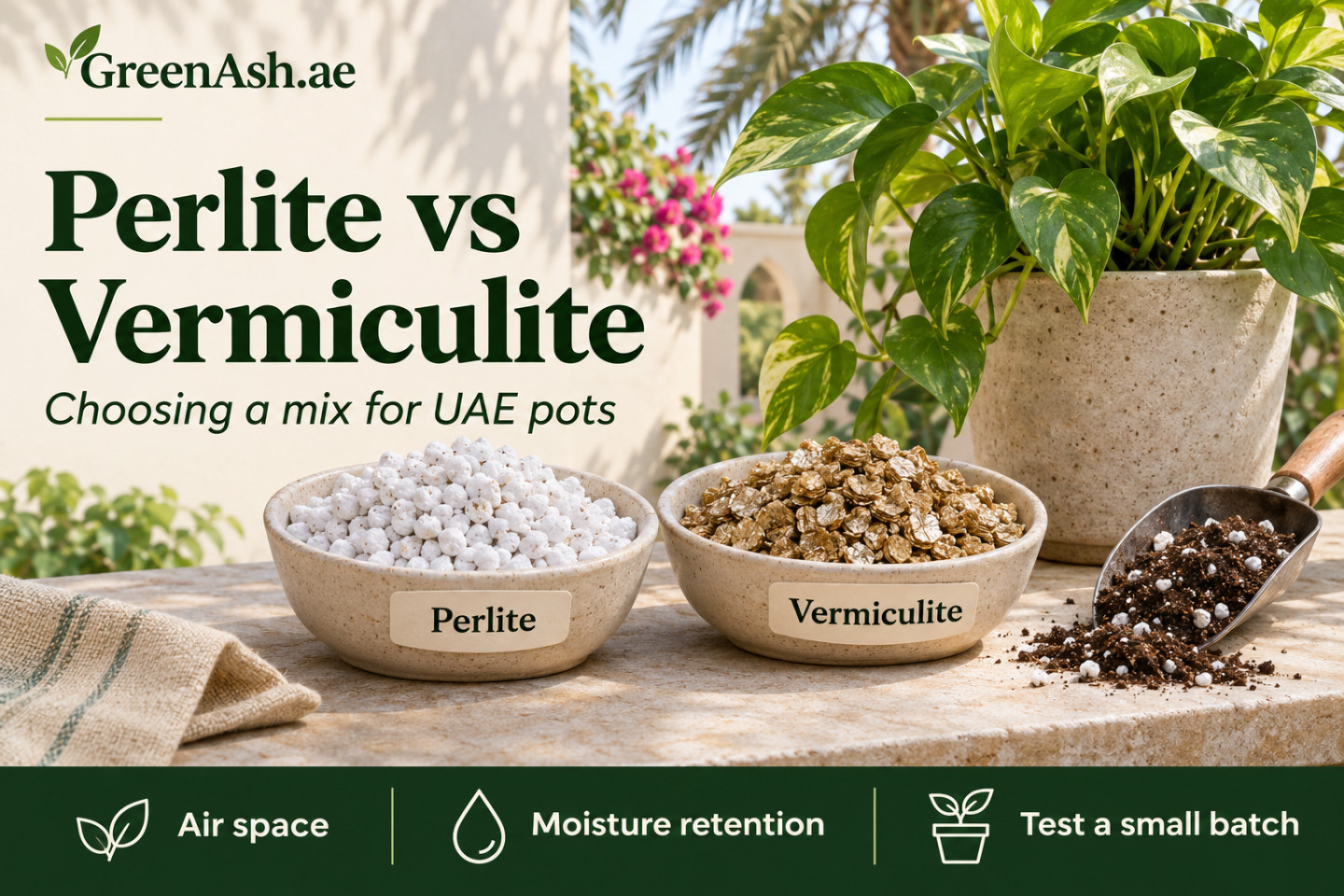
Perlite and vermiculite are both used in potting mixes, but they are not interchangeable answers to every watering problem. Perlite is mainly chosen to improve aeration; vermiculite is mainly chosen for water and nutrient retention. For UAE gardeners, the useful question is what the particular pot needs—not simply which material is “best for hot weather”.
This guide compares the two ingredients for balcony pots, houseplants and seed trays. For the broader choice of a complete growing medium, see our guide to soil and potting mixes in the UAE.
Perlite vs vermiculite: the practical difference
| What to compare | Perlite | Vermiculite |
|---|---|---|
| Appearance | Lightweight, pale, expanded mineral particles | Shiny, flaky mineral particles |
| Main reason to include it | To add air-filled spaces to a blend | To increase water and nutrient retention |
| Typical buying question | Does this medium need a more open structure? | Does this crop need a blend that retains more moisture? |
| Handling consideration | Dry material can be dusty | Rough handling can compress it |
| Does every pot need extra? | No—check the existing blend | No—check the existing blend |
Iowa State University Extension distinguishes perlite’s aeration role from vermiculite’s water-holding role. It also stresses that particle size, the container and handling affect the result. The ingredient name alone does not describe how a finished mix will behave.
Start with the pot’s problem
A houseplant stays wet between waterings
First check whether water is trapped in its outer pot or saucer and whether the plant occupies the container well. Adding an ingredient does not remove trapped water. If the growing medium itself is unsuitable, consider a fresh blend matched to the plant when repotting is justified. Our houseplant repotting guide explains the container and drainage checks.
A balcony planter dries rapidly
Record where it stands, when you water and whether the whole root ball becomes wet. Do not buy an aeration ingredient solely because the surface looks dry. A pot near a sun-facing wall and one inside an apartment are different growing situations; assess them separately. If moisture retention is the issue, investigate the complete mix and watering arrangement before changing one component.
You are preparing a seed tray
Choose a medium intended for germination and the size of the tray cells. NCAT’s potting-media guide explains that seed-starting blends differ from mixes for larger plants, including their texture and fertilizer concentration. Buying a general amendment is not the same as buying a finished seed-starting mix.
What perlite can—and cannot—do
University of Florida IFAS describes perlite as a lightweight volcanic material that increases air space and improves drainage in potting blends. It also recommends small test batches when experimenting with mixtures. That is more useful than assuming one ratio suits every plant.
GreenAsh lists Desert Energy Natural Perlite, 10 litres. Use the listing to check the pack you are buying, then confirm the grade and handling instructions on the bag. It is a mixing component; the product name is not a guarantee that a wet or unhealthy plant will recover. We do not recommend an automatic addition to every commercial potting mix.
Before ordering, photograph the front and ingredient panel of your current mix. Note the plant name, pot dimensions and watering pattern. These details help establish whether you need perlite, a different complete medium or a change in care.
Where vermiculite fits
Vermiculite is useful when water retention is an intended part of a recipe. NCAT describes its capacity to retain both water and nutrients. This is a different function from supplying a complete fertilizer programme: holding nutrients does not mean a mix already contains everything a plant needs.
Florida IFAS also advises handling vermiculite gently because compression reduces its air-holding ability. Ask for a horticultural product of a grade appropriate to the intended use. Do not substitute an unidentified construction or insulation material for a growing-medium ingredient.
If a ready-made mix already performs well, there may be no reason to add vermiculite. Keep the purchase tied to a specific purpose rather than adding both materials simply because they appear in online recipes.
How to compare mixes before changing every pot
The University of Maryland Extension explains why containers need a balance of air, water and support: excess water must drain so air can return to the root zone. It also notes that commercial blends vary considerably. Begin by reading their ingredients and intended use.
- Write down one goal. For example, evaluate a more open blend for a plant whose current medium stays wet. Avoid changing the pot size, fertilizer and location simultaneously.
- Choose a plant-appropriate recipe or finished mix. Keep its instructions with your notes. Do not invent a universal “UAE ratio”.
- Make a small batch. Use the same measuring container for every component. If instructions specify parts by volume, do not replace those measurements with equal weights.
- Label the trial. Record ingredients, volumes, date and plant. Where practical, compare similar plants in similar containers and positions.
- Observe before expanding. Check moisture below the surface and note how the plant grows. One quick drainage test does not establish that the mix will suit it over time.
Work out the shopping quantity
Once you have selected an appropriate recipe, calculate the component volume before buying. For arithmetic only, if a recipe calls for 20% perlite in a planned 15-litre batch, that is 3 litres of perlite and 12 litres of other components. This example is not a recommended mix for a particular species. The measured loose volumes may settle after mixing and watering.
Handling and common mistakes
Open and pour dry ingredients carefully to avoid raising dust, and follow the bag’s protective-equipment instructions. Mix gently and avoid pressing the medium tightly into pots. Keep unused material sealed and labelled. Iowa State highlights both dust from dry perlite and the importance of avoiding compaction during filling.
- Adding more to an already balanced mix: check what is present first.
- Judging only by the top surface: assess moisture where roots are growing.
- Treating an amendment as a cure: persistent wilting or damaged roots needs investigation.
- Copying a recipe without its context: seed trays and mature container plants have different requirements.
Frequently asked questions
Which is better for UAE plants: perlite or vermiculite?
Neither is universally better. Choose according to the plant, container, existing medium and whether the blend needs more aeration or moisture retention.
Can I use both in the same mix?
Yes, recipes can contain both. Use a recipe suited to the plant and avoid adding either automatically to a finished commercial blend.
Is vermiculite the same as vermicompost?
No. Vermiculite is a mineral component; vermicompost is material processed by earthworms. They serve different purposes. Our vermicompost guide covers that separate product category.
Will perlite fix a pot without drainage holes?
No. Provide an escape route for excess water, such as a draining inner pot that can be removed for watering. Changing the medium does not create an outlet.
For a useful product recommendation, share the plant name, pot size, current mix and the problem you want to solve. Those four details are a better starting point than buying a bag of every amendment.