
Blog
Lizards in the House? How to Keep Them Out in the UAE, and Where Lizard Repellent Fits


If you keep finding a small, pale lizard on the wall by your balcony light, or droppings on the curtains in the morning, you almost certainly have house geckos. They come in for two reasons: insects to eat and gaps to hide in. Seal the gaps, make your lights less attractive to insects and clear the daytime hiding spots, and your home becomes much less attractive to them. A lizard repellent can be added at doors and windows once that is done, but no repellent replaces sealing.
By the end of this article you will be able to tell a gecko problem from an insect problem, find the exact gaps they use in a UAE villa or apartment, catch the ones already inside without touching them, clean droppings safely, and decide whether a repellent is worth adding and where to put it.
Which lizards come into UAE homes
The lizards that live on house walls in the UAE are geckos. The Emirates Natural History Group’s list of UAE reptiles names two house geckos: the yellow bellied house gecko (Hemidactylus flaviviridis) and the Turkish or Mediterranean house gecko (Hemidactylus turcicus). Both belong to the same genus as the house geckos studied by American extension services, so their advice on behaviour and control applies well here.
Texas A&M AgriLife Extension describes the Mediterranean house gecko as reaching 4 to 5 inches (about 10 to 13 cm), light coloured with darker mottling and small bumps on the back. House geckos have large lidless eyes with vertical pupils and sticky toe pads, which is how they walk up glass and across ceilings. They are active at night and may give a high pitched squeak or call when alarmed.
If the lizard is walking up your wall, window glass or ceiling at night on sticky toe pads, it is a house gecko.
Why lizards come into UAE homes
Geckos follow food and shelter. Texas A&M describes them gathering at porch lights at night to hunt moths, cockroaches and other insects, and sheltering by day in cracks and crevices around the building. The University of Florida IFAS Extension says the same and adds that removing their food sources inside the home helps stop them settling.
That gives you the whole logic of control. A bright light by an open door pulls insects in, the insects pull geckos in, and a gap around a frame or an AC pipe gives the gecko a place to spend the day. Break any link in that chain and the house becomes less attractive. Break all three and you have done everything the extension services recommend.
Diagnose first: what you are seeing and what it means
| What you notice | Most likely cause | What to do first |
|---|---|---|
| A gecko on the outside wall by a light every night | Insects drawn to that light | Change the bulb to warm white or yellow, switch it off when not needed |
| Geckos inside near a balcony or garden door | Gap at the threshold or door left open in the evening | Fit a door sweep, replace worn seals, keep the door shut after dark |
| Geckos in a bathroom, kitchen or laundry | Gaps around pipes and drains, plus insects such as cockroaches | Seal pipe entries; check for cockroaches and treat them |
| Geckos near the split AC unit | Gap where the AC line passes through the wall | Seal around the pipe sleeve with sealant or foam |
| Small dark droppings with a white tip on sills, curtains or floors | Gecko droppings | Clean with gloves and disinfectant; find the hiding spot above |
| Small white oval eggs in a crevice, behind a frame or in a storeroom | Gecko eggs | Remove with gloves into a bag; seal and declutter the area |
| Small dark droppings with no white tip, in cupboards | Probably cockroaches or rodents, not geckos | Look for the insect or rodent itself; geckos are not the main problem |
Texas A&M describes gecko droppings as elongated, brownish and often tipped with white. That white tip is the useful clue. Droppings without it, especially inside food cupboards, point to cockroaches or rodents, and in that case the geckos are a symptom, not the cause.
Are house lizards dangerous?
Both Texas A&M and UF/IFAS describe house geckos as beneficial insect predators. UF/IFAS notes that some people choose to leave them alone for that reason. The real concerns are droppings, which stain fabrics, carpets and walls, and hygiene.
The US Centers for Disease Control and Prevention (CDC) explains that reptiles often carry Salmonella bacteria in their digestive tracts, even when they look healthy, and that people can get sick from contact with the animals or the places they live. The CDC says children under 5, adults over 65 and people with weakened immune systems are more likely to get sick. That is the reason to treat droppings in a kitchen or a toddler’s room as something to clean properly, not just wipe away.
How to clean gecko droppings safely
- Put on disposable gloves.
- Pick up dry droppings with a damp paper towel rather than sweeping, so you do not scatter dust.
- Clean the spot with a household disinfectant, following its label for contact time.
- For fabrics, follow the care label and wash as hot as the fabric allows.
- Bin the gloves and towels in a sealed bag, then wash your hands with soap and running water, as the CDC advises.
- On food preparation surfaces, clean and disinfect before you next cook.
How geckos live, and why it changes what you do
Three facts from the extension sources shape every step below.
They hunt at night by lights. A gecko spends the day in a crack and comes out after dark to the places insects gather. That is why the evening is when doors matter most, and why a single bright outdoor light can keep geckos coming back to the same wall night after night.
They breed in warm months, two eggs at a time. Texas A&M says females lay several clutches of two eggs during summer, placed in crevices, under bark, in soil or other protected spots. UF/IFAS also describes clutches of two sticky eggs. So a storeroom with boxes against the walls, or a gap behind a fixed frame, is not only a hiding place but a nursery. Clearing those spots before the warm months cuts the next generation.
No poison is the answer. Texas A&M states that no pesticides are registered for gecko control in the United States, and UF/IFAS says no pesticide is registered for managing geckos inside a structure. Texas A&M adds that general insecticides may reduce their food but will probably have minimal effect on the geckos themselves. Those statements refer to US registrations, but we do not recommend any product to kill geckos indoors.
Step 1: Seal the way in
Both Texas A&M and UF/IFAS recommend sealing doors, windows and gaps, and Texas A&M says management should focus on keeping geckos out of the building. Work through the home in this order, starting with the rooms where you see geckos most.
Doors
- Close the door and look along the bottom from inside with the room lights off and the outside light on. Any line of light is a way in.
- Fit a door sweep or threshold seal to close the gap at the floor.
- Replace weather stripping that is flattened, cracked or peeling, particularly on sliding balcony doors, where the brush seals wear first.
Windows and screens
- Seal gaps between the frame and the wall with silicone sealant. Texas A&M names silicone caulk and expanding foam as the materials to use.
- Fit or repair insect screens on any window you open in the evening. A screen also keeps out the moths that geckos follow.
Pipes, cables and AC lines
- Check where the split AC pipes, drain pipes, cables and gas lines pass through the outside wall. Texas A&M specifically lists plumbing and electrical penetrations.
- Fill gaps with sealant for small cracks and expanding foam for larger voids. For AC lines, leave service access clear and ask your AC technician if you are unsure what can be sealed.
- Under kitchen and bathroom sinks, seal the gap where pipes come through the cabinet back.
Outside the house
- Seal cracks around soffits, wall lights and the edges of cladding. Texas A&M points out that these exterior gaps are where geckos hide during the day.
- In a villa, look at boundary walls and pergolas close to the house. Geckos living there will move to the house wall at night if a light is on.
Step 2: Make your lights less attractive to insects
Geckos gather at lights because insects do, so the type of bulb matters.
UF/IFAS Extension Sarasota County explains that insects see mainly ultraviolet, blue and green light and are most attracted to wavelengths between about 300 and 420 nm, and that a bulb’s ultraviolet output is the main factor in attracting them. It names incandescent, CFL, halogen and HID bulbs as the most attractive and recommends LED bulbs with a colour temperature below 3600 K, sold as warm white or ultra warm white. University of Georgia Extension adds that soft yellow lights are the least attractive to most insects, and that LED light filtered to yellow or amber attracts fewer flying insects.
- Swap outdoor and balcony bulbs for warm white LEDs (check the box for a figure such as 2700 K or 3000 K) or yellow or amber LEDs.
- Switch off outdoor lights you do not need, or fit a motion sensor so they are on only when someone is there.
- Draw curtains or blinds after dark so indoor lights do not shine through glass doors and windows and pull insects to them.
- If a light must stay on, place it away from the door rather than directly above it, so insects and geckos gather a few metres from the entrance.
Step 3: Cut the insects inside
Inside the home, cockroaches are the gecko food you most want to remove, both for their own sake and because they keep geckos fed. UF/IFAS says removing food sources inside the structure helps keep geckos from establishing.
- Keep bins lidded and empty them at night, and do not leave pet food out overnight.
- Fix dripping taps and wet cabinet bases under sinks. Damp areas draw cockroaches.
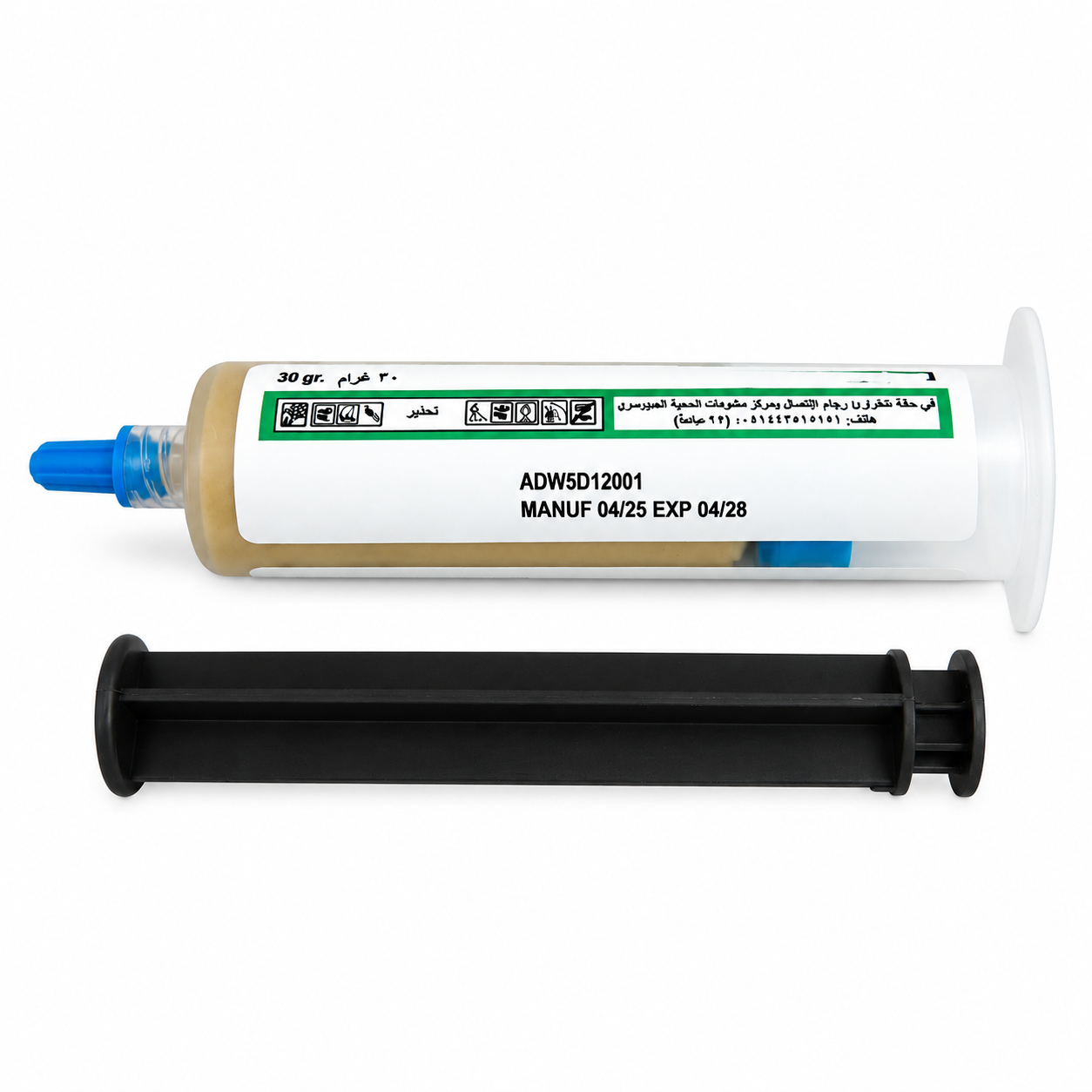
- Treat cockroaches with a gel bait in cracks and crevices rather than a spray. Our Advion cockroach gel guide explains placement and spacing in detail.
Worked example: how much gel for a typical kitchen
The Advion product page gives small drops 10 to 30 cm apart in cracks and crevices, up to 400 placements per 30 g tube, and suggests re-checking after 3 to 5 days and reapplying every 2 to 3 months. For a kitchen with 6 m of cabinet base and hinge line to treat:
- At 20 cm spacing: 600 cm divided by 20 cm gives 30 placements.
- At the closest 10 cm spacing (the page says to use more small placements in heavy infestations): 60 placements.
- Either way, one tube covers the kitchen several times over, so you can also treat the bathroom and laundry pipe entries from the same tube.
The MAXIROACH page states its rate as an area: at least 2 gel spots per 2 m2, and up to 5 spots per 2 m2 for heavy infestations or where American or Oriental cockroaches dominate. For a 10 m2 kitchen, that is 10 spots at the minimum and 25 at the heavy rate.
Outdoors: flies and moths near bins
Around a villa, bins and compost attract flies, and flies attract geckos to the nearest wall. Keep bins away from doors and clean them regularly. A bait trap hung near the bins, away from the house, can reduce the flies in that area. The Flying Insect Trap page says it is for outdoor use only and to hang it in a shaded spot away from seating, baited with a sugar solution, fruit or a commercial attractant. The page gives no bait quantities.

Step 4: Remove daytime hiding spots and eggs
- Move stored boxes, suitcases and furniture a little away from walls in storerooms and maids’ rooms, so there is no dark gap behind them.
- Check behind wall mounted frames, mirrors and AC covers, and along the top of wardrobes.
- Outside, keep plant pots, firewood and stacked items away from the house wall, and trim climbers that touch the house.
- If you find small white oval eggs in a crevice, put on gloves, lift them into a bag, seal it and bin it, then seal the crevice.
Step 5: Move the ones already inside
Texas A&M suggests the simplest way. Wait until the gecko is on a wall or floor, place a plastic tub or jar over it, slide a piece of card underneath, and carry it outside. Release it well away from the door, at the boundary or in the garden. Texas A&M is clear that this only helps if you have also sealed the way back in.
Use the container rather than your hands, and if you do touch the gecko, wash your hands with soap straight away because of Salmonella.
Step 6: Where a lizard repellent fits
Once the gaps are sealed and the insects reduced, some people want an extra deterrent at doors and windows. We sell two granular lizard repellents. Be clear about what is and is not known about them before buying.

BuyBlocker Lizard Deter
The BuyBlocker Lizard Deter page describes a granular repellent in a 2 kg pack that is designed to make lizards move away rather than kill them. It does not list the ingredients and gives no amount per metre or per room. It says to sprinkle the granules where lizards appear, focusing on entry points such as windows, doors and outdoor corners, to reapply every few weeks and after cleaning or heavy outdoor watering, and that it usually lasts longer indoors than outdoors.
Because there is no rate on the page, read the pack label before you start and use the amount it gives. If the label gives no amount either, contact us or the supplier before applying, and keep it where children and pets cannot reach it. Write the date on a strip of tape on the tub each time you apply, so you can see whether reapplying every few weeks makes any difference to what you see.

No-Lizard Repellent
No-Lizard is also sold as repellent granules. Its page gives no ingredients, pack size or amount, and its wording is inconsistent: it calls the product non-toxic, chemical free and harmless to reptiles, while also using phrases such as “lizard killer” and “lizard pesticide spray”. Treat it as a repellent, follow the pack label, and do not take those words as evidence that it kills geckos or that it is safe around children and pets. Its own safety text says to avoid skin contact and to store it away from children and pets.

Be realistic about repellents
Neither Texas A&M nor UF/IFAS mentions repellents in their gecko guidance; both base control on exclusion and food removal. We found no university or government study testing either of these products. So treat a repellent as a trial at one or two doors after the other steps, not as the main plan. If you still see geckos at a treated, sealed door after two reapplications, the repellent is not adding enough to keep buying it.
Products compared
| Product | Active or type | Pack | Use | Rate on the page | Safety on the page | Who it suits |
|---|---|---|---|---|---|---|
| BuyBlocker Lizard Deter | Granular repellent, ingredients not listed | 2 kg | Doors, windows, outdoor corners | None; reapply every few weeks | Gloves, away from children, pets, food and water | Homes that have sealed gaps and want an extra deterrent |
| No-Lizard | Granular repellent, ingredients not listed | Not stated | Where lizards are seen | None; reapply as needed | Avoid skin contact, away from children and pets | Not our first choice: page claims conflict |
| Advion gel | Indoxacarb 0.6% | 30 g tube | Cockroaches in cracks | Drops 10 to 30 cm apart, up to 400 per tube | Out of reach of children and pets, not on food surfaces | Kitchens and bathrooms with cockroaches |
| MAXIROACH gel | Indoxacarb 0.6% | 35 g syringe | Cockroaches in cracks | 2 to 5 spots per 2 m2 | Out of reach of children and pets, away from food | An alternative indoxacarb gel |
| Flying Insect Trap | Bait trap, no insecticide | 1 trap | Flies and moths outdoors | No bait amount | Outdoor use only | Villas with bins or compost near the house |
What about lizard killer sprays, poison, glue traps and mothballs?
Sprays and poison. As above, Texas A&M and UF/IFAS say no pesticide is registered for geckos in the US, and Texas A&M says spraying insecticide to reduce their food has minimal effect on them. Do not spray any insecticide at a lizard or use one indoors for lizards unless its UAE label specifically lists that use. If you use any insecticide for the insects, follow its label, wear the protective equipment it names, and keep children and pets out until the label allows them back.
Glue traps. Both extension services note that glue boards catch and kill geckos and do not allow release. Texas A&M warns that they do not kill the gecko quickly. We do not recommend them in homes.
Mothballs. These are sometimes scattered to repel lizards and snakes. UF/IFAS publication PI289, The Facts about Mothballs, explains that mothballs are registered pesticides containing naphthalene or paradichlorobenzene, labelled only for use in airtight containers against moths, and that using them outdoors to repel wildlife is not an approved use. It warns that one mothball can seriously harm a child who eats it, that they can look like sweets, and that naphthalene can cause damage to red blood cells. Keep them out of your lizard plan entirely.
Eggshells, peacock feathers, onion, garlic and coffee. These appear in many online lists. We found no university or government testing behind any of them.
A UAE timeline
| Period | What is happening | What to do |
|---|---|---|
| October to December | Cooler evenings; doors and windows open more | Do the sealing work now while it is pleasant outside. Fit door sweeps and screens before you start leaving doors open in the evening |
| January to February | Coolest months; geckos less visible | Declutter storerooms, move boxes off walls, check behind frames and AC covers for eggs and hiding spots |
| March to April | Warming up; insects increase around lights | Change outdoor bulbs to warm white or amber LEDs, start cockroach baiting, check seals again |
| May to September | Hot season; Texas A&M notes geckos are most active and breed in warm months | Keep doors shut after dark, curtains drawn, bins emptied nightly. If you use a repellent, this is when to reapply it every few weeks |
Villa, apartment or farm: what differs
- Villa: geckos often come from the garden and boundary walls. Focus on outdoor lights, the garden door threshold, AC line entries and stacked items against the house wall.
- Apartment: the balcony door and gaps around the AC pipe sleeve are common ways in. Fit a brush seal on the sliding door, close it at dusk, and seal the AC entry from inside. You cannot control the building’s corridor lights, so concentrate on your own door and balcony.
- Farm, majlis or storeroom buildings: large stores of boxes and bright yard lights make ideal conditions. Keep stored goods on shelves off the walls and use warm white or amber lighting in the yard.
Common mistakes
- Buying a repellent before sealing. Granules cannot close a gap under a door. Seal first, then decide whether you still need anything.
- Leaving a bright white light over the door. It keeps feeding the geckos on that wall. Change the bulb or move the light.
- Spraying insecticide on the walls. Texas A&M says the effect on geckos is minimal, and it adds residue where children touch. Use gel baits in cracks for cockroaches instead.
- Using glue traps or mothballs. Glue traps kill slowly; mothballs are not approved for this and can poison children and pets.
- Catching geckos without sealing. Texas A&M is clear that catch and release only works if they cannot get back in.
- Heaping repellent granules. More is not better, it is just more for a child or pet to find. Use the label amount.
Troubleshooting: still seeing geckos?
- Same spot every night: stand outside with a torch after dark and watch where the gecko goes when disturbed. That is the gap to seal.
- Small young geckos appearing: eggs are hatching inside. Search storerooms, behind frames and furniture, and the tops of cupboards.
- Geckos only in one bathroom: check the pipe entries under the sink and behind the toilet, and the gap around any extractor fan.
- Lots of droppings without white tips: look for cockroaches or rodents; treat those first.
- Nothing works after sealing, bulbs and baiting: the gaps may be in places you cannot reach, such as a false ceiling or cladding. Call a licensed pest control company to inspect, and ask your landlord or building management to repair the building fabric.
Safety checklist
- Wear disposable gloves to clean droppings and handle eggs, and wash hands with soap afterwards.
- Wear gloves when spreading repellent granules, keep them off kitchen counters and food storage, and keep children and pets away from treated spots, as the BuyBlocker page advises.
- Place cockroach gels only in cracks and crevices out of reach of children and pets, never on food preparation surfaces.
- Unless the label says otherwise, store all pest products in their original containers, closed, in a cool, dry, locked place away from food.
- Never use mothballs or unlabelled chemicals for lizards.
- Dispose of empty packs as the label directs, and never pour product down the drain.
Frequently asked questions
Do lizard repellents really work?
The extension services we cite base gecko control on sealing and food removal and do not mention repellents, and we found no independent test of the granules we sell. Use one only after sealing, at one or two doors, and judge it by what you see over the following weeks.
Why do I see more lizards in summer?
Texas A&M says house geckos are most active from spring through autumn and lay eggs in summer, when the insects they eat gather around lights at night.
Can lizards come in through the AC?
They come in through gaps around the AC pipes where they pass through the wall. Sealing around the pipe sleeve is one of the most useful single jobs you can do.
Are lizard droppings harmful?
Reptiles often carry Salmonella, according to the CDC, so treat droppings as a hygiene risk, especially near food and young children. Clean with gloves and disinfectant and wash your hands.
Where do house lizards lay eggs?
In protected spots such as crevices, behind fixed objects, under bark or in soil. Texas A&M describes several clutches of two white oval eggs during summer.
Do eggshells or peacock feathers keep lizards away?
We found no university or government evidence for either. Spend the effort on sealing gaps and changing bulbs instead.
Is it bad to have a lizard in the house?
Geckos eat insects, and UF/IFAS notes some people leave them alone. If you prefer them gone, catch them with a container, release them outside, and seal the gap they used.
What is the best lizard killer?
We do not recommend killing geckos indoors. Texas A&M and UF/IFAS say no pesticide is registered for gecko control in the US, and glue traps kill slowly. Exclusion, warm white lighting and insect control are what the extension services recommend.
Need help?
Tell us where you are seeing geckos and what the area looks like, and we will help you work out the gap and the simplest fix. For the insects that feed them, see our pest control range, and for deterrents, our repellents. If you also have bed bugs or termites, our guides to khatmal and termite control cover those.
