
Blog
Green Shade Net in the UAE: How Much Shade Your Plants Really Need

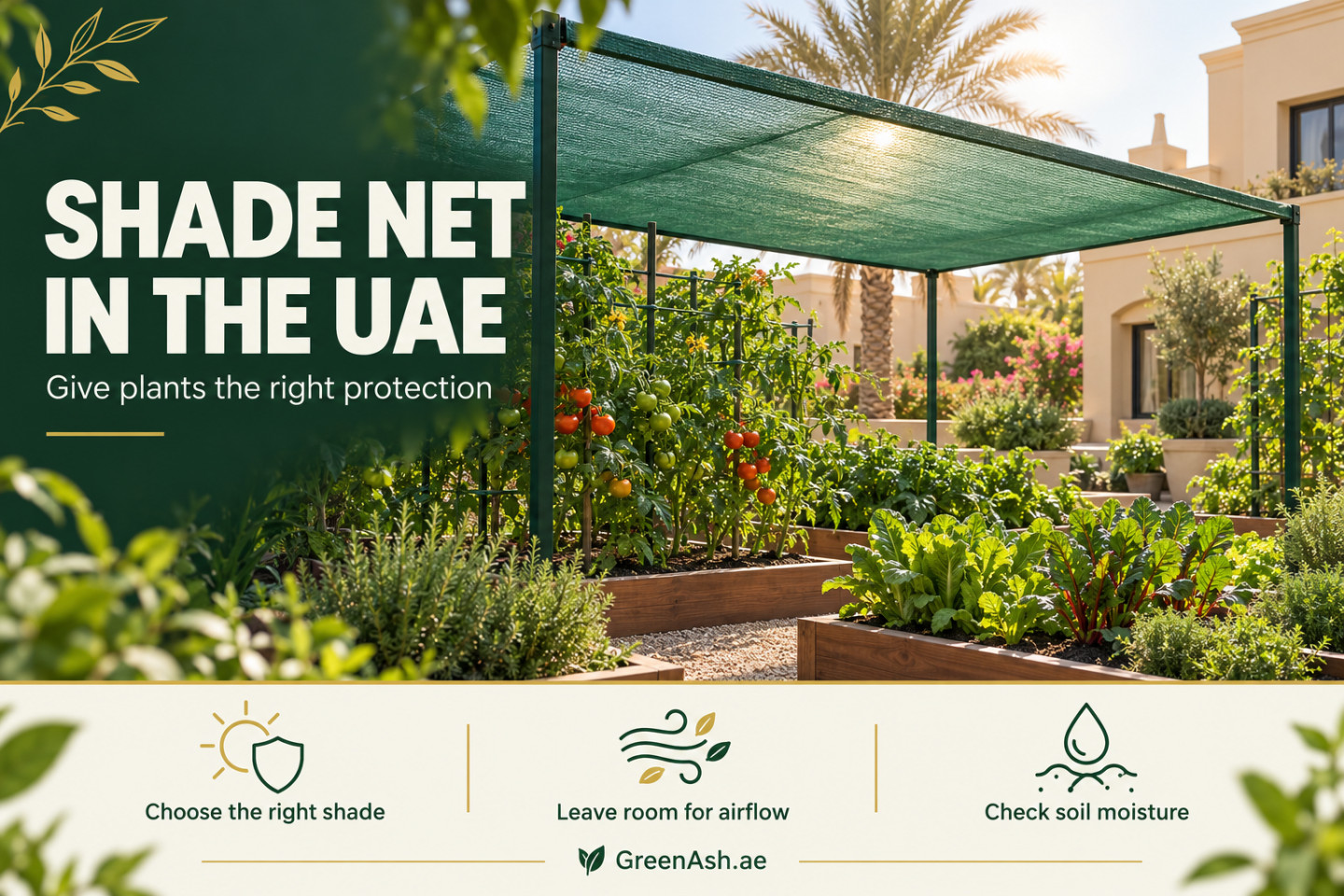
For most vegetables in a UAE summer, the right green shade net is around 30 to 50% shade, not 70%. A west Texas university trial found that 50% shade kept tomato yields level with full sun, while 70% shade cut tomato and pepper yields significantly; peppers set fewer marketable fruit even at 50%. A 70% net still has its place: over seating areas, parked cars, pets, new transplants in their first hot week, and fruiting crops during the very hottest hours. By the end of this guide you will be able to choose a shade level for each part of your garden, tell whether your plants are getting too much or too little shade, size a net for a balcony, a raised bed or a small farm plot, and fix it so it cools the plants instead of cooking them.
What the percentage on a shade net means
The number on a shade net is the share of sunlight it is rated to block. A 70% green shade net is rated to stop roughly 70% of the light and let about 30% through. Nets are sold from around 20% to 90%, and the right choice depends on the plant, not on how hot it feels outside.
Two findings are worth knowing before you buy.
- The rating is not the whole story. In a 2016 high tunnel trial reported by Purdue University’s Vegetable Crops Hotline, a black cloth sold as 30% shade cut light by more than 60% in strong sun, and by around 30% on a cloudy afternoon. Under bright UAE sun, the real shade may well be heavier than the label suggests.
- Shade lowers intensity, not hours. UC Master Gardeners in Stanislaus County point out that a shade cloth reduces how strong the light is, not how many hours of sun the plant gets. That is why a moderate net can protect a plant without starving it.
How shade actually helps a plant in the heat
A leaf in full summer sun absorbs far more energy than it can use. It heats up and loses water through its pores faster than the roots can replace it. Shade helps in three ways:
- Cooler leaves. The HortTechnology trial in west Texas (Masabni and colleagues, 2016) found that both 50% and 70% shade lowered leaf temperature in tomatoes and chilli peppers.
- Cooler air under the net. In the Purdue trial, air under the 30% cloth peaked at 109°F (about 43°C) on a sunny day against 119°F (about 48°C) without it, a drop of about 5.5°C. Night temperatures were unchanged.
- Less water loss. UC Master Gardeners note that shade reduces wilting and sunscald, lowers transpiration and keeps the soil cooler with less evaporation.
The cost is light. Plants make food from light, so every extra percent of shade is a trade. In the west Texas trial, tomato growth and photosynthesis were best under 50% shade. Chilli pepper photosynthesis was actually highest in full sun, and its marketable fruit count was lower under 50% shade, which tells you peppers need even less shade than tomatoes.
Does the colour of the net matter?
Somewhat. A three season trial reported in the Emirates Journal of Food and Agriculture (2023), run on tomatoes in the rainy season at Bhopal in India, tested red, white, black and green nets at 35%, 50% and 75%. Green nets let through the most light at every shade level and cooled the least: 1.4 to 3.5°C below the outside air, against 3.2 to 5.9°C under black nets. Plants grew best under 50% shade, the highest yield came from the 50% red net, and the lowest from the 75% green net. A University of Delaware extension specialist adds that white or aluminised cloth may give extra cooling. For a home garden, green is a sound choice that blends in; just do not expect it to cool as much as black or white at the same rating.
Which shade percentage for which plants
| What you are protecting | Suggested shade | Evidence |
|---|---|---|
| Tomatoes | About 30 to 50% | 50% matched full sun yields with fewer unmarketable fruit; 70% cut yields (Masabni et al. 2016). Purdue advises 30% or less |
| Peppers and chillies | 30% or less where you can | Pepper photosynthesis was highest in full sun, and marketable fruit count fell under 50% (Masabni et al. 2016) |
| Lettuce, spinach and other leafy greens | 20 to 40%, often about 30% | University of Delaware gives 20 to 40% for vegetables, including leafy greens; shade slows bolting of lettuce and spinach (SARE fact sheet) |
| Strawberries | Up to about 50% | A Texas A&M study found 50% shade improved Poteet strawberry yields over a longer season (Bexar County Master Gardeners) |
| Ornamentals and bedding plants | About 30% | Texas A&M AgriLife trials found ornamentals did best under 30% through a hot summer (Bexar County Master Gardeners) |
| New transplants, cuttings and seedlings in heat | Heavier shade for the first week or two, then lighter | UC Master Gardeners list transplanting as a key use; young roots cannot yet keep up with water loss |
| Nursery plants waiting to be planted | About 50% | San Antonio Botanical Garden holds plants under 50% cloth to harden them off (Bexar County Master Gardeners) |
| Seating areas, pergolas, car parking, pets | 70% or more | Comfort, not plant growth, is the goal |
The pattern is clear across all the trials: moderate shade protects, heavy shade costs fruit. The University of Delaware specialist puts it simply: choose between 20 and 40% for vegetables, and do not shade so heavily that photosynthesis drops.
Why 70% is too dense for fruiting vegetables all day
Tomatoes and peppers need a lot of light to set and fill fruit. In the west Texas HortTechnology study, carried out from May to August, 50% shade gave tomato yields similar to full sun with fewer damaged fruit, while 70% shade significantly reduced yields of both crops. The authors suggested that shade below 50% might work better still. The Indian trial pointed the same way, with its densest green net giving the lowest tomato yield.
So if all you have is a 70% net, keep it for the jobs below, or use it over fruiting crops only during the hottest part of the day and roll it back afterwards.
Where a 70% net is the right choice
- Over a seating area, pergola, children’s play area or parking spot.
- Over pets’ outdoor space in the afternoon.
- As a cover for new transplants and cuttings for their first hot week or two, then removed or swapped for lighter shade.
- As a midday only cover over tomatoes and peppers on the hottest days.
- As a privacy or dust screen on fences, railings and building sites, where plant growth does not matter.

Is it too much sun, or too much shade? How to tell
Before you buy or move a net, check what the plants are telling you. Some heat symptoms look like other problems, so use the right hand column to rule those out.
| What you see | Likely cause | What to do | When it is NOT this |
|---|---|---|---|
| Pale, papery or bleached patches on the sun facing side of tomatoes or peppers | Sunscald | Add 30 to 50% shade over the hottest hours; keep leaf cover over fruit | Dark, sunken, leathery patches at the flower end of the fruit point to blossom end rot, a watering and calcium problem |
| Leaves wilt every afternoon but recover by evening | Heat and water stress | Afternoon shade; check soil moisture at root depth | Wilting that does not recover overnight, with wet soil, suggests root rot or overwatering |
| Lettuce and coriander bolting, leaves turning bitter | Heat | 20 to 40% shade; sow heat sensitive greens in the cool season | Bolting in cool weather can simply mean the plant is old |
| Brown, crisp leaf edges on young shrubs | Leaf scorch from sun, heat and wind | Temporary shade and a windbreak while roots establish | Brown tips that spread inwards on watered plants may be salt build up |
| Tall, stretched stems with long gaps between leaves | Too much shade | Lower the shade level or shade fewer hours | Stretching on seedlings indoors comes from low light anywhere, not only nets |
| Plenty of leaves and flowers, few fruit, under a dense net | Too much shade | Switch to lighter shade or remove the net in the morning and evening | Flower drop on tomatoes and peppers in extreme heat can happen even in good shade |
| Mildew or leaf spots appearing under a fully enclosed net | Still, humid air | Open the sides; raise the net | Spots that appear in open beds too need a disease check |
The stretching sign is not guesswork. In the Purdue trial, tomatoes under shade grew longer internodes and taller plants, and determinate plants needed tying more often.
When to put the net up, and when to take it down
Purdue’s advice is to use shade with caution, keep it moderate, and if possible put it up only on days when the maximum temperature passes 90°F (about 32°C), removing it when temperatures drop. That gives you a practical rule for the UAE: check the forecast, and shade fruiting crops on days above about 32°C.
| Period | Fruiting vegetables | Leafy greens and herbs | Transplants, shrubs and people |
|---|---|---|---|
| Late September to October | Light shade over new transplants on hot afternoons; remove as days cool | 20 to 40% shade over new sowings while days are still hot | Shade new plantings for their first week or two |
| November to February | No net: this is the main growing season and plants want all the light | No net in most gardens | No net needed; roll it up and store it |
| March and April | Put light shade back on days that pass 32°C; remove on cooler days | Light shade to slow bolting as heat builds | Shade spring transplants |
| May to early September | 30 to 50% over the hottest hours, or 70% at midday only | Most cool season greens struggle; heat tolerant herbs under 30 to 40% | 70% over seating, cars and pets |
Balcony, villa, rooftop and farm
- Balconies: the problem is often the low afternoon sun and heat reflected from walls and glass. A vertical panel on the sun facing side does more than a roof. Check your building’s rules before tying anything to railings, and fix it so it cannot blow loose.
- Villa gardens: a fixed frame over one or two raised beds lets you shade the vegetable area without darkening the whole garden. Use 70% only over the patio.
- Rooftops: wind is the main risk. Use more ties at shorter spacing, keep the net taut, and take it down before forecast storms.
- Farms and large plots: a post and wire frame high enough to walk and work under, as the University of Delaware describes. We suggest running the net in strips across the wires.
- Coastal and humid areas: leave the sides open so air moves, because humid air trapped under a closed net favours leaf diseases.
How to put up a shade net so it actually works
- Keep it well above the plants. A net lying on leaves passes heat straight into them. UC Master Gardeners suggest matching the height to the plants, and for tomatoes taller than about 1.8 m, a cover above about 2.4 m.
- Shade the afternoon first. UC Master Gardeners recommend shading the hottest part of the day, usually the afternoon. Cover the top, and if you can add one side panel, put it on the west.
- Use the reinforced edges. Our net’s product page says it has reinforced edges for tying to poles, fences or trellises. If you cut a roll to length, fold and tie or tape the cut end, since only the original edges are reinforced.
- Pull it taut and tie it often. UC Master Gardeners advise securing cloth against winds of 10 to 15 mph (about 16 to 24 km/h). A loose net flaps, wears through at the ties and drops onto plants.
- Leave the sides partly open. The cloth does not need to reach the ground if the plants are mostly shaded, which keeps air moving.
- Make it removable. Tie one edge permanently and the other with quick release ties, so you can roll it back on cooler days, as Purdue advises.
How much net do you need? Three worked examples
Our green shade net is 2 m wide and comes in lengths of 2, 5, 10, 40 and 50 m. To size it, measure the area, add about 50 cm on every side so the moving shadow still covers the edges, and run 2 m strips side by side with a 10 cm overlap where the area is wider than 2 m.
1. A balcony planter
A 1 m railing planter on a west facing balcony. A vertical panel 2 m wide and 2 m high, tied above and beside the planter, blocks the afternoon sun from the side. One 2 m by 2 m piece.
2. A raised vegetable bed
A bed 3 m long and 1.2 m wide. Add 50 cm all round: 4 m by 2.2 m. One 2 m by 5 m piece covers the length with 50 cm to spare at each end of the bed, leaving 40 cm of overhang on each long side instead of 50. If you want a west side panel instead, shift the net so the spare metre hangs down the west end; the east end then simply meets the bed edge.
3. A small farm or vegetable plot
A plot 9 m long and 7 m wide (63 m2). Add 50 cm all round: 10 m by 8 m. Strips 10 m long, 2 m wide, overlapping 10 cm: four strips cover 2 + 1.9 + 1.9 + 1.9 = 7.7 m, giving about 35 cm of overhang on each side. That is four 2 m by 10 m pieces, or one 40 m roll cut into four. Tie the strips together along every seam.
Water less under shade, and check before you do
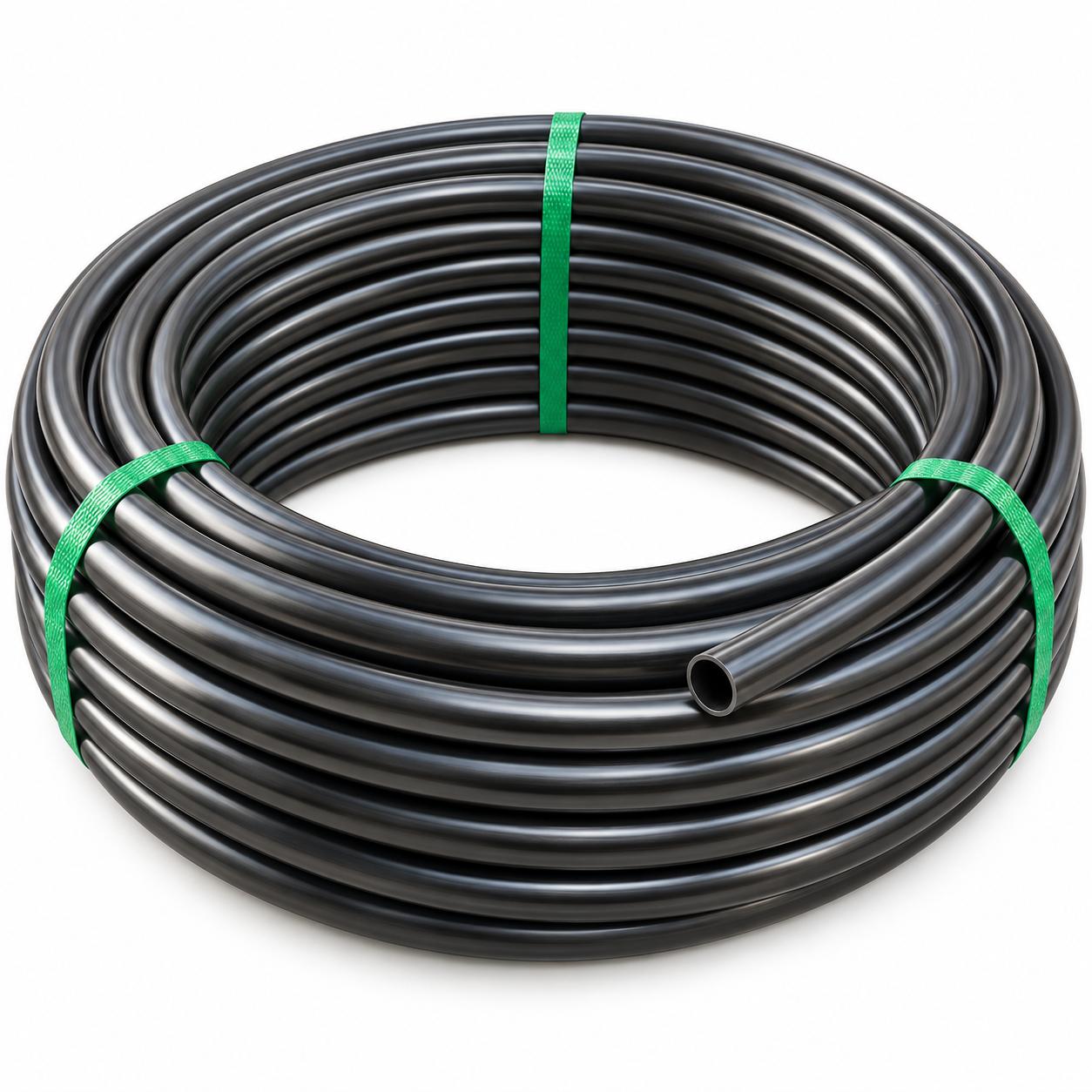
Shaded plants lose less water, so the watering schedule that kept them alive in full sun can drown them under a net. Before your usual watering, push a finger or a thin stick 5 to 10 cm into the soil next to the plant. If it comes out damp, wait. For beds, a drip line puts water at the roots without wetting leaves, which also matters under a net where leaves dry more slowly. Our guide to setting up and testing drip irrigation explains how to measure what each emitter gives.

Common mistakes
- Buying the densest net because the summer is extreme. Heat is a reason to shade, not a reason to shade heavily. In the trials, the heaviest shade (70 to 75%) gave the lowest yields.
- Laying the net on the plants. It traps heat against the leaves. Build a frame.
- Enclosing a bed on all sides. Still air under a closed net holds humidity. Leave the sides partly open.
- Leaving the net up all winter. From November to February most crops want full light. Shade then only slows them down.
- Keeping the same watering schedule. Plants under shade use less water. Check the soil first.
- Trusting the rating blindly. Purdue measured more than double the rated shade in strong sun. If plants stretch, go lighter.
- Tying it loosely on a roof or balcony. Wind tears loose nets and can blow them off. Tie at short intervals and check after storms.
Troubleshooting
- Still scorching under the net: check whether the damage is on the west side, where low afternoon sun gets under the roof. Add a side panel. Check the net is well clear of the leaves, with room for air to move underneath.
- Plants growing tall and floppy, few fruit: too much shade. Roll the net back in the morning and late afternoon, or swap to a lighter net.
- Leaf spots or mildew after the net went up: open the sides, water at the base early in the day, and remove badly affected leaves. If it spreads, get it identified before choosing a fungicide.
- Net sagging or tearing at the ties: pull it tighter, add ties between the existing ones, and support long spans with a wire or rope along the middle.
- When to call a professional: for shade structures over parking, play areas or anything above head height on a roof, use a contractor who can design the frame for wind loads.
Safety
- Wind: a large net acts like a sail. Anchor poles firmly, keep spans taut and take temporary nets down before storms.
- Balconies: fix screens to the inside of the railing, never to anything that could fall to the street, and follow your building’s rules.
- Children and pets: keep guy ropes, wire and cut ends out of play areas and away from eye height, and do not leave loose net where pets can get tangled.
- Sprays under a net: if you treat plants under a net, follow the product label, its harvest interval and its protective equipment, and leave the sides open so spray vapour does not collect.
- Storage: roll the net clean and dry and store it out of the sun when not in use. The product page does not give a service life, so check it for brittle or torn areas before each summer.
Products compared
| Product | What it is | Key spec on the page | Sizes | Suits | Not suited to | Gaps on the page |
|---|---|---|---|---|---|---|
| Green Shade Net 70% | UV stabilised HDPE net | 70% shade factor; reinforced edges | 2 m wide by 2, 5, 10, 40 or 50 m | Seating, parking, pets, transplants, screens | All day cover over fruiting vegetables | No weight per m2 or service life; title lists sizes that are not sold |
| GhafDrip 16 mm lateral pipe | Black PE drip lateral | 16 mm, 1.1 mm wall, 5 bar maximum | 50 m roll | Watering shaded beds at the roots | Use without emitters | No emitters or fittings listed |
| Orbit Buddy timer | Single outlet tap timer | Adjustable duration and frequency, rain delay | One unit | Hose or drip watering on a schedule | Multi zone systems | No battery type or programme ranges |
We do not currently stock a 30 to 50% net. If you are shading vegetables all day, a lighter 30 to 50% net would suit them better than our 70% net; ours remains the better choice for the uses where heavy shade is the point.
Frequently asked questions
Is 70% shade net good for vegetables?
Not as an all day cover. In the west Texas trial, 70% shade significantly cut tomato and pepper yields, while 50% kept tomato yields level with full sun (pepper marketable fruit count was somewhat lower at 50%), and the University of Delaware recommends 20 to 40% for vegetables. Use 70% over vegetables only in the hottest hours, or for a week or two after transplanting.
What shade percentage is best for tomatoes in the UAE summer?
Around 30 to 50%. The west Texas trial (published 2016) found 50% kept tomato yields level with full sun and reduced damaged fruit, and its authors suggested shade below 50% might work better. Purdue advises 30% or less.
How much cooler is it under a shade net?
It depends on the net and the site. Green nets in the Indian tomato trial cooled the air by 1.4 to 3.5°C, black nets by 3.2 to 5.9°C, and the Purdue 30% black cloth by about 5.5°C on a sunny day inside a tunnel. Leaves under shade are cooler too.
Does the colour of shade net matter?
Green lets through the most light and, in the Indian trial, cooled the air about half as much as black or white (1.4 to 3.5°C against 3.0 to 5.9°C). White or aluminised cloth may give extra cooling, according to the University of Delaware.
Should I keep the shade net up in winter?
Usually not. From November to February most plants want full light, so roll it up and store it.
How high should a shade net be above plants?
High enough that it never touches the leaves and air can move underneath. UC Master Gardeners suggest a cover above about 2.4 m for tomatoes taller than about 1.8 m.
Can I use shade net as a privacy screen on a balcony?
Yes, the same net works on fences and railings, where strength and fixing matter more than the shade percentage. Tie it at short intervals and check your building’s rules first.
Why are my plants leggy under the shade net?
They are getting too little light. Shade fewer hours, raise and open the sides, or switch to a lighter net. The Purdue trial saw longer stems even under a cloth sold as 30%.
Need shade for a seating area, pergola or new transplants? Our 70% green shade net is UV stabilised and comes in 2 m wide rolls. For the plants underneath, see our guides to growing tomatoes and growing peppers and chillies in the UAE, our garden hose guide, and our irrigation and watering range.
