
Blog
Aphids on Roses and Vegetables in the UAE: When to Rinse, Prune or Wait

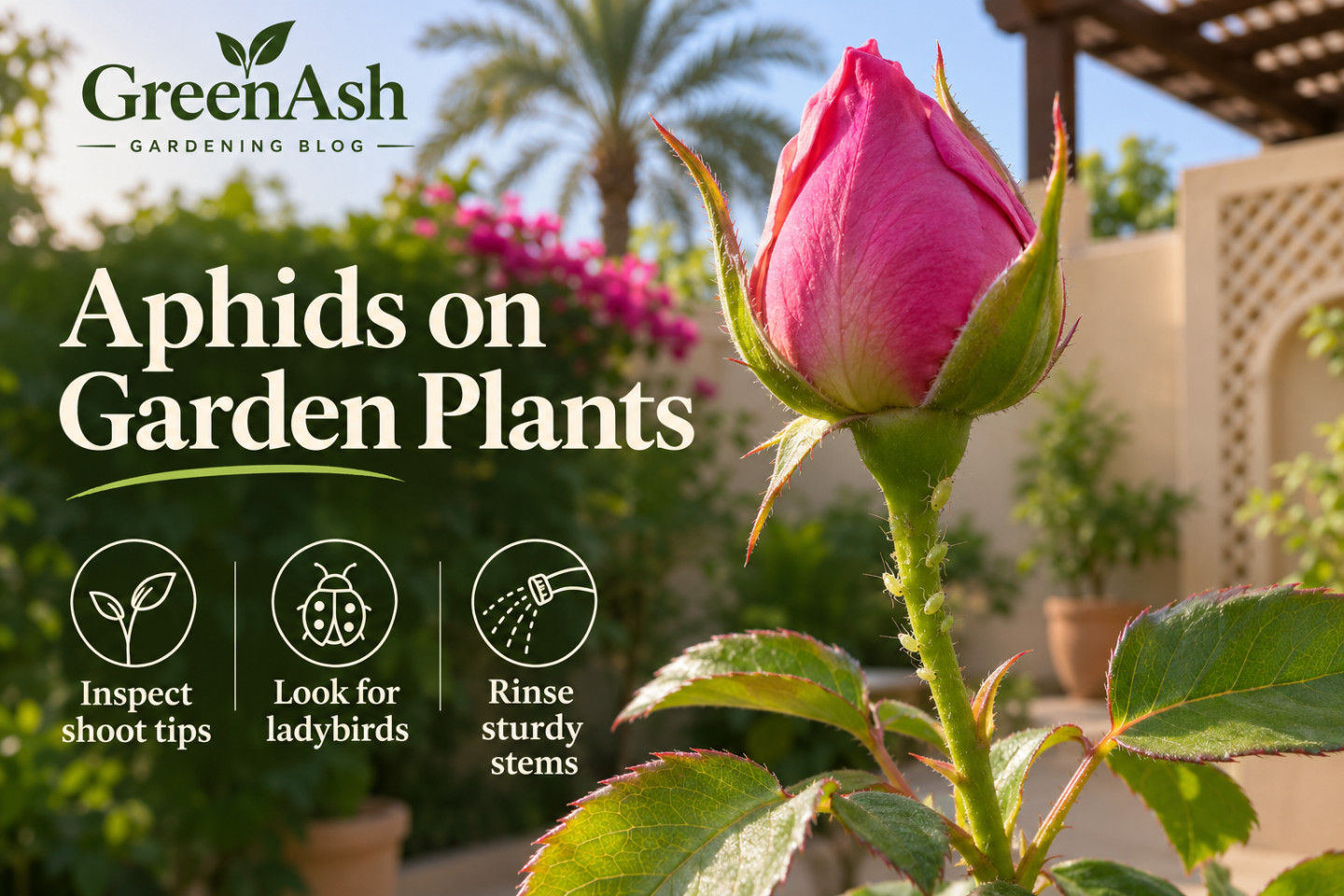
Look just below an unopened rosebud or under a young pepper leaf. If a cluster of small insects is feeding there, the first decision is whether the plant needs help. A few aphids on an established rose and a colony covering the growing tip of a seedling call for different responses. The short answer: on a sturdy rose, rinse the colony off with water and let ladybirds and parasitic wasps finish the job; on a crowded seedling, remove the aphids by hand and protect the tip; prune a single curled shoot; and wait, while watching, wherever predators are already at work. Sprays come second, and only after you have rechecked.
Here is how to make that decision in a UAE balcony garden or vegetable bed, how the UAE cool season changes the timing, and, if water and pruning are not enough, how to choose and mix a spray without harming the plant, the harvest or the helpful insects.
How to identify aphids on roses and vegetables
Turn the leaf over and examine the insects with a hand lens or your phone camera. Aphids are soft-bodied, often pear-shaped, and many have two short tubes projecting from the rear. These tubes are called cornicles, and the University of California aphid guide notes that their presence distinguishes aphids from all other insects. The University of Minnesota Extension guide puts adults at about 2 to 4 mm long, and points to another clue: white cast skins left on leaves after the young moult.
Look for groups on tender growth. Colour alone is unreliable: the rose aphid can be pink or green on the same bush, and vegetable aphids range from pale yellow to grey or black. A sticky leaf or an ant trail is a reason to inspect the shoot above it, since aphids and other sap-feeding insects produce honeydew. Some colonies include winged adults. These appear when a shoot becomes crowded, and they fly or drift on the wind to start new colonies on nearby plants.
Before disturbing a colony, look for ladybird beetles, lacewing larvae or swollen, papery tan aphids. These tan shells, called mummies, are evidence that parasitic wasps have attacked aphids. Look closely at small, grey or green maggot-like larvae moving among the aphids too: these are often hoverfly larvae, which eat aphids. The University of California guide includes identification photographs and explains how to recognise natural enemies.
Where each crop gets hit first
- Roses: the stem just under a bud, the bud itself and the softest leaves at the shoot tip. Clemson University’s rose pest fact sheet names the rose aphid, Macrosiphum rosae, as the most common species and notes that heavy feeding distorts new growth and reduces both the number and quality of blooms.
- Peppers, chillies and aubergine: the undersides of the youngest leaves and the growing tip.
- Cabbage, cauliflower, broccoli and kale: grey, waxy colonies tucked into the inner leaves and the developing head, where water and sprays reach poorly.
- Cucumber, squash and melon: the underside of leaves near the vine tip. These crops matter most because aphids can carry viruses such as cucumber mosaic virus.
- Lettuce and leafy herbs: deep in the heart, where you only find them after harvest. Check by gently opening the centre of one plant in each row.
What it looks like when it is not aphids
| What you see | Likely cause | How to tell | What to do |
|---|---|---|---|
| Clusters of soft, pear-shaped insects with two rear tubes on buds and tips | Aphids | Cornicles visible with a hand lens; white cast skins nearby | Follow the decision steps below |
| Tiny white insects that fly up when the leaf is touched | Whitefly | Adults have white wings and fly; scale-like young stay flat on the leaf | Different life cycle; water rinses work less well |
| Fine stippling, pale speckles, webbing under leaves | Spider mites | Tap the leaf over white paper and look for moving specks | See our spider mite guide |
| Silvery scars, black dots, distorted petals | Thrips | Slender insects that move fast inside flowers | Shake a flower over white paper to check |
| White, cottony clusters on stems and leaf joints, slow moving | Mealybugs | Waxy coating covers the whole body; often in crevices | Rinsing helps little; pick off and treat differently |
| Black, sooty film on leaves with no insects on that leaf | Sooty mould growing on honeydew | Insects are on the shoot or tree above | Find the source above it; the mould wipes off |
| Curled, yellow leaves with no insects at all | Old aphid damage, heat, water stress or a virus | No live insects or cast skins on fresh tips | Do not spray; check watering and new growth |
Why aphid colonies explode, and why that changes what you do
Aphids feed by pushing needle-like mouthparts into the plant’s sap stream. Sap is rich in sugar but poor in protein, so aphids pass large volumes and excrete the excess sugar as honeydew. That sticky film is what draws ants, and it is where black sooty mould grows. The mould does not attack the plant, but it shades the leaf.
Most garden aphids skip mating for much of the year. The University of California guide explains that females give birth to live young, often as many as 12 per day, and in warm weather a newborn can become a reproducing adult in 7 to 8 days. Each adult can produce up to 80 offspring in a week. Clemson’s rose fact sheet sums up the practical result: leaving even one aphid alive can lead to a large population very quickly. This is why a single rinse rarely ends a problem, and why rechecking the same shoots matters more than the first treatment.
The same biology also works in your favour. The University of California guide notes that many species do most damage at about 18 to 27 C and that summer heat in desert areas reduces many populations. In the UAE that means the aphid season lines up with the cool growing season, and many colonies on roses and vegetables fade as days heat up in late spring. A colony found in late April may need patience more than a spray.
Natural enemies follow the aphids. When mummies appear, the University of California guide says populations may drop substantially within a week or two. Ants work against this: they feed on honeydew and drive off predators, so an aphid colony tended by ants often keeps growing where an untended one collapses. Too much nitrogen fertilizer favours aphid reproduction too, because soft, fast growth is exactly what they feed on.
Finally, the virus question. Aphids can carry viruses into cucumbers, squash, melons, beans and lettuce. The University of California guide warns that transmission takes only minutes, so killing aphids does not reliably stop a virus. On those crops, prevention (covers on young plants, removing infected plants early) does more than spraying after the fact.
Decide what to do with the colony
- A few aphids, normal new growth. Mark the shoot with a loose tie or photograph it. Check again while the plant is growing. If predators are present and the colony is shrinking, leave them to feed. The University of California Quick Tips card notes that most established plants tolerate aphid feeding and outgrow the damage.
- A crowded bud on a sturdy rose. Support the stem and direct plain water at the colony. Start gently and increase the flow just enough to dislodge the insects. Check under the bud afterwards. Leave nearby shoots with natural enemies alone where practical.
- A young vegetable seedling with a crowded tip. Inspect its neighbours straight away. A strong hose jet can flatten a seedling. Gently dislodge accessible aphids by hand without pinching out the growing point. Recheck the plant closely for survivors.
- A colony enclosed in curled foliage. Unfold a leaf gently to see what is still alive inside. On a well-established plant, pruning one badly infested shoot can remove an isolated colony. Preserve healthy growth and the main shoot of a young transplant.
- Ants running up and down the stem. Deal with the ants as well as the aphids, or the colony will be protected from predators. On a shrub or small tree, the University of California guide suggests wrapping the trunk with tape and putting a sticky barrier on the wrap, never directly on thin bark.
- Colonies on several plants, new growth twisted, rinsing tried twice. This is the point to consider a spray, using the checks further down.
A quick decision table
| Situation | First action | Recheck | Move to a spray if |
|---|---|---|---|
| Under 10 aphids on one rose shoot, mummies or ladybirds present | Wait and mark the shoot | 3 to 4 days | Colony has grown and predators have gone |
| Crowded rosebud, sturdy stem | Rinse with water in the morning | 2 to 3 days | Colonies return on several buds after 2 rinses |
| Seedling tip covered | Remove by hand, check neighbours | Next day | Several seedlings affected and losing their tips |
| Single curled shoot on an established plant | Prune it and bag the cutting | 3 to 4 days | New curling appears on fresh tips |
| Inner leaves of cabbage or broccoli | Peel and remove the worst outer leaves, rinse | 2 to 3 days | Colonies are inside the head |
| Late April to May, colony on a hardened shoot | Rinse once and wait for heat | 1 week | Rarely needed |
The numbers in this table are recheck intervals we suggest for home gardens, not thresholds from a study. University sources do not give a fixed number of aphids that justifies spraying on garden roses or vegetables. The University of Minnesota guide is direct: in most cases aphids cause little or no harm, and treatment is only worth it when they cause real problems.
Use a hose without damaging the plant
A limited rinse of a sturdy shoot is enough for a first attempt. Angle the stream towards the underside where insects are sheltering. On a balcony, move the pot to a spot that drains and direct the spray away from neighbouring pots and the balcony edge. Check the potting mix before the next routine watering.
Rinse early in the day. The University of California guide recommends the morning so plants dry quickly, and in the UAE that also keeps you ahead of the midday heat. Clemson suggests aiming above and below the leaves and repeating as needed, focusing on new growth. Plan for two or three rinses a few days apart rather than one hard blast: dislodged aphids that survive can climb back, and newborns keep arriving.
If a plain hose end is difficult to control, a Beorol GPP9 multi-pattern garden hose nozzle lets you select a spray pattern. Test it away from the plant first. Check the hose-end connection before buying an attachment. Our garden hose and fittings guide explains how to match the parts. The University of Minnesota Extension guide also describes water removal and the role of natural enemies.
A few cases where water is the wrong tool:
- Seedlings with two to four true leaves. Use a soft brush or your fingers instead.
- Rosebuds that are already showing colour. A hard jet can bruise petals; a gentle rinse is fine.
- Cabbage and broccoli heads. Water collects inside and the colony stays protected; remove affected leaves instead.
- Pots on an apartment balcony where runoff drips onto the floor below. Take the pot to a sink or shower tray, or wipe colonies off by hand.
When to prune, and how
Pruning works best when the colony is concentrated in one place. The University of California guide recommends removing heavily infested or curled leaves and shoots, because curled leaves shelter aphids from both sprays and predators.
- Choose one shoot only. As a rule of thumb, if more than a quarter of the plant’s tips are infested, pruning will cost too much growth; rinse instead.
- On roses, cut a few centimetres below the colony, just above an outward-facing leaf. Use clean, sharp secateurs.
- Hold a bag under the shoot as you cut so the aphids fall in, not onto the next plant. Seal it and put it in the bin, not the compost.
- On a young pepper, aubergine or tomato, do not cut the main growing tip. Remove only a curled side leaf, and wipe the tip clean by hand.
- Recheck the plant three to four days later, looking at the next buds below the cut.
Recheck the same shoots before choosing a spray
During rapid growth, inspect plants at least twice a week. Compare the marked shoot with the original photograph and look at one fresh tip nearby. Record whether live colonies are smaller, stable or spreading. An old curled leaf may stay misshapen after the insects are gone. Fresh distortion with a growing colony is a better reason to reconsider your approach.
A simple log helps: date, plant, number of shoots with live aphids, predators seen, what you did. Three entries over a week will tell you more than any single look.
If aphids keep spreading and new growth is suffering, identify the plant and pest before selecting a treatment. For food crops, check that the current UAE pack label covers the exact crop, pest and application site. Read its harvest interval, flowering restrictions and protective equipment directions. A product suitable for a rose can have different directions for edible peppers. Our guide to reading an insecticide label walks through those checks.
If you do need a spray: choosing by situation
The University of California guide lists insecticidal soaps and oils, including plant oils such as neem, as the preferred aphid sprays. They work on contact, kill only the aphids present on the day you spray and leave the predators that arrive later largely alone. The same guide advises against broad-spectrum insecticides such as organophosphates, carbamates and pyrethroids for garden aphids, because they kill the natural enemies. The University of Minnesota guide adds that residual pesticides of this kind can make aphid problems worse.
Three rules apply to every spray below:
- Coverage decides results. Contact sprays must hit the aphid. Spray the undersides of leaves and the stem under the bud, with enough volume to wet them.
- Not on stressed plants or in heat. The University of California guide says not to apply soaps or oils above 32 C (90 F), and not to water-stressed plants. Water the day before and spray in the early morning or evening.
- Test first. Spray a few leaves and wait several days for spotting or burn before treating the whole plant.
For roses and vegetables in pots or a small bed: neem oil
Neem oil is the most flexible first spray for a home garden. The National Pesticide Information Center neem oil fact sheet explains that azadirachtin, its main active component, reduces feeding, repels insects and disrupts their growth hormones. The University of Minnesota guide adds that aphids stop feeding and die slowly, so do not judge it after one day. Look again after three to four days.
The Vembu Neem Oil 80% EC product page lists aphids among its target pests and gives 2 to 3 ml per litre for vegetables and for ornamentals. It says to apply in cooler parts of the day and to repeat based on pest pressure and monitoring.

For a non-chemical contact spray on vegetables and ornamentals: Siltac EC
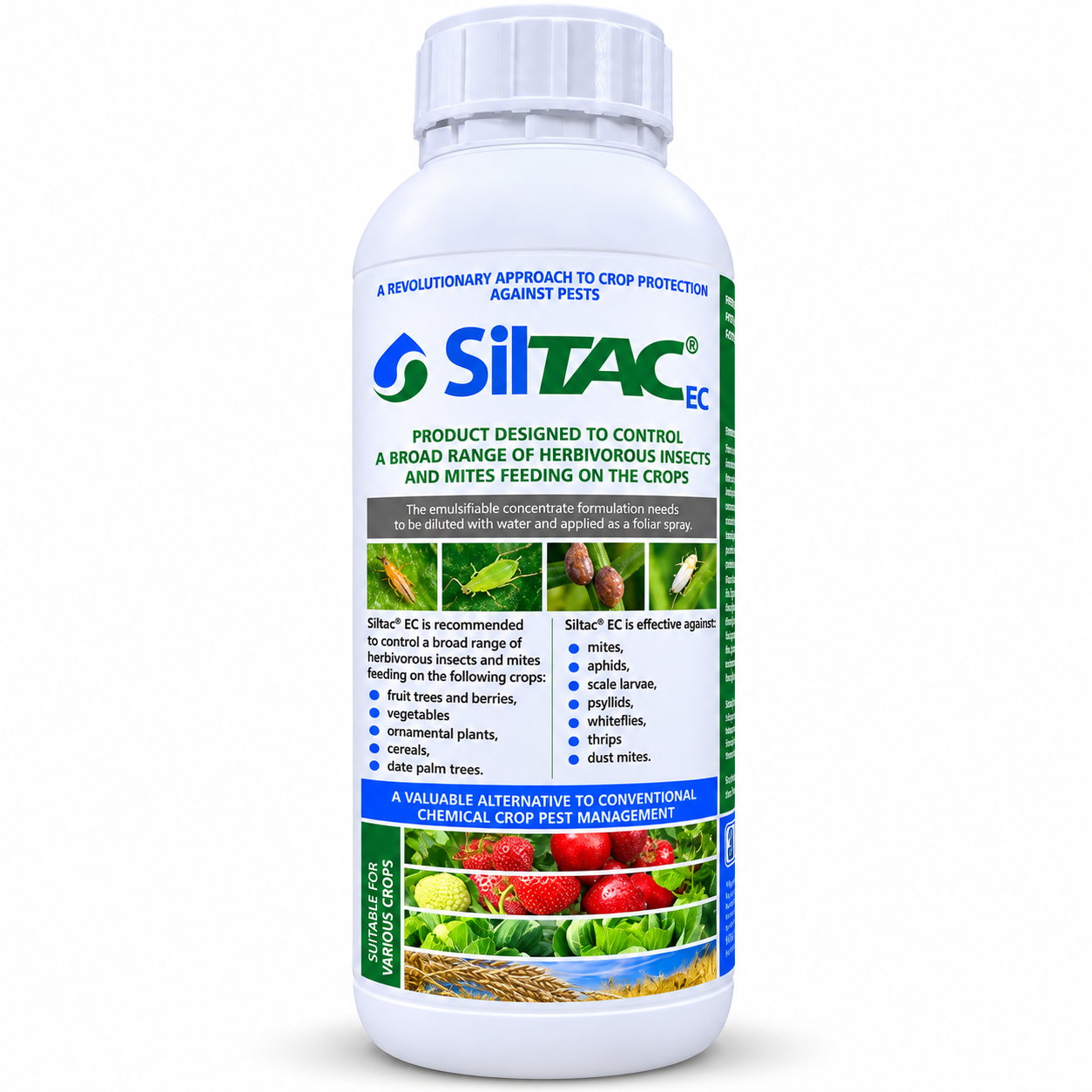
Siltac EC works differently. The product page describes a physical action: silicone polymers form a net over the insect and immobilise it, with no conventional pesticide active ingredient. It names aphids among its target pests. The page gives 0.1 to 0.15% for vegetables and ornamentals (100 to 150 ml per 100 L of water), and 0.1% for sensitive plants. For ornamentals it adds a repeat 1 to 2 times every 7 to 10 days if needed. It also warns of leaf damage on some tomato cultivars and petal damage on some geranium, gerbera and chrysanthemum cultivars, and asks for a small test first. The page gives no harvest interval, no registration number and no protective equipment wording, so read the pack label for those before using it on food crops.
For a heavy outbreak on peppers, cucumbers or tomatoes before flowering: acetamiprid
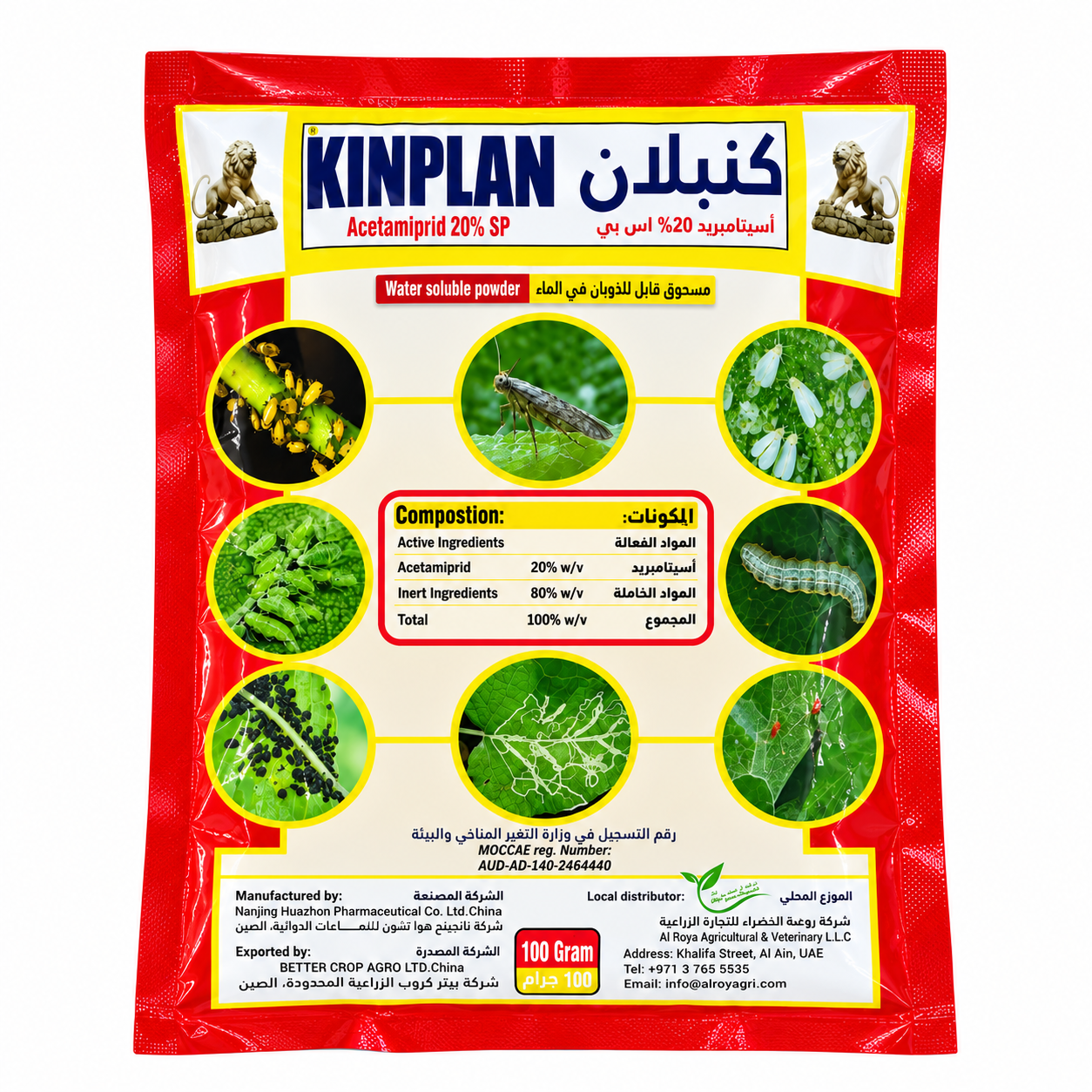
Acetamiprid is a neonicotinoid. The University of California active ingredient database describes it as a systemic, broad-spectrum insecticide that disrupts the insect nervous system. Broad spectrum means it can also hit ladybirds, lacewings and parasitic wasps that touch or feed on treated plants. A University of Florida toxicity profile (Fishel, PI-80, 2005) rates acetamiprid as moderately toxic to honey bees, meaning it kills bees if sprayed over them, and less hazardous to bees than imidacloprid or thiamethoxam. Because it moves inside the plant, it reaches aphids that contact sprays miss, which is also why it belongs after the water, pruning and contact steps, not before.
The KINPLAN Acetamiprid 20% SP page lists aphids on cucumber, tomato, pepper, aubergine, squash, watermelon, potato and citrus. It does not list roses, so we would not use it on them. The page sets a 3 day harvest interval, a maximum of 2 applications per season at least 20 days apart, and says not to apply during flowering. On fruiting vegetables that limit is a real one: it fits young plants with a bad outbreak before the first flowers open, not a crop already in bloom.
For spot treatment on a balcony: a small pressure sprayer
For a few pots, a 2 L handheld sprayer gives better control than a large tank and lets you mix only what you need. Adjust the nozzle to a fine spray that wets the underside of leaves without runoff. Our garden sprayer guide compares sizes and explains cleaning between products. Keep one sprayer for pesticides and label it, so it is never used for watering.

Products compared
| Product | Active or type | Strength and pack | Use for aphids | Rate on the page | Harvest interval on the page | Suits |
|---|---|---|---|---|---|---|
| Vembu Neem Oil 80% EC | Neem oil | 80% EC, 1 L | Contact and feeding deterrent | 2 to 3 ml/L vegetables and ornamentals; 4 to 5 ml/L fruit trees | Page says none required | Roses, vegetables, pots and beds |
| Siltac EC | Silicone polymer, physical action | EC, 1 L | Contact, physical | 0.1 to 0.15% (1 to 1.5 ml/L) | Not given | Vegetables and ornamentals; test sensitive cultivars |
| KINPLAN Acetamiprid 20% SP | Acetamiprid (neonicotinoid) | 20% SP, 100 g | Systemic | 2 to 4 g per 10 L (pepper, aubergine, citrus); 4 to 6 g per 10 L (cucumber, tomato, squash) | 3 days | Listed vegetables before flowering; not roses |
| Sivanto Prime 200 SL | Flupyradifurone | 200 g/L SL, pack not stated | Systemic | 50 to 100 ml per 100 L (“typical dose”) | Not given; page says follow crop PHI guidelines | Farms that can get the full label; not boxed |
| Neem Raz | Neem oil | 60%, 1 L | Contact and feeding deterrent | 5 ml/L | Not given | An alternative neem; claims on the page go beyond the evidence |
We left Sivanto Prime out of the boxes because its page gives no harvest interval, pack size or registration number. Two other aphid products in the store, Taekwando 250 CS and Imidacloprid 17.8% SL, are marked restricted use on their pages, so we do not recommend them for home gardens.
Step by step: mixing and spraying
- Confirm live aphids on fresh growth, and that rinsing and pruning have been tried.
- Read the pack label. Check that it lists your crop, the harvest interval, any flowering restriction and the protective equipment. If the label and this article differ, follow the label.
- Water the plant the evening before if the soil is dry.
- Put on gloves, eye protection and long sleeves before opening the pack (KINPLAN’s page names protective clothing, gloves and a mask).
- Half fill the sprayer with clean water, add the measured product, close and shake, then top up to the final volume and shake again. Neem should be shaken well in its bottle first.
- Spray in the early morning or after sunset, below 32 C, onto the undersides of leaves, shoot tips and the stem below buds. Stop before it drips.
- Mix only what you will use. Siltac’s page says to use the mix within 24 hours.
- Recheck after 3 to 4 days. Repeat contact sprays only if live aphids remain, and within the label’s limits.
Worked doses from the product pages
| Product and crop | Rate on the page | 1 L hand sprayer | 5 L sprayer | 16 L knapsack |
|---|---|---|---|---|
| Vembu Neem Oil, vegetables and ornamentals (roses) | 2 to 3 ml per litre | 2 to 3 ml | 10 to 15 ml | 32 to 48 ml |
| Siltac EC, vegetables and ornamentals | 0.1 to 0.15% | 1 to 1.5 ml | 5 to 7.5 ml | 16 to 24 ml |
| Siltac EC, sensitive plants | 0.1% | 1 ml | 5 ml | 16 ml |
| KINPLAN, pepper and aubergine | 2 to 4 g per 10 L | 0.2 to 0.4 g | 1 to 2 g | 3.2 to 6.4 g |
| KINPLAN, cucumber, tomato and squash | 4 to 6 g per 10 L | 0.4 to 0.6 g | 2 to 3 g | 6.4 to 9.6 g |
How these were worked out: 0.1% means 1 ml of product in each litre of mix, so 16 L needs 16 ml. KINPLAN’s 2 g per 10 L is 0.2 g per litre, so 5 L needs 1 g. Fractions of a gram cannot be measured with kitchen spoons. For KINPLAN, use a scale that reads to 0.1 g and mix at least 5 L, or do not use it on a few pots. Use a measuring syringe or a marked cup for the oils, never a kitchen spoon you will cook with again.
A UAE aphid calendar
| Months | What aphids are doing | What to do |
|---|---|---|
| October | New transplants and the first soft growth after summer; colonies start small | Check seedlings twice a week. Feed lightly; avoid a big nitrogen push. |
| November to January | Cool days suit aphids; cabbage family, lettuce and peppers often colonised | Rinse and prune early. Expect predators to lag behind, since Clemson notes natural enemies are less effective in cool weather. |
| February to March | Roses flush and bud; vegetables flower | Watch buds. Do not use KINPLAN on flowering crops. Contact sprays on the undersides only, avoiding open blooms. |
| April | Rising heat; predators numerous; many colonies decline | Wait more, spray less. No oils on hot days. |
| May to September | Heat reduces many aphid populations | Spray rarely. If needed, only early morning and below 32 C; whitefly and spider mites are more likely culprits now. |
Villa garden, balcony and farm
Villa garden. More predators reach open beds, so waiting works better here. Plant a few flowers that supply nectar and pollen (the University of California Quick Tips card suggests this to keep natural enemies nearby), and keep ants off roses and citrus. Feed with a slow release fertilizer in small amounts rather than heavy doses of soluble nitrogen; our NPK guide explains how to read the nitrogen figure.
Apartment balcony. Wind brings winged aphids, but predators arrive less often, and sheltered corners stay mild. Check new purchases before placing them next to existing pots. Rinse at a sink or shower tray. Sprays drift easily on a windy balcony and onto neighbours below, so use a small hand sprayer, spray on a calm morning and close windows nearby.
Farm or large vegetable plot. Aphid-borne viruses matter more on cucumbers, squash and melons. Cover young plants with fine mesh until they flower, remove plants with mottled, distorted leaves early, and keep records of which blocks were sprayed and when, so harvest intervals are never missed. The University of California guide notes silver reflective mulch reduced aphid-borne virus spread in squash and melons, but it must be removed when temperatures rise.
Common mistakes
- Spraying at the first sign of aphids. A few aphids are food for predators. Spraying removes the predators and the aphids return first. Mark and recheck instead.
- One rinse and done. With live births every day, survivors restart the colony within a week. Plan two or three rinses.
- Spraying oil at noon in March. Above 32 C, oils and soaps can burn leaves. Spray early or late.
- Missing the underside. Contact sprays only kill what they touch. Turn the nozzle upwards.
- Using a systemic on open flowers. Bees forage on roses and on vegetable flowers. KINPLAN’s page bars spraying during flowering; follow it.
- Treating the ants with the aphid spray. Ants keep coming from the nest. Block them with a sticky band on woody stems instead.
- Heavy nitrogen to “help the plant recover”. Soft new growth feeds the next generation of aphids. Feed lightly.
- Judging by old curled leaves. They stay curled after the aphids are gone. Judge only by fresh tips.
Troubleshooting
Aphids came back a week after rinsing. This is expected. Rinse again, and look for ants guarding the colony. If ants are present, block them first.
Neem did not seem to work. Neem acts slowly; aphids stop feeding and die over days. Check after three to four days, not the next morning. If many remain, check coverage on the undersides and the dose you mixed.
Leaves spotted or burned after spraying. The likely causes are heat, a water-stressed plant or a sensitive cultivar. Rinse the leaves with water, skip the next spray and test a small area before trying again at a lower rate within the label range.
Aphids inside curled leaves keep surviving. Contact sprays cannot reach them. Prune the curled shoots. On listed vegetables before flowering, a systemic is the step after that.
Mottled, distorted leaves on cucumbers or squash with few aphids. Suspect a virus. Spraying will not cure it. Remove the plant and protect the young ones nearby.
When to call a professional. A large tree or tall hedge covered in honeydew, colonies on several trees, or woolly aphids that soaps and oils cannot penetrate need equipment and products for trained applicators. The University of Minnesota guide notes hiring a professional landscape company is an option for trees and shrubs.
Safety
- Protective equipment. Wear chemical resistant gloves, eye protection, long sleeves and closed shoes when mixing and spraying. KINPLAN’s page also names a mask. Wash hands and face before eating.
- Harvest interval. KINPLAN’s page gives 3 days. Vembu’s page says no harvest interval is required; Siltac’s page gives none. Check each pack label, and wash produce before eating.
- Re-entry. Keep children and pets out of the sprayed area until leaves are dry, or longer if the label says so.
- Bees. Never spray open flowers. Spray in the evening when bees are not foraging. Acetamiprid is moderately toxic to bees sprayed directly, per the University of Florida profile.
- Fish. The NPIC fact sheet rates neem oil as slightly toxic to fish and azadirachtin as moderately toxic. Keep sprays away from ponds and fountains, and never pour leftover mix into a drain.
- Pets. NPIC reports that cats treated with neem oil for fleas abroad showed salivation, trembling and convulsions, and some died. Keep cats off freshly sprayed plants, and never use a garden product on an animal.
- Children. Store packs locked up and out of reach, in the original container. Never decant into a drink bottle.
- Storage. Keep products in a cool, shaded, dry place. A car boot or a balcony cupboard in summer is too hot.
- Disposal. Mix only what you need. Spray any small leftover onto the labelled crop within the rate, rinse the sprayer three times and spray the rinse water on the same plants. Put empty packs in household waste unless the label says otherwise; do not burn them.
Frequently asked questions
Do ants on a stem prove there are aphids?
No. Follow the trail and check for a live colony. Ants can visit several kinds of honeydew-producing insects, so treating aphids based on ants alone can miss the cause.
Should I spray the whole garden if one rosebud has aphids?
Check nearby buds and the undersides of leaves first. A local rinse or selective pruning may address an isolated colony. Reinspect the same growth before expanding treatment.
What should I photograph if water removal has not helped?
Take one close-up of the insects, one of the affected shoot and one of the whole plant. Include the crop name, whether it is flowering or near harvest, and what you have already tried. These details help distinguish a persistent colony from old damage.
Does dish soap kill aphids?
Insecticidal soaps sold for plants are formulated for leaves; kitchen detergents are not, and their strength and additives vary. A University of Arizona extension aphid alert warns that citrus-scented sprays can damage plants. Plain water is the safer free option; if you want a soap, use one labelled for plants and test a few leaves first.
Is neem oil safe to use on vegetables I will eat soon?
The Vembu page says no harvest interval is required. Still, read the pack label, spray onto the plant rather than the ripe fruit where you can, and wash produce before eating.
Why do aphids appear on my roses every winter in the UAE?
The cool season is when roses push soft new growth, and temperatures of roughly 18 to 27 C suit aphids. As the heat builds, many populations drop. Expect them, check often and act early with water.
Can I use the same spray on roses and tomatoes?
Only if the label lists both. Neem and Siltac pages list ornamentals and vegetables. KINPLAN lists tomatoes but not roses.
How long until ladybirds clear a colony?
It depends on numbers and weather. Once you see mummies, the University of California guide says populations may drop substantially within a week or two. Predators are slower in cool weather, so keep rinsing while they build up.
Need help choosing?
Start with water and a pair of clean secateurs. If you have rechecked and still need a spray, send us a photo of the insects and the crop name, and tell us whether it is flowering. We will point you to a product whose label fits, and the dose for your sprayer. Browse the Vembu neem oil page, or read more on growing peppers and chillies in the UAE.
