
Blog
Seaweed Extract for UAE Gardens: How to Choose and Evaluate It


Seaweed extract is worth evaluating by its formulation and your reason for buying it. A bottle may contain seaweed-derived compounds, added nutrients or both. For a UAE garden, start by asking what you want to improve, then check whether the product directions and supporting evidence fit that use.
The short answer from the research: seaweed extracts raise crop yields on average in farm and greenhouse trials, but the result varies a great deal between products, and university horticulturists have found little benefit in home gardens and landscapes. So a seaweed extract is an optional extra, not a fertiliser and not a fix for heat or salty water. By the end of this article you will be able to read a seaweed label, work out what it actually supplies, mix it accurately for a pot, a bed or a farm sprayer, and run a fair trial to see whether it earns a place in your garden.
What the research supports
Seaweed-based biostimulants have been studied for crop growth and stress responses. A 2019 review describes how extraction methods and source material affect composition. A 2026 meta-analysis reports positive average crop-yield responses but substantial variation between studies, formulations and application strategies. Those findings support evaluating specific products in specific conditions. They do not establish a guaranteed improvement for every garden or bottle. Read the 2019 research review and the 2026 meta-analysis.
The numbers in that meta-analysis are worth knowing, because they are often quoted loosely. It pooled 198 studies and found an average yield increase of 16.3%. Controlled-environment trials averaged 21.8% and field trials 14.0%. Soil drenches (19.0%) and fertigation (20.6%) did better than foliar sprays (15.5%). Ascophyllum nodosum gave 16.3%, the most stable and precisely estimated result of any seaweed. The authors also report very high variation between studies, and they found no significant link between the concentration applied and the yield response, while early applications and 4 to 6 applications gave the most consistent results. Both papers include authors from Acadian Seaplants, a company that makes Ascophyllum extracts, which is worth bearing in mind.
The home garden evidence is weaker. Washington State University’s urban horticulture specialist, Linda Chalker-Scott, reviewed kelp products for gardens in 2019. The research she reviewed found that newly planted trees treated with kelp biostimulants grew roots no better than untreated trees, that no biostimulant protected trees or shrubs from drought or salt damage better than water, and that some products growers believed in performed worse than controls in testing. Her conclusion is that some kelp products have shown benefits in intensive agriculture, but none has shown it in settings like home gardens. Her WSU fact sheet on kelp-based garden products is now archived but still worth reading.
NC State tested seaweed on vegetables directly. In preliminary greenhouse work, tomato and pepper transplants drenched twice a week were the tallest and heaviest. But in the field, foliar sprays on sweet peppers gave no significant difference in yield or grade between seaweed, fish, a blend, a 20-20-20 fertiliser and plain water after one harvest, and soaking seeds in seaweed did not change germination. The NC State “Fertilizer From the Sea” study is a useful reality check because it compares seaweed with water as well as with fertiliser.
A practical buying question is whether evidence relates to your crop, formulation and application method. A tomato experiment using one extract does not automatically demonstrate the same outcome for a citrus tree treated with another. Avoid using an average research result as a promised yield increase.
How seaweed extract works, and why that changes how you use it
Most garden seaweed extracts are made from brown seaweeds such as Ascophyllum nodosum. The 2019 review lists its main components as alginic acid (about 28%), fucoidans (11.6%), mannitol (7.5%) and laminarin (4.5%). The University of Florida notes that polysaccharides such as alginates and laminarins can make up 30 to 40% of the dry weight of brown seaweeds, and that the biological activity of an extract “strongly depends on the raw material and the extraction process”. Its UF/IFAS overview of plant biostimulants also points out that positive effects are mostly reported under controlled laboratory or greenhouse conditions.
Extraction is where products really differ. The review describes alkaline extraction, using sodium or potassium hydroxide at 70 to 100°C, as the most common industrial method. This breaks the long sugar chains into smaller pieces and can create compounds that were never in the original seaweed. It also explains a detail on many labels: WSU notes that in at least one product the high potassium came from the potassium hydroxide used in processing, not from the seaweed itself.
Seaweed extracts are often sold on their plant hormone content, especially cytokinins and auxins. The review shows how variable these are: one report gives around 50 mg of the auxin IAA per gram of dry extract, while another measured 25 to 35 nanograms per gram, a difference of more than a million-fold. Some compounds also vary considerably with the season of harvest. WSU adds that plants make their own hormones and move them where they are needed, and that there is no documented benefit from applying hormones to garden plants in this way.
What this means for you: a seaweed extract is not a standard product like a 20-20-20 feed, where the label tells you exactly what you get. Two bottles that both say “seaweed extract” can behave differently. That is why we suggest judging any bottle by its stated analysis and directions, and then by your own trial, rather than by the word seaweed.
Read the nutrient analysis as well as the word seaweed
Seaweed products differ in their declared nutrient supply. Some include added nutrients, so assess the complete analysis before changing your feeding programme. For example, GreenAsh’s Dragon Sea 5 L listing states 12% seaweed extract and 8% potassium expressed as K2O. That nutrient contribution should be considered alongside other fertilizers. The words “seaweed extract” alone cannot tell you whether a product meets a plant’s nitrogen, phosphorus and potassium requirements.
For a sense of scale, NC State lists plain seaweed extracts at about 0-0-1, compared with 2-4-1 for fish emulsion. In other words, a typical seaweed extract supplies a little potassium but very little nitrogen or phosphorus. A plant that is pale and slow because it is short of nitrogen will not be fixed by seaweed alone.
Keep a list of everything you apply. Include the amount, frequency and declared analysis of each feed. Our NPK label guide helps explain fertilizer numbers. If you already use a complete feed, check the combined programme before adding another nutrient-containing product. If potassium is the real question, our potash guide covers how to tell whether a bed needs it.
Decide what to address first
Before a purchase, write down the problem in observable terms. “The new transplant wilts by midday” is more useful than “it needs a tonic.” Check moisture beside the roots, drainage, light exposure and the existing feed. In a UAE patio garden, note reflected heat from walls and whether all irrigation outlets deliver water. The drip irrigation testing guide provides a simple flow check.
| What you see | Likely cause | Do this first | Where seaweed fits |
|---|---|---|---|
| Transplant wilts every afternoon for the first two weeks | Roots have not grown out of the root ball yet; heat | Water the root ball itself, not only the surrounding soil; give light shade for a week | An optional transplant drench, if you are trialling it; NC State saw taller transplants in preliminary greenhouse work |
| Older leaves pale yellow all over, slow growth | Nitrogen shortage | Feed with a fertiliser that states its nitrogen content | Not a solution; most seaweed extracts contain very little nitrogen |
| Young leaves yellow with green veins | Iron or other micronutrient problem, often linked to high soil pH | Check soil pH and use a suitable iron chelate | Not a solution on its own |
| Brown, crisp leaf edges and white crust on soil | Salt build-up from water or fertiliser | Water deeply enough to drain; test water salinity; cut back feed | No evidence it makes salty water safe; research cited by WSU found biostimulants protected no better than water |
| Healthy plant, you want “a bit more” | Nothing wrong | Keep routine care steady | This is the case where a fair trial makes sense |
| Sticky leaves, webbing, holes | Pests | Identify the pest and treat that | Not a pest control product |
If a watering fault or pest problem is identified, address that directly. An extract trial is easier to interpret when routine care is already consistent. For recurring nutrient symptoms, obtain advice or testing appropriate to the crop and growing medium.
Compare pack size and instructions before purchasing
GreenAsh stocks four seaweed products at the time of writing, and their directions differ widely, so this is the table to read before you buy.
| Verified listing | Seaweed and analysis on the page | Pack | Rate on the page | Buying check |
|---|---|---|---|---|
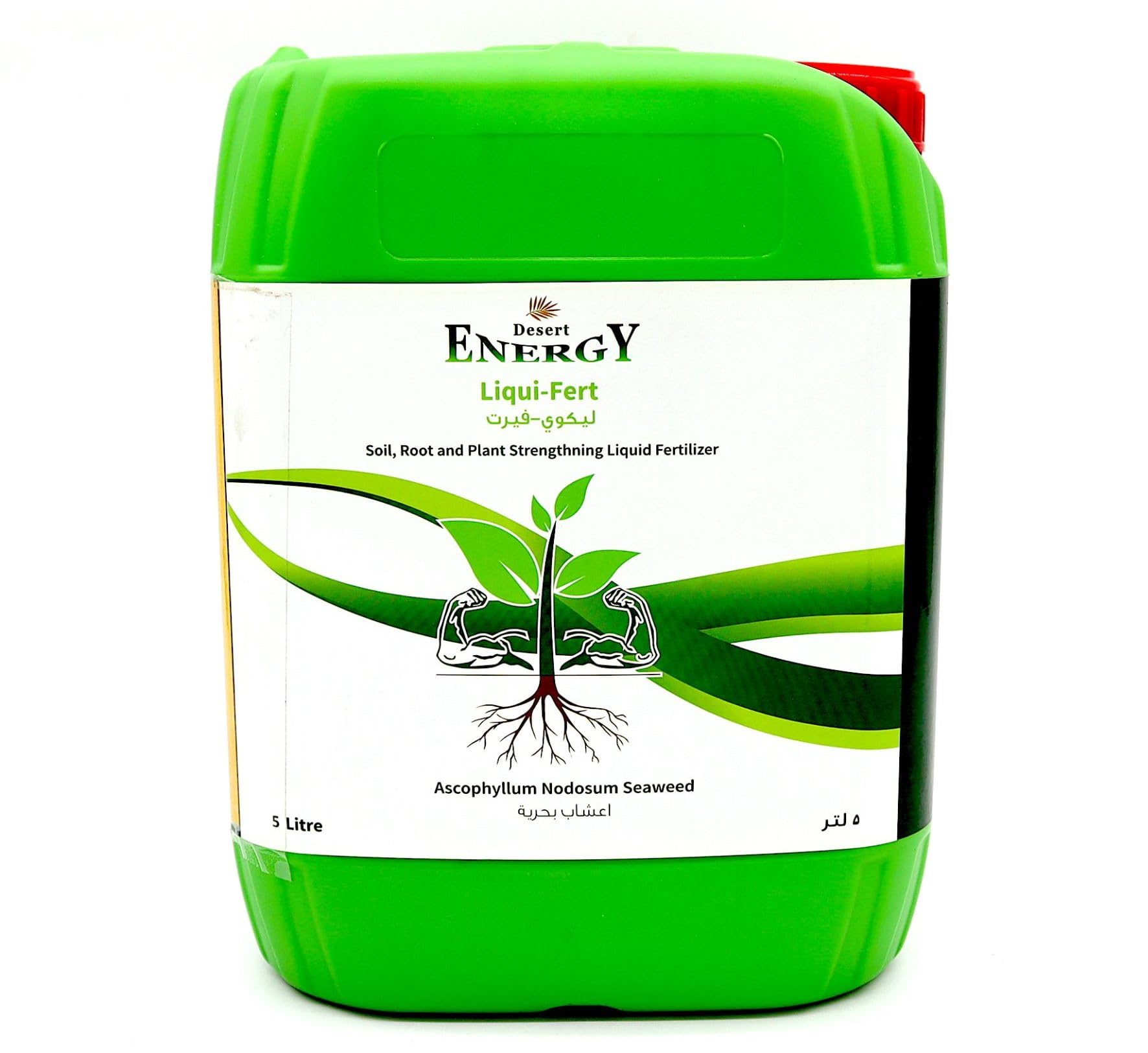
| Desert Energy Liqui-Fert | Ascophyllum nodosum extract; no concentration or NPK stated | 5 L | 100 to 150 ml per 10 L, foliar or soil, every 2 to 3 weeks | The listing identifies Ascophyllum nodosum. Check how much prepared solution the label rate produces and whether that fits your area. |
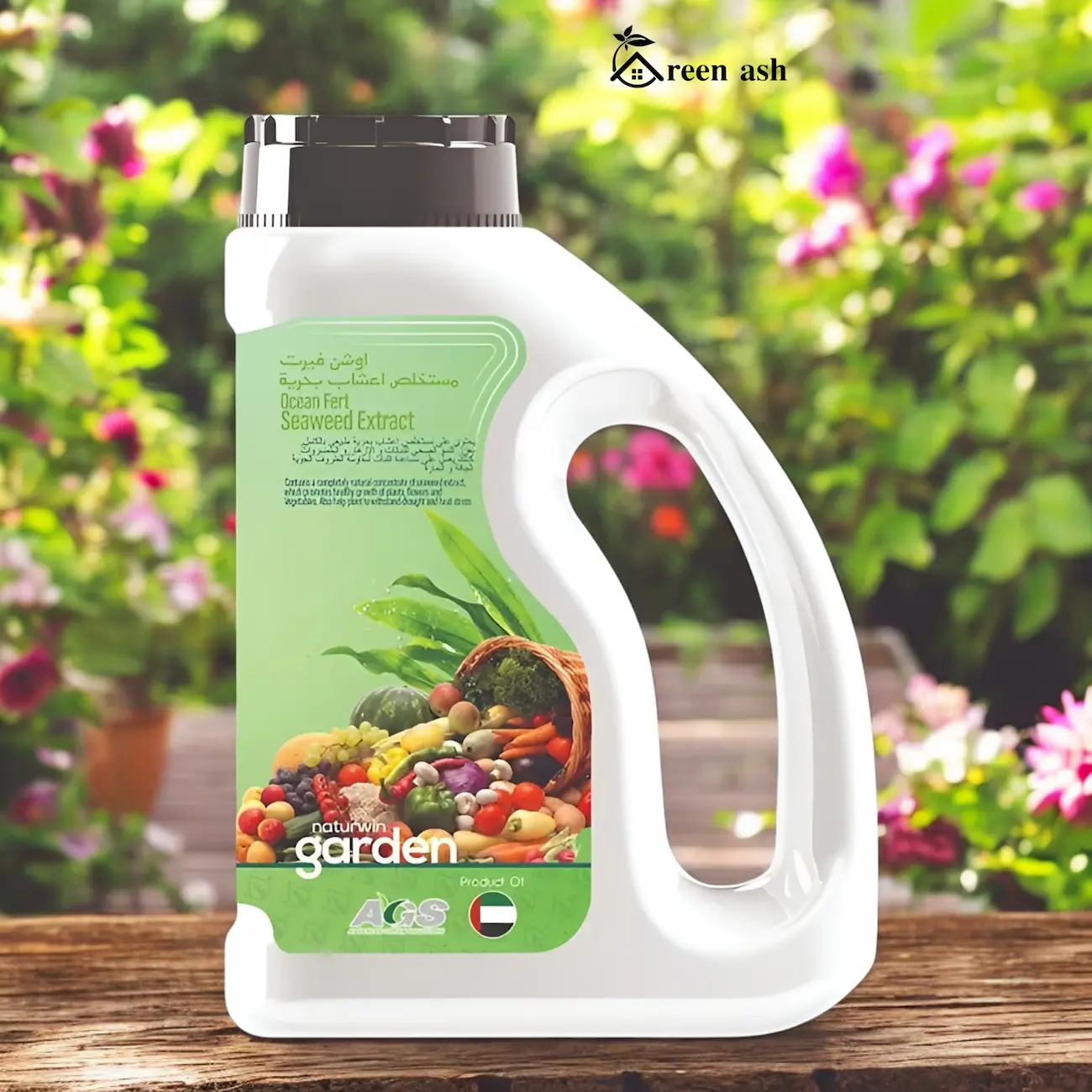
| Ocean Fert Seaweed Extract | Described as 100% seaweed extract; species and NPK not stated | Title says 1 L; page heading (which names Naturwin) and option say 500 ml | 10 ml per litre (1:100), soil or foliar, weekly | Confirm the pack size before ordering |
| Bio Green seaweed-based liquid, 1 litre | Seaweed extract and organic nutrients; no species or analysis | 1 L | None given (“dilute according to plant requirements”) | A smaller pack to consider when comparing options for a limited garden trial. Confirm the current label’s dilution and method. |
| Dragon Sea, 5 litres | 12% seaweed extract, 8% K2O | 5 L | 100 to 200 ml per feddan (about 4,200 m2), 2 to 4 applications | Review its declared potassium as part of your feeding plan. Its area-based spray directions require application planning. |
A rate per cultivated area cannot be converted into millilitres per watering can without knowing the treated area and application volume. Obtain usable directions for your crop and equipment before mixing. Never transfer a dilution rate from one brand to another.
To see why, work the Dragon Sea rate down to a garden. 100 to 200 ml per 4,200 m2 is about 2.4 to 4.8 ml of product for a 100 m2 garden, and roughly 0.02 to 0.05 ml for a 1 m2 bed, which is about a drop or less. The page does not say how much water to spray it in. At 8% K2O, that 100 m2 dose carries well under a gram of K2O (potash), a small amount next to a single watering can of a general feed. We would want the full label before recommending Dragon Sea for a home garden.
Worked mixing examples from the page rates
These use only the rates on the product pages. Always check the label on the pack you receive.
| Sprayer or can | Liqui-Fert at 100 ml per 10 L | Liqui-Fert at 150 ml per 10 L | Ocean Fert at 10 ml per L |
|---|---|---|---|
| 1 L hand sprayer (a few pots) | 10 ml | 15 ml | 10 ml |
| 5 L pressure sprayer or can (a bed) | 50 ml | 75 ml | 50 ml |
| 16 L knapsack (a large garden or farm row) | 160 ml | 240 ml | 160 ml |
Two more sums are useful when comparing value. A 5 L pack of Liqui-Fert makes about 500 litres of spray at 100 ml per 10 L, or about 333 litres at 150 ml. A 500 ml bottle of Ocean Fert makes 50 litres at 10 ml per litre, and a 1 litre bottle makes 100 litres. For a balcony with ten pots, a small bottle lasts a long time; for a farm, the cost per litre of prepared spray matters more than the bottle size.
When to use seaweed extract in the UAE
If you decide to trial a product, think about timing as well as dose. The 2026 meta-analysis found the most consistent responses from early applications and from 4 to 6 applications, and warm arid climates like ours showed among its larger effects (25.6%), though those were crop trials rather than gardens.
| Season | Villa beds and lawns | Balcony pots | Farm crops |
|---|---|---|---|
| October to November (planting) | Optional drench at transplanting, alongside watering in; NC State saw taller transplants with twice weekly drenches in preliminary greenhouse work | Drench new transplants once they are watered in | Early applications through fertigation during establishment |
| December to February (main growth) | If trialling, apply every 2 to 3 weeks per the page, keeping the comparison plants untreated | Weekly or fortnightly per the label; watch for salt build-up from any added nutrients | Follow the product’s stated number of applications (Dragon Sea gives 2 to 4) and record yields per row |
| March to April (flowering and fruit) | Account for any added potassium in the feeding plan | Spray only in the cool early morning or evening | Compare treated and untreated rows at harvest |
| May to September (heat) | Do not rely on seaweed for heat or drought; water, mulch and shade do that job | Avoid foliar sprays in heat; leaves dry in minutes | Fix irrigation uniformity and salinity first |
Sandy soil and salty water change things. In sandy beds, a soil drench passes quickly below the roots, so apply it to moist soil and use a modest volume rather than flooding it through. If your water is salty, remember that any product carrying added potassium also adds salts. A seaweed extract does not change the salinity of the water, and the FAO’s irrigation guidance is clear that salts leave the root zone only when extra water carries them below it.
Run a small, fair comparison
- Choose comparable plants. Use several plants of the same variety, age and approximate size if possible. Divide them between treated and comparison groups. We suggest at least six of each; with one or two plants per group, normal differences between plants will swamp any effect.
- Keep ordinary care comparable. Use the same potting medium, light exposure and normal feeding approach. Account for any additional nutrients supplied by the test product. Give the comparison group the same volume of plain water at the same time, so the only difference is the extract.
- Measure and record. Follow the exact label rate and method. Record dates, amounts and water volumes. Photograph each group from the same position.
- Choose an outcome in advance. For vegetables, record harvest weight or fruit count over a defined period. For ornamentals, record new growth and condition. Include product cost and time spent.
- Interpret cautiously. One better-looking plant is a useful observation, but a small home comparison cannot prove the cause. Repeat before expanding an expensive routine.
Here is how that looks for a winter tomato bed. Plant 12 seedlings of the same variety on the same day, alternating treated and untreated plants down the row so that one end of the bed does not get all the shade. Drench the treated six at transplanting and every 2 to 3 weeks after, as the page directs, and give the other six the same volume of plain water. Weigh every fruit you pick until the end of March. We would want to see the treated group clearly ahead, and the same result again next season, before calling it a success. A difference of a few percent is within the normal variation between plants.
A measuring cylinder or a dosing cup marked in millilitres makes this much easier than guessing with a bottle cap.
Common mistakes and what to do instead
- Using seaweed instead of fertiliser. Most extracts supply very little nitrogen or phosphorus, so plants slowly go hungry. Keep a complete feed with a stated analysis as the base, and treat seaweed as an optional extra.
- Using it to “fix” salty water or summer heat. Research cited by WSU found biostimulants protected trees and shrubs from drought and salt no better than water. Test the water, water deeply enough to drain, mulch and shade instead.
- Making it stronger to get a bigger effect. The meta-analysis found no clear link between concentration and yield, and products with added potassium add salts. Use the label rate.
- Borrowing a rate from another brand. Concentrations differ and most pages do not state them. Use only the rate for the bottle in your hand.
- Foliar spraying at midday. In our experience the spray dries within minutes in sun and can mark leaves. Spray in the early morning or evening, as the Liqui-Fert and Dragon Sea pages also advise.
- Judging by one plant. A single plant looking greener after a spray tells you very little. Compare groups of plants over a whole season.
- Mixing it with everything in one tank. Some products react with acidic or alkaline mixes. Liqui-Fert’s page advises a small compatibility test first.
Troubleshooting: if it did not seem to work
- No visible difference after a season: WSU found no demonstrated benefit in home garden settings, so this is not a surprise. Stop buying it and put the money into compost, mulch or a complete feed.
- Plants got worse: check for salt build-up (brown leaf edges, white crust) if the product contains added potassium, and check whether you changed watering at the same time.
- Leaf spotting after a foliar spray: the likeliest causes are spraying in sun or heat, or mixing too strong. Rinse leaves with plain water and spray only in the cool of the day.
- Blocked drip emitters after fertigation: flush the line with clean water after each injection and check emitter flow again.
- The original problem is still there: go back to the diagnosis table above. Persistent yellowing, wilting or dieback usually needs a soil or water test, or a look at the roots, not another tonic.
Safety, residues and the environment
- Protective equipment: wear gloves and eye protection when measuring concentrate and when foliar spraying. The Dragon Sea page asks for suitable protective equipment during preparation and application.
- Heavy metals: brown seaweeds can accumulate metals such as arsenic. WSU reported nine seaweed or kelp products in Washington’s fertiliser database with arsenic at 0.509 to 6.14 ppm, and advises gardeners who use kelp products regularly on edible crops to test their soil, because metals stay in the soil once added. None of the GreenAsh pages gives heavy metal test results.
- Food crops: none of these pages gives a harvest interval. Wash all produce well and avoid spraying fruit close to harvest.
- Children, pets and storage: Bio Green’s page says to store it cool and dry, out of direct sun, closed and out of reach of children and pets; Dragon Sea’s says to keep it closed, cool, out of direct sunlight and away from children, food and animal feed. We apply the same rules to every bottle.
- Water and disposal: do not pour concentrate into drains, ponds or water features. Rinse the sprayer and use the rinse water on the garden.
- Sustainability: WSU notes that kelp harvesting removes canopy-forming seaweed, and associated fish and algae can take several years to recover. If sustainability matters to you, ask the brand whether its seaweed is certified as sustainably harvested.
When a complete feed is the better buy
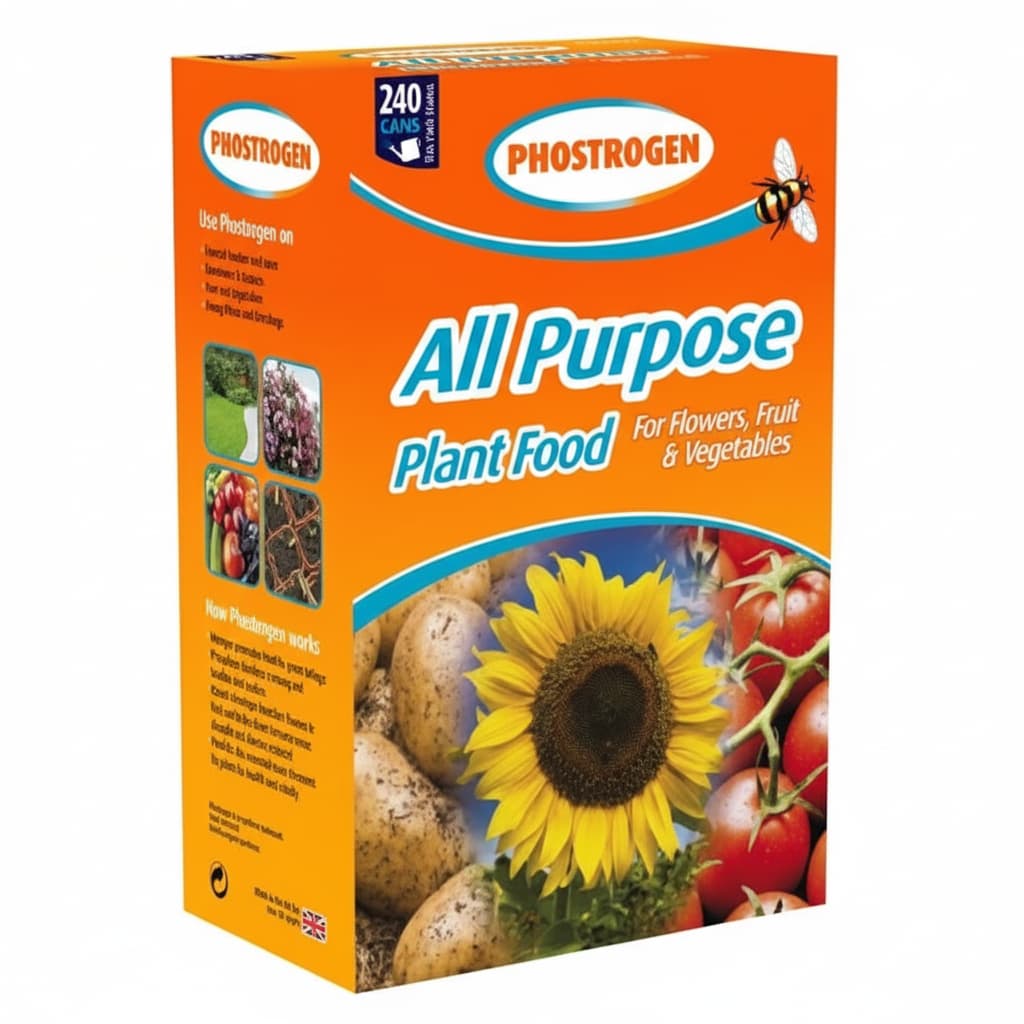
WSU recommends that home gardeners use organic fertilisers with a guaranteed nutrient analysis, and a good woody mulch, rather than seaweed products. The common thread is a known analysis. For pots and vegetable beds that need feeding, a soluble feed with a stated NPK gives you a known dose. Phostrogen All Purpose Plant Food, for example, states NPK 14-10-27 with magnesium and trace elements, and one 4.5 litre can at its page rate carries more potassium than the Dragon Sea area rate supplies to a whole 100 m2 garden. For sandy soil, we would put compost or vermicompost ahead of any extract for building water holding; see our vermicompost guide.
Frequently asked questions
Can seaweed extract replace my regular fertilizer?
Check the full nutrient analysis and crop needs. Any declared nutrients count towards the programme, but the seaweed description alone does not establish a complete feed. NC State lists typical seaweed extracts at about 0-0-1, so they supply very little nitrogen or phosphorus.
How often should I apply it?
Use the directions for the specific product, crop and method. On GreenAsh pages, Liqui-Fert gives every 2 to 3 weeks in active growth and Ocean Fert weekly. Our liquid fertilizer mixing guide explains measuring and preparation.
Does it make saline irrigation water suitable?
A stress-tolerance claim does not establish that a particular water source suits your crop. If water quality is a concern, get it tested and seek a crop-specific irrigation recommendation. Research cited by WSU found that biostimulants did not protect trees and shrubs from salt damage better than water.
Can I mix it with other products?
Check the labels and manufacturer compatibility guidance first. Follow the specified handling, protective equipment and storage instructions. Mix a small test batch in a jar and look for clumping or separation before filling a sprayer.
Is foliar spray or soil drench better?
In the 2026 meta-analysis, soil drench and fertigation gave larger average yield responses than foliar sprays. In UAE heat, a drench also avoids the risk of marking leaves, so we find it the simpler choice for most gardens.
Does seaweed extract contain plant hormones?
Many contain cytokinins and auxins, but the amounts vary enormously between products and batches, according to the 2019 review. WSU found no documented benefit from adding hormones to garden plants this way.
Is seaweed extract good for UAE lawns in summer?
There is no good evidence that it keeps a lawn green through summer heat. We would get watering, mowing height and feeding right first. If you want to try it, treat half the lawn and compare.
Is seaweed extract organic?
Seaweed is a natural material, but “organic” on a retail page is not a certification. None of the GreenAsh seaweed pages shows an organic certificate, so ask for one if certified organic matters to you.
Next step
If your plants are healthy and you are curious, pick one product with a clear rate, mark out a treated and an untreated group, and run the comparison for one season. If something is already wrong, fix the water, feed or pest first, and come back to seaweed later. For the soil side of the same question, our humic acid guide takes the same evidence first approach.